eBook - ePub
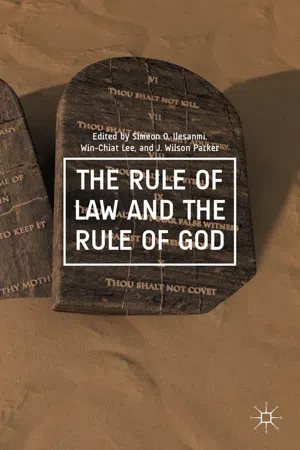
The Rule of Law and the Rule of God
- English
- ePUB (mobile friendly)
- Available on iOS & Android
eBook - ePub
The Rule of Law and the Rule of God
About this book
This book examines the competing regimes of law and religion an offers a multidisciplinary approach to demonstrate the global scope of their influence. It argues that the tension between these two institutions results from their disagreements about the kinds of rule that should govern human life and society, and from where they should be derived.
Information
Part 2
Limits in the Construction and Application of Free Exercise and Establishment Doctrine
Chapter 3
Grappling with Neutrality and Liberty under the Religion Clauses
Frank S. Ravitch
Introduction
The US Supreme Court’s decisions relating to law and religion have often been criticized. The source of the criticism frequently depends on the issues involved and the decision in a given case. There is no doubt, however, that some of these cases have occupied a central role in the evolving culture wars played out every day in the United States.
Cases involving law and religion have often resulted in inconsistent outcomes, and even more important, in inconsistent use and application of legal tests. When one evaluates these cases, however, one sees the same principles being used by different courts and different justices in entirely inconsistent ways. While this is especially true of the principle of neutrality, it is also sometimes true of the principle of religious liberty. This essay evaluates both of these principles and how they have been applied in a variety of cases. Interestingly, this analysis leads to the conclusion that neutrality is not possible and certainly has not been achieved by any of the conflicting decisions that attempt to apply this principle in the Religion Clause context. Religious liberty may be a more robust principle in some contexts, but it has proven equally empty in others.
Neutrality
Neutrality, whether formal or substantive, does not exist in the Religion Clause context. Others have recognized this.1 Still others have come part way to this conclusion by suggesting that neutrality is inherently dependent upon the baseline we choose to use in describing it, and thus it doesn’t exist apart from these baselines.2 Claims of neutrality cannot be proven. There is no independent neutral truth or baseline to which they can be tethered.3 This fact is important because it means that any baseline to which we attach neutrality is not neutral, and claims of neutrality built on these baselines are by their nature not neutral. This might seem circular (i.e., since there is no independent state of neutrality from which to derive neutral rules or applications of rules, there can be no neutral results and no means by which we can prove a given baseline is neutral), yet examples of the Supreme Court attempting to use neutrality as a guiding principle are readily available.4 The Court has used varying concepts or baselines of neutrality,5 and in several cases justices in the majority and dissenting opinions claimed to be relying on the same or similar principles of neutrality, yet they reached opposite conclusions.6
This critique of neutrality applies to both the recent Court’s use of “formal neutrality” (a concept explained further below) and to earlier Courts’ “substantive neutrality” or “separation as neutrality” approaches (also explained further below). Much attention will be paid in this paper to the concept of formal neutrality, which seems most pervasive today, at least in cases involving aid to religious entities or individuals, equal access, and Free Exercise Clause exemptions. As will be seen, the critique of neutrality provided herein applies to any claim that a given approach is “neutral” in regard to the many highly contested questions arising when government and religion interact in our complex regulatory state. In the end, as with interpretive claims based on hard originalism, neutrality requires value choices that are often masked under the cloak of evenhandedness or other mostly rhetorical devices.
Steven Smith has explained:
[T]he quest for neutrality, despite its understandable appeal and the tenacity with which it has been pursued, is an attempt to grasp at an illusion. Upon reflection, this failure should not be surprising. The impossibility of a truly “neutral” theory of religious freedom is analogous to the impossibility, recognized by modern philosophers, of finding some outside Archimedean point . . . from which to look down on and describe reality. Descriptions of reality are always undertaken from a point within reality. In the same way, theories of religious freedom are always offered from the viewpoint of one of the competing positions that generate the need for such a theory; there is no neutral vantage point that can permit the theorist or judge to transcend these competing positions. Hence, insofar as a genuine and satisfactory theory of religious freedom would need to be “neutral” in this sense, rather than one that privileges one of the competing positions from the outset, a theory of religious freedom is as illusory as the ideal of neutrality it seeks to embody.7
Others have also acknowledged the illusive and malleable nature of neutrality.8 The Court’s use of the term until recently was often symbolic—not in the sense that William Marshall’s fascinating work has used that term,9 but rather in the sense that the Court was trying to send a message that it was being balanced in its resolution of the issues that it decided.10 Of course, despite protestations otherwise, this was not always so. Still, the Court did not use neutrality as the be all or end all concept in actually deciding cases. Rather it had to also rely on other principles because neutrality is so malleable—Steven Smith has even argued parasitic.11 If there is no such thing as neutrality—or at least neutrality as more than a buzzword—this seems a logical state of affairs. The Court suggests that it is acting neutrally, but it can only define this neutrality by reference to other principles (which are not neutral).
The current Court, however, has begun to rely on neutrality more directly.12 Neutrality is no longer a background principle that the Court sees no need to consistently define. Rather it is an actuating principle that the Court apparently believes must be given a formalistic definition that can be rigidly applied.13 As will be seen, the Court connects its formal neutrality with what appear to be arguments for formal equality between religion and non-religion.14 Yet, the current Court’s neutrality is no more neutral than past Courts’ neutrality. In fact, because of its formalistic nature, it is potentially “less neutral”—if it is possible to be less than something that doesn’t exist—because, at least potentially, if a government action or inaction meets the Court’s definition of neutrality (and the element of individual choice discussed below), pesky things such as the effects of the program need not be considered.15 This is particularly problematic because the Court does not explain why its formal neutrality is neutral given the competing views of neutrality, and the Court uses terms such as “entirely neutral,”16 and “neutral in all respects.”17 By relying on the term in this direct, yet unsubstantiated, manner the Court gives it extra power.
Not to be outdone, the justices who reject the Court’s formal neutrality have begun strenuously arguing for a return to substantive neutrality,18 or sometimes to separation as neutrality, as the guiding principle.19 The battle thus joined, the justices argue over the meaning of neutrality, which, as I have suggested is like arguing over the real location of Oz. Neither side is forced to confront in any serious way the interpretive presumptions that inform its chosen neutrality position, although the substantive neutrality wing often openly acknowledge their reliance on separation (without, of course, explaining how separation is in fact neutral). As will be seen, substantive neutrality—at least as envisioned by Douglas Laycock—has something important to lend to this debate, but not because it is neutral.
The current Court’s formal neutrality approach requires a law or government policy to be facially neutral in regard to religion.20 In the aid context, there is an additional element to the formal neutrality approach.21 Any benefit or funding that flows to religious entities must do so as the result of the choices of private individuals.22 As will be seen below, this approach has not been applied in all aid cases, but to the extent it has been applied, the private choice element may have lost its substantive bite.23
The current version of neutrality, which has become dominant in the aid, equal access, and Free Exercise contexts, is intensely formalistic, and it appears to minimize the effects of government programs and actions.24 Establishment Clause jurisprudence has traditionally been fact sensitive, but the Court’s formal neutrality approach lacks the tools to enable it to deal with the many situations to...
Table of contents
- Cover
- Title
- Copyright
- Contents
- Acknowledgment
- The Rule of Law and the Rule of God: An Introduction
- I Fundamental Concerns
- II Limits in the Construction and Application of Free Exercise and Establishment Doctrine
- III The Challenge of Islam
- IV Concluding Thoughts
- List of Contributors
- Bibliography
- Index
Trusted by 375,005 students
Access to over 1.5 million titles for a fair monthly price.
Study more efficiently using our study tools.
Frequently asked questions
Yes, you can cancel anytime from the Subscription tab in your account settings on the Perlego website. Your subscription will stay active until the end of your current billing period. Learn how to cancel your subscription
No, books cannot be downloaded as external files, such as PDFs, for use outside of Perlego. However, you can download books within the Perlego app for offline reading on mobile or tablet. Learn how to download books offline
Perlego offers two plans: Essential and Complete
- Essential is ideal for learners and professionals who enjoy exploring a wide range of subjects. Access the Essential Library with 800,000+ trusted titles and best-sellers across business, personal growth, and the humanities. Includes unlimited reading time and Standard Read Aloud voice.
- Complete: Perfect for advanced learners and researchers needing full, unrestricted access. Unlock 1.5M+ books across hundreds of subjects, including academic and specialized titles. The Complete Plan also includes advanced features like Premium Read Aloud and Research Assistant.
We are an online textbook subscription service, where you can get access to an entire online library for less than the price of a single book per month. With over 1.5 million books across 990+ topics, we’ve got you covered! Learn about our mission
Look out for the read-aloud symbol on your next book to see if you can listen to it. The read-aloud tool reads text aloud for you, highlighting the text as it is being read. You can pause it, speed it up and slow it down. Learn more about Read Aloud
Yes! You can use the Perlego app on both iOS and Android devices to read anytime, anywhere — even offline. Perfect for commutes or when you’re on the go.
Please note we cannot support devices running on iOS 13 and Android 7 or earlier. Learn more about using the app
Please note we cannot support devices running on iOS 13 and Android 7 or earlier. Learn more about using the app
Yes, you can access The Rule of Law and the Rule of God by S. Ilesanmi, W. Lee, J. Parker, S. Ilesanmi,W. Lee,J. Parker in PDF and/or ePUB format, as well as other popular books in Social Sciences & Law Theory & Practice. We have over 1.5 million books available in our catalogue for you to explore.