Through close textual and contextual analysis of British films spanning a century, this book explores how pupils, teachers and secondary education in general have been represented on the British screen. The author addresses a number of topics including the nature of public (fee-paying) and state schooling; the values of special, single-sex and co-education; the role of male and female teachers; and the nature of childhood and adolescence itself. From the silents of Hitchcock to the sorcery of Harry Potter, British cinema's continued explorations of school life highlights its importance in the nation's everyday experience and imaginary landscape. Beyond this, the school film, varying in scope from low-budget exploitation to Hollywood-financed blockbusters, serves both as a prism through which one can trace major shifts in the British film industry and as a barometer of the social and cultural concerns of the cinema-going public. This applies especially for gender, race and, in all senses, class.
Stephen GlynnThe British School Film10.1057/978-1-137-55887-9_1
Begin Abstract
1. The School Film: A British Genre?
Stephen Glynn1
(1)
Oakham, Leicestershire, UK
End Abstract
1 Induction
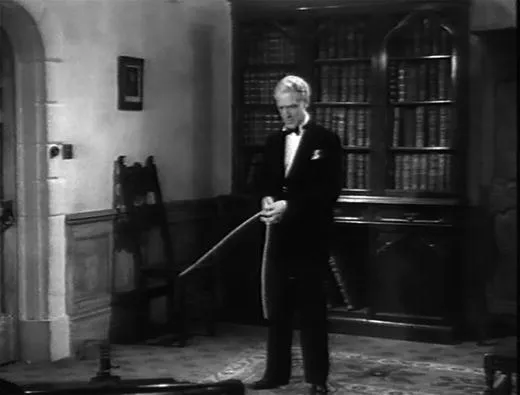
In 1994, the British Film Institute commissioned a documentary series on national cinemas to commemorate the centenary of the motion picture industry. The opening instalment, entrusted to Leicester-born director Stephen Frears, begins by quoting François Truffaut on ‘a certain incompatibility between the terms “cinema” and “Britain”’ (1978: 140). Retorting over the title-card with a robust ‘well, bollocks to Truffaut!’, Typically British (Channel 4, 2 September 1994), Frears’ ‘Personal History of British Cinema’, commences with a sequence of clips from British school films, each showing a teacher either promising to cane or soundly caning a pupil. First to account is Goodbye, Mr. Chips (1939) where the ferociously hirsute Headmaster (Lyn Harding) informs a cowering class of his intention to thrash them all: ‘You will present yourselves at my study tomorrow afternoon, in alphabetical order at intervals of three minutes, starting at three o’clock. I believe I can promise you that I have lost none of my vigour!’ Perhaps not, but maybe there was a leniency in the announced timing since, to ‘really tell this story’, Frears next avails himself of an archive Alfred Hitchcock interview. ‘At college’, Hitchcock recalls with his distinctive laconic delivery, ‘the method of punishment was rather a dramatic thing, I felt: if one had not done one’s prep, the form master would say “Go for three!” Going for three, that was a sentence. And it was a sentence as though it were spoken by a judge.’ Frears explains how Hitchcock’s teachers would tell him on a Monday that he was going to be beaten on a Friday and concludes: ‘that’s how he learnt about suspense’. As we reflect on that (frequently cited) formative connection with Hitchcock’s own ‘masters of suspense’ at his Jesuit boarding school, St Ignatius College, London (Russell Taylor 1978: 29–30; McGilligan 2003: 18–20), we cut to Housemaster (1938) where Otto Kruger takes two canes from his office cupboard and tests them to decide which would—at the appointed hour—have greater purchase (Fig. 1.1). While Frears recollects how his class would gather every Saturday afternoon to watch films that ‘the school thought appropriate for children to watch: George Formby; Will Hay; typically British films, often about school itself’, we witness Alastair Sim beating a pupil in The Happiest Days of Your Life (1950) and a similar scene from The Guinea Pig (1948) where Leicester’s finest, Richard Attenborough, is caned for burning the toast. As Frears recounts that the first film he saw at school was Boys Will Be Boys (1935), the extract shown reverses the power dynamics, with headmaster Hay being tossed on a blanket by his pupils outside the school gates—‘in that very British, benign sort of way’, Frears notes. The sequence ends with Frears recalling the British school film on which he worked as Assistant Director, Lindsay Anderson’s If…. (1968). This was much less benign: as the rebellious Crusaders (Malcolm McDowell and Christine Noonan) take aim from the roof tops of Cheltenham College, Frears concludes: ‘We shot the headmaster in If….!’
Fig. 1.1
‘If you can wait and not be tired by waiting’
It is a striking montage, and its central trope is as old as British cinema itself. In The School Master’s Portrait (Bamforth, 1898) a disorderly pupil is discovered drawing cartoons of his teacher on the blackboard, and is soundly caned: film over. It is also a deep-seated montage: as well as comprising a demotic dismissal of Truffaut’s celebrated insult, Frears’ filmography of flagellation raises a second, earthy, Anglo-Saxon finger, again across the Channel, to Jacques Rivette who explained his neighbouring nation’s mediocrity thus: ‘British cinema is a genre cinema, but one where the genre has no genuine roots’ (1985 [1957]: 32). Wrong, Rivette! So argues Mark Sinker who, in his monograph on If…., emphasises the appositeness of Frears’ headmagisterial exposition: ‘The boarding school story is a British genre, with genuine roots: central to the Romance of Empire, its history as a genre—both literary and otherwise—is a map of the fortunes of Empire, from mid-life crisis, to zenith to dismantlement’ (2004: 20). There is more, it seems, to this catalogue of canings than a Midlander’s cinematic nostalgia. Time to define our terminology.
2 Lessons in Genre
Can we talk of a British school film genre? Genre tout court is a troublesome constant in film studies. Is it a theoretical concept of analysis or a function of industry and market forces? Is it best assessed as a product or process? At its most reductive a film genre can be adjudged to display distinct narrative patterns and a secure iconography: ‘Put simply, genre movies are those commercial feature films which, through repetition and variation, tell familiar stories with familiar characters in familiar situations’ (Grant 2007: 1). Many of the films under examination here clearly possess common properties, telling of errant pupils (or staff) finding their way to an acceptance of societal norms in a visual cadre of classrooms, common rooms, playing fields, gowns, mortarboards and, enduringly it seems, canes.1 Genres, though, are seldom well-behaved: for Steve Neale they ‘are not to be seen as forms of textual codifications, but as systems of orientations, expectations and conventions that circulate between industry, text and subject’ (1980: 19). It is a useful enlargement of scope and this study will replicate such a tripartite structure for its case studies, investigating production histories, the film ‘texts’ themselves, and their consumption both critical and commercial. Categorisation is further complicated since films often demonstrate varying degrees of overlap, aka ‘generic hybridity’. Many of the films treated here could equally, if not primarily, be classified as examples of comedy or tragedy, the musical or horror film, social realism or romantic drama. Or multiples thereof: To Sir, With Love (1967) is a ‘Swinging London’ musical drama—and a school film; Never Let Me Go (2010) is a dystopian sci-fi romance—and a school film. Moreover, a genre study must investigate its intertextual relationship with other media. Film is rarely generically pure, evident if we consider the medium’s derivative entertainment heritage (Hayward 1996: 161), and pertinent for this genre study would be music hall, theatre, newspaper cartoons, television series and, especially, the novel. Steve Neale contends that film constantly refers to itself as a cross-media generic formation (1980: 62) and this will be explored for the British school film which is composed of several ‘intertexts’ that rework, extend and transform the norms that codify it.
A further problematising factor is that genre is never ‘the simple reproduction of a formalistic model, but always the performance of a politically and historically significant and constrained social process’ (Threadgold 1989: 109). Many commentators see mass media genres as ‘reflecting’ or ‘re-presenting’ values dominant at the time of their production and dissemination. John Fiske, for instance, contends that generic conventions ‘embody the crucial ideological concerns of the time in which they are popular’ (1987: 110), while their evolution indicates for Leo Braudy how they serve as a ‘barometer’ of the socio-cultural concerns of cinema audiences (1992: 431). Such an approach operates with the belief that the culture itself is the prime ‘author’ of the text since filmmakers can only work the representational conventions available within that culture. Thus, through its study of a discrete film genre, this book also functions as a work of social history. This holds whatever a film’s temporal placement since, as Pierre Sorlin has explained, ‘we can only understand characters and events in historical films by referring to the years in which those films were produced’ (1980: 83): hence Another Country (1984), though set in a boys’ public school of the early 1930s, reveals as much of the ‘heritage’ and homophobic values permeating Thatcherite Britain as does the explicit professional aspirations of a mid-1980s co-educational secondary modern headmaster in Clockwise (1986).
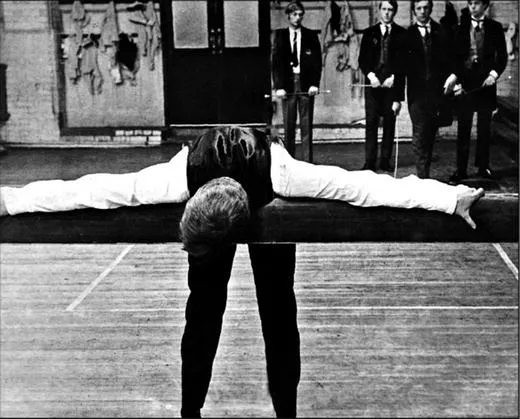
The near-concurrent commissioning of these two films demonstrates how school life is both a common and singular experience. As James Hilton wrote in his 1938 follow-up to Goodbye, Mr. Chips: ‘Schooling is perhaps the most universal of all experiences, but it is also one of the most individual… No two schools are alike, but more than that—the school with two hundred pupils is really two hundred schools, and among them, almost certainly, are somebody’s long remembered heaven and somebody else’s hell’ (1938: 11–12). The happiest days of your life? It is the sorrow that often predominates. In the course of a personal selection of the world’s ‘top ten’ school films, Peter Bradshaw questions why more, if not all films, are not set in schools: ‘For many, it’s the most intensely felt period of their lives: more emotionally raw and vivid and painfully real than anything in adult existence. It’s a period when we are judged with terrifying candour and finality, when we will be exposed to adult emotions but without the adult prerogatives, adult status, and the adult carapace of worldly wisdom that protect us from humiliation. Who cannot close their eyes and mentally walk, in cinematic detail, down every corridor of their old school?’ As with Frears, Bradshaw homes in on Britain’s caning trope, again choosing If…. and musing on the scene where Malcolm McDowell’s character awaits a caning from the privileged prefectorial oligarchy: ‘McDowell is caught between gloweringly accepting his fate, and ferociously realising that he doesn’t have to accept it. They are just boys like him—how dare they presume to beat him?’ (Fig. 1.2). For Bradshaw ‘this is the sixth-form crisis writ large: a growing and overwhelming sense of your own possibilities as an adult, yet still treated as a child’ (‘Starring You and Me’, Guardian, 24 February 2004). The scene highlights both the individual and the general, the way a school setting frequently underpins a troublesome ‘coming of age’ story, a site for the British bildungsfilme. On this theme, Josephine May notes how, especially with the increased secularisation of society, the individual’s rites of passage to adulthood, once signalled through traditional ‘staged’ religious ceremonies and processes, have largely been transferred to education, with the leaving of school now arguably the primary marker of the closing of childhood (2013: 5). In Tell England (1931) the inexpressive Edwardian father invites his son, on leaving school and entering army training, into his study for a drink: this formal familial gesture has few words but intense emotion and signifies the son’s ascent to man’s estate. This study will demonstrate how British cinema has long been keen to explore this transitional temporal and spatial terrain: a trend intensified since the 1950s when unprecedented challenges from suburbanisation, television and other leisure pursuits led film studios to target the remaining youthful market by drawing on aspects of teenage culture and catering for teenage interests, tastes and concerns. This newly important cinematic audience was coupled with an increased school attendance beyond the compulsory age of 16, a demographic that helped to render depictions of schools other than those in the private sector both financially and ideologically viable.
Fig. 1.2
School—the new religious rite of passage
3 Lessons in Nationhood
While acknowledging this expedient commercial exploitation of market segmentation, the school narrative allows filmmakers to comment on e...
Table of contents
Cover
Frontmatter
1. Introduction
2. The Early Years Programme (1900–45)
3. The Middle Years Programme (1945–70)
4. The Final Years Programme (1970–)
5. Conclusion
Backmatter
Trusted by 375,005 students
Access to over 1.5 million titles for a fair monthly price.
Study more efficiently using our study tools.
Frequently asked questions
Yes, you can cancel anytime from the Subscription tab in your account settings on the Perlego website. Your subscription will stay active until the end of your current billing period. Learn how to cancel your subscription
No, books cannot be downloaded as external files, such as PDFs, for use outside of Perlego. However, you can download books within the Perlego app for offline reading on mobile or tablet. Learn how to download books offline
Perlego offers two plans: Essential and Complete
Essential is ideal for learners and professionals who enjoy exploring a wide range of subjects. Access the Essential Library with 800,000+ trusted titles and best-sellers across business, personal growth, and the humanities. Includes unlimited reading time and Standard Read Aloud voice.
Complete: Perfect for advanced learners and researchers needing full, unrestricted access. Unlock 1.5M+ books across hundreds of subjects, including academic and specialized titles. The Complete Plan also includes advanced features like Premium Read Aloud and Research Assistant.
Both plans are available with monthly, semester, or annual billing cycles.
We are an online textbook subscription service, where you can get access to an entire online library for less than the price of a single book per month. With over 1.5 million books across 990+ topics, we’ve got you covered! Learn about our mission
Look out for the read-aloud symbol on your next book to see if you can listen to it. The read-aloud tool reads text aloud for you, highlighting the text as it is being read. You can pause it, speed it up and slow it down. Learn more about Read Aloud
Yes! You can use the Perlego app on both iOS and Android devices to read anytime, anywhere — even offline. Perfect for commutes or when you’re on the go. Please note we cannot support devices running on iOS 13 and Android 7 or earlier. Learn more about using the app
Yes, you can access The British School Film by Stephen Glynn in PDF and/or ePUB format, as well as other popular books in Media & Performing Arts & Film & Video. We have over 1.5 million books available in our catalogue for you to explore.