- English
- ePUB (mobile friendly)
- Available on iOS & Android
eBook - ePub
The Gentleman's House in the British Atlantic World 1680-1780
About this book
The Gentleman's House analyses the architecture, decoration, and furnishings of small classical houses in the eighteenth century. By examining nearly two hundred houses it offers a new interpretation of social mobility in the British Atlantic World characterized by incremental social change.
Information
Topic
HistoireSubtopic
Histoire de l'architecture1
Introduction
Shortly after William Townsend died in 1754, a sales advert appeared for a house he owned known as Paradise (Figure 1.1):
To be Sold in the county of Gloucester A MODERN-BUILT HOUSE, with four rooms on a floor, fit for a Gentleman, with all the convenient Offices and Outhouses, at Paradise, about a Mile from Painswick, and five from Gloucester, pleasantly situated on the Side of a Hill, which affords beautiful prospects; with 34 acres of Arable, Pasture and Wood Lands, the greatest Part adjoining to the House, and 50 Sheep Commons on Painswick Hill; all Freehold, and the Lands of the Yearly Value of about 35L.1
This intriguing description defined a ‘modern-built house ... fit for a gentleman’. The recently constructed house, probably completed in the 1730s, had eight principal rooms, four per floor. It stood close to a prosperous village and not far from a thriving commercial centre, the seat of the diocese. It benefitted from a pleasant situation, enjoyed a beautiful prospect, and stood amidst a small estate of farm land, pasture and woods. An unnamed but implied group of labourers accomplished the work of the house and small estate in a range of service buildings. The property, however, produced a relatively meagre income of £35, hardly enough for a gentleman to live on, suggesting that the estate owner had secured his living another way.
Paradise is a telling example of small classical houses built throughout Britain and its North American colonies in the late-seventeenth and eighteenth centuries.2 Its forty-five foot wide façade, with five bays set off by a segmental pediment and an oeil-de-boeuf window, has been described as a fine example of West Country ‘mason’s Baroque’.3 Like many houses on both sides of the Atlantic, it is uncertain who designed and constructed it; one historian suggests a local craftsman, another opts for a regional architect.4 Despite its advertised description as a house with four rooms to a floor, physical evidence indicates that the classical façade was added to part of an earlier structure, a feature found in many similar houses. Townsend, a ‘gentleman clothier’ who amassed a fortune manufacturing cloth in the Stroudwater valleys of the Cotswolds, occupied a contested social borderland between rising middling sorts and the landed gentry of England.
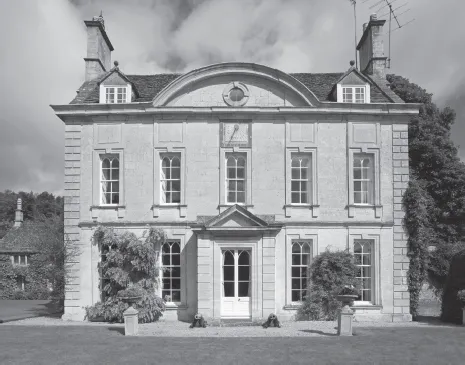
Figure 1.1 Paradise (now Castle Godwyn), Gloucestershire, c. 1730s
Source: Country Life Picture Library.
An ocean away, James Logan had died a few years earlier. As the colonial representative for the Penn family, proprietors of Pennsylvania, Logan lived the last twenty years of his life at Stenton, a brick, hipped-roof house he completed five miles from the burgeoning port of Philadelphia (Figure 1.2).5 Situated on a small estate of about 500 acres, Stenton represented the culmination of Logan’s years in the colony. After a long career as a Provincial Councillor, merchant, fur trader, Mayor of Philadelphia, Indian negotiator, Chief Justice, and finally acting Governor in the 1730s, Logan settled down at Stenton to a genteel life that mixed books and politics on his modest estate.6 The substantial dwelling provided spaces for public and private activities, ranging from large-scale conferences with Native Americans to intimate discussions with figures like Benjamin Franklin. Fashionable goods, some from London, others from provincial England, still others made locally, established the Logan household at the leading edge of style in the colony. Stenton was yet another ‘modern-built house, with four rooms on a floor, fit for a gentlemen’.
This book examines ‘gentlemen’s houses’ like Paradise and Stenton, which developed as a significant architectural type across the British Atlantic world from the late-seventeenth century. It is in effect an object study, a detailed exploration of a particular kind of object, in this case a house. It is primarily concerned, however, with status in the eighteenth century. As a result, it examines a group of small classical houses and how they functioned for the people who inhabited them.
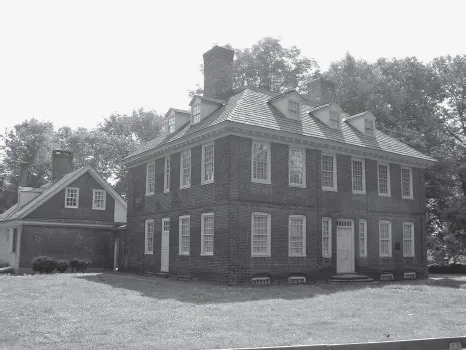
Figure 1.2 Stenton, 1723–1730, Philadelphia, Pennsylvania
Source: Courtesy Stenton, NSCDA/PA.
By taking this ‘material culture’ approach I seek to contribute a fresh perspective to larger questions that animate debates about the eighteenth-century British world. The century after 1680 was a time of profound change for Britain. This period witnessed the remaking of the political system, the creation of new financial institutions, British imperial growth, expanding trade and a ‘consumer revolution’ that saw people purchasing and using more goods, the dramatic reshaping of England’s towns in an urban renaissance, and the rise of polite culture. Historians disagree, however, about how these developments unfolded and their implications for Britain’s social structure.7
The connections between these important social processes and small classical houses are too striking to ignore. Often viewed as commonplace because of their standard form, the importance of small classical houses and their owners has been largely neglected.8 To enter the gentleman’s house is to penetrate the complex lives of people like William Townsend and James Logan who experienced these great changes. Building a gentleman’s house represented a calibrated strategic action, and gentlemen builders and owners employed their houses in precise ways across a range of settings to project power and define status. When considering building, James Logan noted that his wife feared, ‘I should build too fine’.9 It is the idea of what ‘too fine’ might look like, or what constituted a house ‘fit for a gentleman’ that is a main theme.
Studying small classical houses in conjunction with their owners illustrates how buildings shaped identity throughout the British Atlantic World. Understanding what a ‘gentleman’s house’ was is crucial to this book. These houses can be defined through the basic design building blocks of form and function. In terms of form, small classical houses shared a series of characteristics: all were freestanding houses built or remodelled in a classical style in the late-seventeenth and eighteenth centuries. Their main façades measured between forty-five and seventy feet wide, with five or occasionally seven bays of windows. They stood two and one half or three storeys tall and had double-pile (or two-room deep) floor plans, with a hall and grand stair. Increasingly during the eighteenth century British society acknowledged this house form as ‘fit for a gentleman’.
These compact, classical boxes were centrally important because of their function. Naturally, gentlemen and their families lived in other types of houses, and this study makes no claim to analyse the many older manor houses and other forms of building that the genteel inhabited. But over the period covered by this book, especially from the 1720s, the small classical house form came to fulfil a specific function, namely as a suitable residence for a gentleman and his household. In other words, they increasingly came to offer floor plans, room arrangements and interior finishes that enabled the performance of genteel status. Although I use the two terms – small classical house and the gentleman’s house – somewhat interchangeably, I tend to employ ‘small classical houses’ when suggesting their specific form, and gentleman’s house, or occasionally the genteel house, when describing their function. In turn, what follows demonstrates how architecture functioned as a social strategy by also considering ‘building status’ in two senses. First, it investigates how buildings conveyed meanings, and what those meanings were; that is, the status of buildings.10 Secondly, it explores how the individuals associated with these buildings used them to construct social position and identity; in other words, the building of status.
First and foremost, then, this book is concerned with status and social mobility in the eighteenth-century Anglo-American world. Through a new reading of evidence from gentlemen’s houses, it seeks to contribute to discussions about how Britain achieved stable but dynamic expansion in the eighteenth century. This study is prompted by the argument Stone and Stone made more than twenty-five years ago that ownership patterns of large country houses indicated the level of social mobility in England had been exaggerated.11 Their claim has been criticized extensively, especially on the count that they neglected smaller houses that were the most likely arena for social interchange between urban merchants, professional men, and landed elites.12 Little effort has been made, however, to evaluate the smaller houses even they admitted might tell a different story. This study is such an effort, and by examining a different size house it reaches different conclusions, offering instead an answer that highlights measured, incremental development.
This social and cultural reading of gentlemen’s houses combines histories of architecture, landscapes, and objects to unite subjects often treated separately. Architectural analyses have contributed to conflicting accounts of elite social development in Britain and its colonies. The history of eighteenth-century domestic building in England has focused overwhelmingly on the country house.13 But as Peter Guillery suggests, ‘houses are principally interesting because people lived in them’, and recent scholarship has highlighted the meaning of buildings as an important avenue of investigation in architectural history.14 Nevertheless, how people lived and worked in houses and how their social relationships developed in relation to space remains largely unexplored.15 Consideration of architecture, interiors, furnishings, and landscapes positions small classical houses at the centre of analysis in the first instance rather than people.16 Despite the persistent view that land was the main indicator of elite status, the small classical house emerged in the second quarter of the eighteenth century as an important symbol of membership in Britain’s governing class. Regardless of surrounding acreage, a key question these objects pose is what sort of owner did this particular type of house acquire? As will be argued, a discernable shift occurred where the construction and furnishing of a small classical house became a distinct marker that confirmed the social standing of house-builders.
Evidence from small classical houses prompts reassessment of the nature and pace of social change in the eighteenth century. Filled with possessions and standing in cultivated landscapes, small classical houses provided a setting for transatlantic elite identity formation by reinforcing power, prestige and a shared culture of gentility. The construction of a classical house resulted from conscious choices made by genteel owners inhabiting the permeable boundary between the middling and upper reaches of British society.17 By adopting a form of ‘polite’ architecture, gentlemen-builders were laying material claim to a position above a ‘polite threshold’.18 Discussions of social status and class have typically emphasized the pre-eminence of the land-owning elite, although a significant body of work has examined the important role of the ‘middling sort’ in eighteenth-century society.19 As Amanda Vickery has highlighted, however, there was no profound cultural gulf between the middling and upper reaches of British society or between colonial and provincial elites.20 The polite collaboration between the landed gentry and the upper elements of bourgeois society formed, ‘the closest thing to a governing class in Georgian England’.21 The same can be said for Britain’s empire, where those inhabiting this social borderland provided much of its governance and administration.22 Associating houses with owners develops a more detailed picture of this porous social stratum in the eighteenth-century British world.
Studies of consumption, material life and manners have suggested such a close connection, and yet the ‘creation and spread of an international gentry culture’ has been underappreciated’.23 Investing in property, constructing houses, and furnishing interiors constituted three of the most significant acts of consumption amongst eighteenth-century elites. Few works, however, seriously engage with buildings as a form of consumption.24 The eighteenth century’s rampant consumption aligned closely with changes in relations between metropole and colonies. An ‘Empire of Goods’, a new world of material culture resulting from increased commercial...
Table of contents
- Cover
- Title
- 1 Introduction
- 2 The Gentlemans House in Context
- 3 Building Status
- 4 Situating Status
- 5 Arranging Status
- 6 Furnishing Status
- 7 Enacting Status
- 8 Social Strategies and Gentlemanly Networks
- 9 Conclusion
- Notes
- Select Bibliography
- Index
Trusted by 375,005 students
Access to over 1.5 million titles for a fair monthly price.
Study more efficiently using our study tools.
Frequently asked questions
Yes, you can cancel anytime from the Subscription tab in your account settings on the Perlego website. Your subscription will stay active until the end of your current billing period. Learn how to cancel your subscription
No, books cannot be downloaded as external files, such as PDFs, for use outside of Perlego. However, you can download books within the Perlego app for offline reading on mobile or tablet. Learn how to download books offline
Perlego offers two plans: Essential and Complete
- Essential is ideal for learners and professionals who enjoy exploring a wide range of subjects. Access the Essential Library with 800,000+ trusted titles and best-sellers across business, personal growth, and the humanities. Includes unlimited reading time and Standard Read Aloud voice.
- Complete: Perfect for advanced learners and researchers needing full, unrestricted access. Unlock 1.5M+ books across hundreds of subjects, including academic and specialized titles. The Complete Plan also includes advanced features like Premium Read Aloud and Research Assistant.
We are an online textbook subscription service, where you can get access to an entire online library for less than the price of a single book per month. With over 1.5 million books across 990+ topics, we’ve got you covered! Learn about our mission
Look out for the read-aloud symbol on your next book to see if you can listen to it. The read-aloud tool reads text aloud for you, highlighting the text as it is being read. You can pause it, speed it up and slow it down. Learn more about Read Aloud
Yes! You can use the Perlego app on both iOS and Android devices to read anytime, anywhere — even offline. Perfect for commutes or when you’re on the go.
Please note we cannot support devices running on iOS 13 and Android 7 or earlier. Learn more about using the app
Please note we cannot support devices running on iOS 13 and Android 7 or earlier. Learn more about using the app
Yes, you can access The Gentleman's House in the British Atlantic World 1680-1780 by S. Hague in PDF and/or ePUB format, as well as other popular books in Histoire & Histoire de l'architecture. We have over 1.5 million books available in our catalogue for you to explore.