This book explores the transformation of youth and urban culture in neoliberal Britain. Focusing on the reconfiguration of urban culture in relation to race, marginalization and youth politics, James examines the shifting formations of memory, territory, cultural performance and politics.
eBook - ePub
Urban Multiculture
Youth, Politics and Cultural Transformation in a Global City
- English
- ePUB (mobile friendly)
- Available on iOS & Android
eBook - ePub
About this book
Information
1
Introduction
On the East side of the River Lea, Canary Wharf’s monuments to capitalist wealth dominate a largely residential landscape smattered with high-rise blocks (Figures 1.1 and 1.2). For over a hundred years, this watery border between Tower Hamlets and Newham has separated the inner city from the fringe. Looking down its banks, the warehouses, chimneystacks and old docks are testament to its industrial heritage and colonial past. The Olympic development, Westfield Shopping Centre and the dockland’s Excel complex mark its official future. Here, through 150 years of constant population, cultural and infrastructural change, a complex multiculture has grown up. This book is a story of that multiculture and the hundred or so young people who lived there between 2007 and 2012.
Newham occupies a particular place in popular and academic imaginaries. Through the docks and the Blitz, it is often thought of as the home of the white working-class as a font of British pluck, luck and courage (Gilroy 2004). On the basis of its superdiverse demographics (Vertovec 2006), it is also sometimes celebrated as an example of postracial conviviality. The youthfulness of its population (LBN 2006a, p. 3; 2010a) and the long-term deprivation experienced in the area (LBN 2010b, p. 45; Noble et al. 2008, p. 86) ensure a never-ending stream of researchers romanticising the inevitability, or surprising lack, of urban conflict.
My original contact with Newham was not disconnected from these streams. Prior to my PhD, I had been working for a quango1 that was evaluating a national programme of funding for faith-based communities. This programme was born of the obsession with interethnic violence that followed the 2005 London bombings. Newham was deemed to be a good site to assess the impact of this programme. Over two weeks I met with funding recipients and produced a report. The report was shared with the relevant central government department, and after ‘influencing policy-makers’ by telling them what they wanted to hear, I left the job frustrated and conflicted. While I had started to learn about the complexities of urban multiculture in this location, I had barely scratched the surface. At the same time, I had contributed to a system of knowledge that sought to contain and manage the everyday forms of life I would latterly seek to understand.
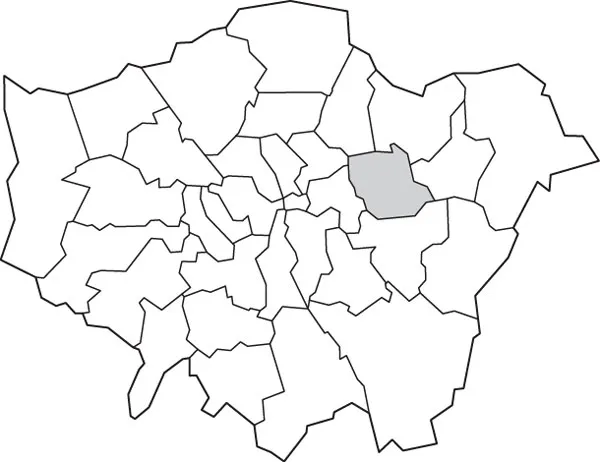
Figure 1.1 Map of London, showing Newham
Over the preceding year, I maintained relations with some of the contacts I had made in Newham. I got to know others through my partner who worked with youth and community providers in the borough. Developing longer-standing experience I had in youth, popular education and community development work, these conversations became a PhD proposal, a successful ESRC funding submission, the beginning of the PhD and an opportunity to listen again.
Arriving back in 2007, it was the end of the New Labour era and the beginning of the cuts to local and national expenditure. Sandwiched between the ‘Summer of Knife Crime’ in 2008, which ran into the 2010 General Election campaign (BBC 2008a; 2008b; Watt 2010),2 and the 2011 ‘Riots’, the fieldwork period was a time when the scourge of urban youth featured prominently in the news. The fieldwork period was also coloured by moments in popular culture: the TV show Britain’s Got Talent spawned the success of the streetdance groups Diversity and Flawless; Chris Brown’s self-titled debut album (2005a) had gone double platinum; and grime artist Giggs was about to release his underground hit ‘Talkin’ the Hardest’ (2009).
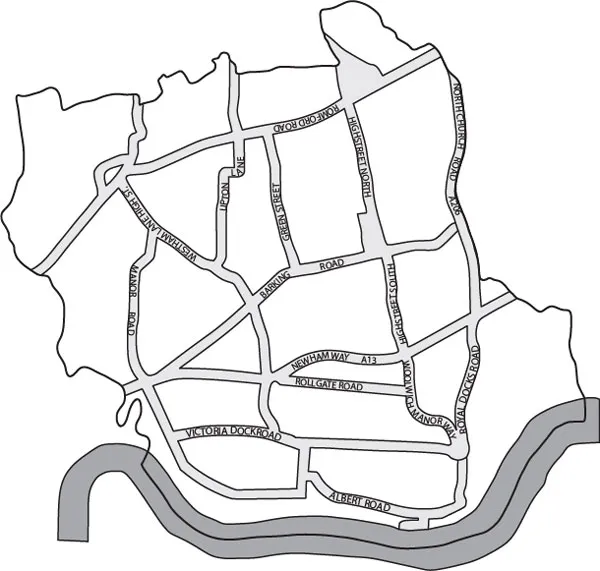
Figure 1.2 Simplified streetmap of Newham
However, moments of less widespread acclaim also resonated through the fieldwork. In 2010, Upcoming Movement, a small hip hop/grime group from Leyham,3 Newham, released a video for a track called ‘Kill All a Dem’. Its nihilistic proclamations knitted together the gangster style of Giggs with the ‘Summer of Knife Crime’ and the 2011 ‘Riots’. However, while it seemed to confirm the apolitical and anti-social perception of youth culture, it confounded these claims by drawing attention to the many contradictions of urban living. Its promotion of territorial warfare was built on an ethics of sharing. Its communication of black diasporic music was made through white bodies. Its supposedly apolitical character was at odds with its reflexive consciousness and its political challenge to social injustice. Its use of YouTube signalled conformity to commercial communication, and connection to the dialogues of the sound system and pirate radio.
Based on a two-year ethnography of three outer East London youth clubs, this book tells the story of young people living at this moment. It unpicks how Newham’s working-class past shaped its residents’ day-to-day existence. It addresses how they were racialised, classed and gendered, how they navigated, resisted and subverted marginalisation, and how they measured their horizons against those set by Canary Wharf and Westfield Shopping Centre. It explores young people’s politics through their reflexive evaluations and visions beyond injustices, and how these related to new forms of cultural technology. It also considers how young people made rules and friends, and negotiated post-code boundaries and narratives of white and autochthonous belonging. While it explores the antagonistic and convivial character of local interactions, it does not ignore the 150 years of migration and movement that gave form to this particular configuration of urban multiculture. Within this constellation, then, this book is a story of urban multiculture in outer East London.
To introduce these themes, this chapter develops in four parts. The first provides contextual and historical information about the borough. The second situates the book within a range of academic debates about multiculture, marginalisation and youth politics. The third foregrounds the methodological approach taken in the research. The fourth part outlines the main arguments contained in each chapter.
From marshland to migrant metropolis
Newham has been described as the ‘outer inner city’ by some (Millington 2011) and the ‘fringe’ by others (Dickens 1857), and authors 150 years apart have written about the relation between its social life and its location (Dickens 1857; Hall 2007). Prior to 1840, much of the south and west of Newham, in which many of the young people I knew lived, was unpopulated marshland (Powell 1973). From the mid-nineteenth century onwards, good river and rail transport (LBN 2003), and Newham’s position on the fringe of the Metropolitan Building Act and the London County Council (Hall 2007, p. 83), brought noxious industry, housing and migration to the area. Industry and cheap housing attracted a new population, and from then on, people came to the borough from all over the country, indeed the world, as they still do today.4 Parish records show the dramatic increase in the population of the area. In 1851, the local parish contained 18,870 people. By 1881, it had reached 128,953 and by 1912 it was populated by 300,860 people. This level would be sustained until the 1930s (Vision of Britain n.d.). By the second decade of the twentieth century, there were 335 manufacturing, engineering and construction firms connecting the River Lea to the London Docks (Powell 1973). The docks themselves, monuments to Victorian imperialism and colonial trade (Hall 2004), employed thousands of people. Newham was one of the industrial centres of the empire. Through its sugar refineries, groundnut trade and P&O shipping lines (Bloch 1995), it was a nexus in the colonial web which connected the Caribbean, West Africa, Australia, India and the Middle East to the ‘Motherland’.
Through these trades, national and international migrant workers came, stayed and went, providing cheap labour as they do today for global capitalism. In 1911, some 40 per cent of the population of the original parish (half the size of today’s borough) had come from outside the area (HMSO 1911). While most were from rural counties to the east and south-east (involving considerable journeys for their time), there had also been large influxes of Scots and Irish, and smaller though significant influxes of ‘foreigners’ – a term used in the Census to describe a wider population of non-British migrants. In 1911, some 1 per cent of the borough was made up of ‘foreigners’ (HMSO 1911). Non-British migrant workers were employed in local industries and lived in local housing. ‘In 1901 the company of Moore and Nettlefolds … alone employed 150 immigrant workers … By the 1920s most of the shops on the Barking Road were owned by Europeans’ (LBN no date) and Crown Street had been nicknamed ‘Draughtboard Alley’ because of the mix of black and white people living there (Bloch 1998, p. 13).
By 1931, some 62 per cent of the population of the borough had been born there, 34 per cent were English but born outside the borough, and the remaining 4 per cent included 2,207 Scots, 1,327 from the Irish Free State, 450 Indians, 397 Sri Lankans, 1,793 Europeans (including 447 Polish and 282 Russians), 168 Canadians, 108 Caribbeans, 200 Australians, 164 Americans and 137 Argentinians (HMSO 1931). Of the 282 Russians, many were Jews fleeing persecution (Bloch 2002, p. 13). Three Jewish cemeteries were built in Newham between 1857 and 1919 for the large Jewish population to the west of the borough, in Whitechapel and Spitalfields. By this point, Leyham also hosted the largest black community in London (Bloch 1995, p. 40; 2002, p. 13).
From marshland to industrial and colonial hub, the Second World War brought further change to the borough. As a result of its central importance to industry and trade, Newham suffered heavy bombing (Aston Mansfield n.d., p. 11). Many of the foreign seamen who had become part of the life of the area were evacuated and didn’t return (Bloch 2002, p. 14). A quarter of the houses (over 14,000) were destroyed through aerial bombardment and the landscape was remodelled. Bomb craters and temporary Nissen hut shelters,5 which became permanent homes, were features of everyday life (Bloch 1998; Harris and Bloch 1995; Hobbs 2006, p. 121). After the war, the landscape underwent another transformation, and 8,000 new permanent dwellings were built to replace the housing stock lost through aerial attack and the continued clearance of the ‘slums’ (Powell 1973, p. 49).6 The slums were the ‘poor-quality’ houses of the nineteenth and early twentieth centuries built, often on flood plains, for migrant labourers. To replace them, large estates were built first in the low-density ‘garden city pattern’ before the introduction of high-density blocks (Powell 1973, p. 56).
Further change came about through the decline of industry and the resulting unemployment. Between the end of the Second World War and the early 1960s – the period dubbed the ‘Golden Era’ (Dench et al. 2006, p. 18) – there was nearly full employment. In the following 40 years, industrial employment contracted by two-thirds (Hall 2007, p. 85). Between 1967 and 1974, employment at the Royal Docks declined from 7,180 to 4,068 positions (Hill 1976, p. 2) – the equivalent of 20 per cent of all jobs in the area. The cause was mechanisation, containeri-sation, changing transit practices and the building of the deep-sea port at Tilbury (Hill 1976, pp. 3–5; Hobbs 2006, p. 122; LBN 1976, p. 19). From 1966 to 1976, there were 24,000 job losses in Newham. In 1976, male unemployment stood at 11 per cent and 6,000 people were chasing 300 vacancies (Canning Town Community Development Project 1976). Employment in the borough has never recovered. High levels of unemployment continued through the 1980s and 1990s when the local authority became the largest employer (Hall 2007, p. 85). The urban fabric of the borough also continued to be remodelled. Many of the high-rise flats built after the Second World War were knocked down and replaced (Canning Town Community Development Project 1976, p. 9). New areas of marshland were reclaimed for Beckton’s 7,500 new homes, and the post-industrial dockside heritage was converted for private use (LBN 1980). This recent phase – connecting the Excel Centre to the Stratford Eurostar terminal, Westfield Shopping Centre and the Olympic site – has been called the ‘Arc of Opportunity’ (LBN 2010b, pp. 16–17) (see Chapter 7).
Contemporary statistics on demography and deprivation provide further insight about this location. At the time I conducted the research, 250,000 people were living in Newham and about 79,100 (32 per cent) of them were children and young people aged 0–19 years (LBN 2006a, p. 3; 2010a; 2010g).7 At 8 per cent higher than the overall figure for London, this factor made it the local authority with the highest proportion of young people in the UK. By 2011, the Census reported that 308,000 people were living in Newham (LBN 2015a) and 86,200 (28 per cent) of them were children and young people aged 0–19 years (LBN 2015b) – an increase of 7,100 children and young people.
The young people I worked with were ethnically diverse, not just in terms of many individual groups but also in terms of mixed ethnic groups. This diversity and mixedness was evidence of the history of long-term migration to the borough. In 2001, Newham had the largest proportion of non-white ethnic groups in the country (61 per cent) (ONS 2001),8 and among children and young people (0–19 years old) this ethnic diversity was more pronounced. Census data from 2011 placed Newham as the most ethnically diverse London Borough, according to Simpson’s Diversity Index (GLA 2011). At the time of conducting the research, 77 per cent of children and young people living in Newham were from ‘Black and Minority Ethnic’ groups and 23 per cent were ‘White British’ (LBN 2010a). As testament to the history of migration, the young people who made up this 77 per cent were not recent arrivals. The vast majority had been born in the UK (87 per cent) with only 6 per cent born in Africa and 6 per cent in Asia (LBN 2006b, p. 5). The largest minority categories for children and young people in 2001 were ‘Black African’ (17 per cent) and ‘Bangladeshi’ (14 per cent) (LBN 2006b, p. 4).
This diversity was also not static but was continually changing. Closer inspection of 2001 Census data shows that within the 0–19 age bracket the spread of ethnic diversity by age was uneven. For example, while there was an even spread of ‘White’ and ‘Bangladeshi’ young people across the 0–19 age range, the proportion of ‘Black African’ young people was highest in the 0–4 age bracket (LBN 2006, p. 4). This reflects more recent African migrations to the borough. The ‘mixed’ ethnic population of the borough was also growing and was expected to double in proportion between 2001 and 2016. Analysis of 2011 Census data shows that across the borough and within households, ethnic diversity was increasing (Jivra 2013). Again, these changes were registered most strongly among the young. Reflecting recent ‘Eastern European’ migration,9 the white population (which already included Irish, Scots, Romany and Greeks) too showed growing complexity with an increase in the ‘Other White’ category projected to rise from 4.5 per cent in 2001 to 5.7 per cent in 2007 (LBN 2010g).
The 2009 School Census supports these findings. It shows that 10 per cent of children on the school roll were of ‘White British’ origin, with ‘Asian’ (43 per cent) and ‘Black’ (26 per cent) young people together making up more than two-thirds of the school population. These figures also show 7 per cent of the school population as ‘White Other’, which included Eastern European young people, again suggesting an increase in line with post-2004 migration. Some 6 per cent of young people in the School Census were ‘mixed’ (LBN 2010e, p. 11). First-language data from the School Census of 2007 (LBN 2007b) showed that the tenth largest reported first language in Newham’s schools was Lithuanian (734 pupils), and Polish was 13th (415 pupils). This compares with 13,778 English speakers, 4,244 Bengali, 3,974 Urdu, 1,907 Gujarati, 1,499 Somali, 1,380 Punjabi, 1,300 Tamil, 996 Yoruba, 735 Portuguese and 328 Albanian.
However, demographic changes in Newham were not simply accounted for by young people arriving in the borough and settling down. A number of the young people I worked with moved through circular migration patterns – leaving, coming back and leaving again as family members sought employment in different parts of the world (see Chapter 2). These ‘new migrations’ did not have the same characteristics as post-war migrations. Whereas Caribbean and Asian immigration of the 1950s, 1960s and 1970s was characterised by workers from ‘less developed’ and post-colonial countries migrating to and settling in the fast-expanding industrial economies of Western Europe, North America and Australia (Castles and Miller 2003, pp. 68–93), ‘new migration’10 is identified with, among other things, circular migration patterns. Some of the Eastern Europeans who arrived in large numbers11 post-2004 came, left and returned (Rutter et al. 2008, p. 8).12 Other young people moved through the migrant labour circuits of the Gulf States before returning to Newham. Consequently, while some children and young people came and settled in Newham, others left and came back again, often more than once.
These demographics were played out in different ways across the three youth clubs. For the most part, the hundred or so young people I worked with had been born in East London, though some had their origins in Latin America, Africa, Western Europe, Eastern Europe and Asia. Of those born in East London, many were ‘mixed’ and nearly all had histories of migration that took them, via their parents, grandparents and great-grandparents, outside East London to the English regions, to Irish Gipsy and British Romany populations, to Ireland and Scotland, to Greece, Colombia, the Democratic Republic of the Congo, Nigeria, Somalia, Kenya, Albania, Romania, Lithuania, Poland, Latvia, France, Spain, Portugal, Jamaica, Barbados, Bangladesh, Pakistan, Afghanistan and the list went on. Some of these histories were more distant, some more recent, but most were within four generations. Some young people passed through Newham from Romania and went ‘home’ again. Others left for Dubai and Saudi Arabia, or to Kenya fo...
Table of contents
- Cover
- Half Title
- Title Page
- Copyright
- Contents
- List of Figures
- Acknowledgements
- 1. Introduction
- 2. The Multicultural Past
- 3. Territory
- 4. Cultural Performances
- 5. Circuitries of Urban Culture
- 6. Negative Politics
- 7. The Multicultural Future
- 8. Conclusions and Political Endnotes
- Notes
- Bibliography
- Index
Trusted by 375,005 students
Access to over 1.5 million titles for a fair monthly price.
Study more efficiently using our study tools.
Frequently asked questions
Yes, you can cancel anytime from the Subscription tab in your account settings on the Perlego website. Your subscription will stay active until the end of your current billing period. Learn how to cancel your subscription
No, books cannot be downloaded as external files, such as PDFs, for use outside of Perlego. However, you can download books within the Perlego app for offline reading on mobile or tablet. Learn how to download books offline
Perlego offers two plans: Essential and Complete
- Essential is ideal for learners and professionals who enjoy exploring a wide range of subjects. Access the Essential Library with 800,000+ trusted titles and best-sellers across business, personal growth, and the humanities. Includes unlimited reading time and Standard Read Aloud voice.
- Complete: Perfect for advanced learners and researchers needing full, unrestricted access. Unlock 1.5M+ books across hundreds of subjects, including academic and specialized titles. The Complete Plan also includes advanced features like Premium Read Aloud and Research Assistant.
We are an online textbook subscription service, where you can get access to an entire online library for less than the price of a single book per month. With over 1.5 million books across 990+ topics, we’ve got you covered! Learn about our mission
Look out for the read-aloud symbol on your next book to see if you can listen to it. The read-aloud tool reads text aloud for you, highlighting the text as it is being read. You can pause it, speed it up and slow it down. Learn more about Read Aloud
Yes! You can use the Perlego app on both iOS and Android devices to read anytime, anywhere — even offline. Perfect for commutes or when you’re on the go.
Please note we cannot support devices running on iOS 13 and Android 7 or earlier. Learn more about using the app
Please note we cannot support devices running on iOS 13 and Android 7 or earlier. Learn more about using the app
Yes, you can access Urban Multiculture by Malcolm James in PDF and/or ePUB format, as well as other popular books in Social Sciences & Criminology. We have over 1.5 million books available in our catalogue for you to explore.