1. Introduction
Anatomy of the Yıldız Bombing: Tracing the Global in the Particular
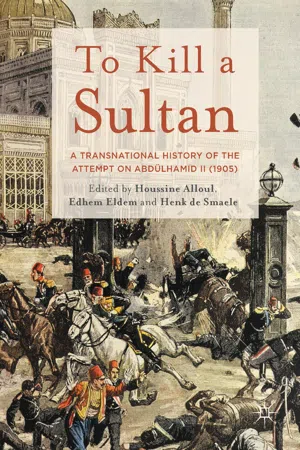
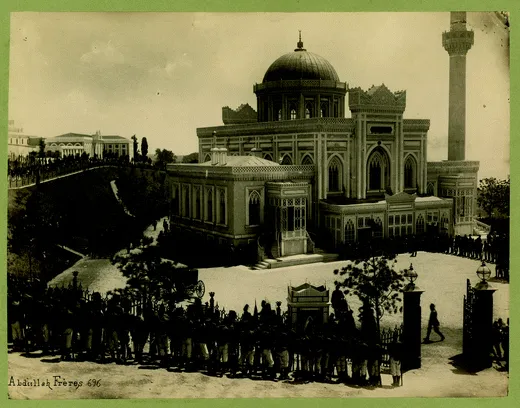
Istanbul, Friday 21 July, 1905: a crowd has gathered at the Hamidiye Mosque, in Yıldız, for the
selamlık, a weekly public procession for the Sultan’s Friday prayer.
1 As, for most people, it was the only chance to catch a glimpse of the Ottoman sovereign, this highly ritualized and grandiose ceremony attracted large numbers of spectators, including many foreign diplomats and visitors (Fig.
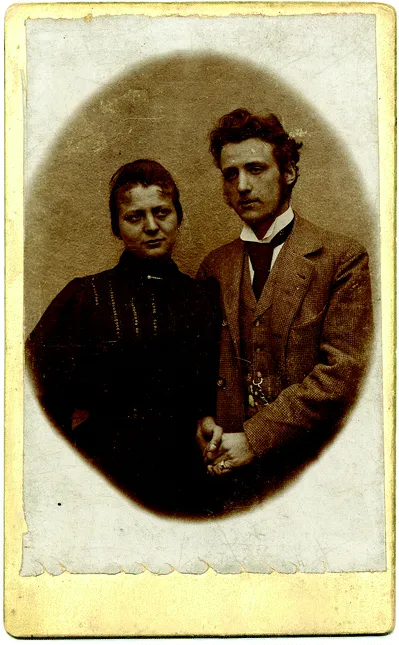
1.1). Just moments after Abdülhamid II came out of the mosque, a bomb planted in a nearby carriage exploded, leaving 26 dead and another 58 wounded or mutilated. By sheer accident, the Sultan, although its main target, escaped the attack unscathed. The operation had been carefully planned by the Armenian Revolutionary Federation (ARF) [Hai Heghapokhakan Dashnaktsutyun] following a strategy aimed at drawing international attention to the fate of Armenians in the Ottoman Empire and to force the Sublime Porte to implement administrative reforms in the eastern Anatolian provinces A week after the bombing, the Ottoman police arrested a Belgian citizen in Istanbul, Edward Joris (Fig.
1.2), as one of the prime suspects behind the plot. Joris, a self-proclaimed anarchist, had moved to the Ottoman capital some 4 years earlier for work, and had gotten involved with ARF members. The police soon arrested other suspects, uncovering the whole plot. In December, an Ottoman court sentenced Joris and three Armenians to death. In the meantime, Joris’s arrest had already sparked an international reaction: support committees were established and a press campaign was launched, demanding his immediate release. Two years later, in late December 1907, Joris was suddenly pardoned, discreetly released from prison, and allowed to return to his native country.
As the incidents surrounding the failed assassination attempt faded from memory, the plot was relegated to the status of a footnote in early twentieth-century history, filled with much more momentous events. The authors of this book do not claim that this particular incident was world changing. They do maintain, however, that the conspiracy that led to it and the subsequent developments offer a unique opportunity to reconsider some of the ways in which the histories of the Ottoman Empire, Europe, and the rest of the world were interconnected. The ‘Yıldız bombing’—so called because it happened in close vicinity of Abdülhamid’s Yıldız Palace and Mosque2—leaves many questions unanswered. How did the ARF succeed in circumventing the Hamidian secret police, prepare their ‘machine infernale’ and carry out their attack, the first recorded use of a ‘car bomb’? How does one explain the involvement of a Belgian anarchist in an Armenian terrorist cell? What is one to make of the international public support for a radical leftist bomber who not only tried to kill the head of state of a major power, but was also an accessory to the murder of 26 people? Why was Joris eventually released after receiving a death sentence? What were the legal strappings of the affair that eventually led to international debates on the ‘capitulations’ system?3 In this book, we reflect on many of these questions.
Although the Yıldız bombing remains largely forgotten today, the event is still likely to captivate the public’s attention.4 For the most part, the occasional and very superficial interest shown for this event in Turkey has more to do with a renewed fascination with Sultan Abdülhamid among conservative circles than with genuine curiosity for the attack itself.5 One of the most obvious reasons for this amnesia is that the attack failed to achieve its principal goal—liquidating Abdülhamid II—and therefore never attracted the kind of extensive, indeed sometimes obsessive, attention that more notorious attempts of the period have received. Think of the assassinations of Tsar Alexander II (1881), of Empress Elisabeth–Sissi—(1898) and of Archduke Franz Ferdinand (1914), to name but a few. Understandably, then, the Young Turk revolution, which put an end to Abdülhamid’s autocracy (1908) and eventually to his reign (1909), has left an incomparably deeper trace. Finally, one cannot help thinking that the ‘peripheral’ status of the Ottoman Empire from the perspective of mainstream Western historiography may have also helped further marginalize an already secondary event. It is quite telling in this sense that the prolific writer-scholar and activist Mike Davis, in his widely acclaimed Buda’s Wagon: A Brief History of the Car Bomb starts his narrative only in 1920—15 years after the ARF’s attempt—when an Italian anarchist parked and then detonated a horse-drawn carriage filled with explosives in Wall Street, leaving almost 40 people dead.6 No wonder, then, that the existing scholarship is scant. Apart from a source edition by the Belgian amateur historians Walter Resseler and Benoit Suykerbuyk,7 the attempt is analyzed or only briefly mentioned in a handful of articles, monographs and theses.8
To fully understand the plot, one needs to engage with various historical subjects (global radicalism, imperialism, diplomacy, nationalism, humanitarianism, international law) and browse thousands of archival documents and publications in many different languages (at least Ottoman Turkish, Armenian, Dutch, French, German and English) from all over the world. Such an endeavor is too vast for any single researcher. That is why we have brought together an international team of scholars with different areas of expertise and specialization. In that sense, rather than an edited volume in the classical sense, this book may be viewed as a monograph by a collective of authors, coordinated by a trio of editors. The guiding question throughout the book is what the failed ARF plot can tell us about broader historical processes, by combining ‘old-school’, rigorous and patient historical methodology with historiographical and theoretical reflection. By studying the ‘anatomy’ of a heretofore unexplored historical event, we aim to uncover and better understand some of the intersections of the global and the local, of governments and sub-state nationalist movements, and of ideology and practice. This multipronged narrative focus on one particularly dramatic episode allows for a truly transnational and ‘entangled’ analysis of the events, which challenges the historical paradigms that take the nation as the natural unit of analysis without, however, losing track of how the nation operates as a powerful ideology that ‘changes over time, and whose precise elaboration at any point has profound effects on wars, economies, cultures, the movements of people, and relations of domination’.9 In so doing, To Kill A Sultan opens a unique window onto several new topics related to Ottoman, European, international and global history.
This book should also be seen as a ‘microhistory’, although it departs in many ways from the genre as it has been developed since the 1970s to offer an alternative and corrective method to generalizing, teleological and reductive ways of writing history.10 Microhistories typically focus on local realities, and tend to disregard international and/or transnational mobility and dynamics. Although detailed, small-scale and case-oriented analyses are far from absent from the historical literature on international relations, such studies usually center on diplomatic and political elites and have very little in common with the methods and ambitions of microstoria. Moreover, diplomatic historians are prone to privileging a unilateral approach, usually by looking at a crisis ...