Widely adopted in the early days of the Soviet Union, the international language Esperanto seemed to many of the revolutionaries and their followers to herald a new linguistic era going beyond the narrow divisions of nationalism. The language was embraced by these enthusiasts as the embodiment of international socialism. But, even as the language took hold, tensions emerged—with the workers of the capitalist west, with the guardians of socialist ideology, and, above all, with the growing emphasis on Soviet nationalism as Josef Stalin consolidated his power following the death of Lenin. The 1930s, with their stress on ideological conformism, put many Esperantists, and ultimately the language itself, on the wrong side of the nationalist/internationalist divide, leading ultimately to the purging and annihilation of the Esperanto movement in the late 1930s.
What, then, happened to the Soviet Esperanto movement in the years 1937–38? In our earlier volume we described the demise of the Soviet Esperantist Union (SEU) from the perspective of the members of the so-called Worldwide Non-national Association (SAT) and of the Proletarian Esperantist International (IPE) outside the Soviet Union. The Esperanto journals of the day, particularly Sur Posteno, presented a picture of slow, unrelenting decline as fewer and fewer Esperanto publications appeared in the Soviet Union, regular contacts were broken, and finally letters stopped coming from individual Esperantists. For a 20-year period thereafter, no information about Esperanto life in the Soviet Union emerged.
From the country itself, up until 1987–88 there was not even official confirmation that Esperanto was suppressed. Only here and there do we encounter statements to the effect that the movement ‘has long been stagnant’. The former secretary of the SEU Committee for the Urals reported that from 1938 until 1957 he read and wrote nothing in Esperanto.1 About the poet Evgenii Mikhalsky it was noted that he ‘died tragically’ in 1937.2
Early on, rumors circulated of the arrest of Soviet Esperantists. In October 1936 the founder and long-time leader of SAT, Eugène Lanti (see Chap. 5 in our earlier volume), mentioned the case of the veteran Bolshevik and radical non-nationalist Maksim Kriukov, who was imprisoned and shot because he ‘dared to express his opinion’.3 In April 1941 the International Esperanto League announced that the Soviet government had in 1937 ‘dissolved all independent educational associations, including Esperanto organizations’,4 but in the midst of war this information attracted little attention. Ivo Lapenna, board member of the Universal Esperanto Association (UEA), the principal apolitical Esperanto organization, as late as 1947 publicly denied assertions that in the Soviet Union the Esperanto movement had been harassed.5 On the other hand, a Bulgarian informed Japanese comrades in 1948 that ‘SEU was liquidated. Causes: anarchism, Trotskyism and other harmful isms and sects among Soviet Esperantists’.6
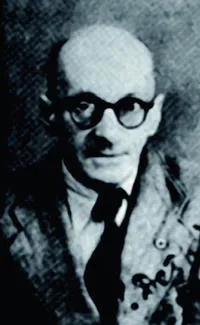
Only in the post-Stalinist ‘thaw’ did more details surface. In 1956 the Swedish Esperantist Erik Ekström, on a visit to the Soviet Union, discovered that ‘legally’ SEU ‘was never disbanded’, but at the same time, he brought news of the fate of Ernest Drezen, who for many years had led the Soviet Esperantist Union: ‘He was arrested by Beriia’s bandits
7—as they were described—and died in prison.’
8 East European Esperantists could well understand what was meant when the journal
Pola Esperantisto informed them that in 1938 the Esperanto poet Georgii Deshkin ‘was unwillingly torn away from the Esperanto movement for eighteen years and lived in Siberia’.
9 Little by little, disturbing news of the fate of the Soviet Esperanto movement leaked out. In 1965 the first witness to these persecutions succeeded in fleeing to the West: the Russian actor Nikolai Rytkov, well known for his portrayal of the role of Lenin. An interview with him,
10 along with conversations between Soviet Esperantists and Western visitors, helped, at least in part, to reconstruct the sequence of events in the years 1937–38 (Fig.
1.1).
We should note that groundwork for these arrests did not include direct attacks against Esperanto in the Soviet mass media (which, however, were full of information about enemies of the people, foreign spies and public trials), so it is hard to know whether the mere knowledge and use of Esperanto was dangerous.11 Indeed it was precisely in the mid-1930s that Soviet Esperantists, like many other ordinary people, experienced something of a reduction in pressure to observe ‘class consciousness’ compared with the time of the First Five-Year Plan. In this breathing space, the Esperantists looked forward with a certain optimism to a more tranquil period in which, independently of ideological considerations, Esperanto’s practical utility might be recognized. It was no accident that SEU’s chief theoretical contribution in this period was publication of a methodology of Esperanto teaching—a work that put particular emphasis on Esperanto’s so-called propaedeutic value as an introduction to language study that facilitated the acquisition of foreign languages.12
Drezen, probably with a feeling of relief, completely abandoned excursions into the field of Marxist theory and, as of 1932, concentrated on research on the international standardization of technical terms. He helped popularize in his country the pioneering work on that topic, published in 1931 by the Austrian terminologist Eugen Wüster, who—an Esperantist from his youth—argued in favor of the broad use of Esperanto for international language standardization.13 Drezen himself produced a programmatic monograph on the standardization of scientific and technical terms.14 As head of the terminological commission of the All-Soviet Committee for Standardization, he developed a project for establishing an international terminological code derived from the basic principles behind Esperanto. This report15 was presented by the Standardization Committee in September 1934 to the conference of the International Federation of the National Standardization Associations (ISA) in Stockholm, which accepted it unanimously and commissioned the Soviet Committee to continue its researches. In the following year a Russian translation of Wüster’s work was published.16
This common interest in giving Esperanto a place in discussions of international linguistic standardization strengthened the relations between Drezen and the neutral movement as of 1934.17 On 15 March 1936, Drezen wrote to the president of the Universal Esperanto Association Louis Bastien: ‘In our country probably sometime soon the work of SEU will be re-energized on probably a somewhat new basis. Among other things our affiliation with UEA will likely be possible.’ At the end of May 1936, Drezen sent a postcard to Bastien promising that cooperation between SEU and UEA will be possible ‘as soon as a solution is found to a few basic problems relating to Esperanto activity in SEU’.18 Meanwhile, Drezen stayed in active contact with Wüster. On 28 January 1937 Wüster asked Drezen whether the Soviet Union would be represented in an ISA meeting planned for June in Paris19 and congratulated him ‘that you have been chosen as editor-in-chief of the multilingual technical dictionaries’. The last letter from Drezen to Wüster bears the date 9 March20; two later letters that Wüster sent to his Soviet colleague brought no reply.
We now know that Drezen was arrested on 17 April 1937. It is not certain whether his imprisonment was primarily motivated by his leading position in the Esperanto movement. As a non-Russian, a former Tsarist officer and early activist in the Red Army, a university professor, a board member of the All-Union Society for Cultural Relations with Foreign Countries (VOKS), a joint founder of Iazykfront and, not least, a frequent traveler abroad, he provided an abundance of reasons to be suspected as a ‘spy’. Non-Soviet Esperantists never regarded Drezen as a convincing representative of the Soviet Union—a view apparently confirmed by his mode of presentation at the World Congress in Danzig (1927). Participants in the Congress observed that the SEU leader, ensconced in a first-class railway compartment, wore yellow gloves.21 Following the Congress, Drezen revealed to a former fellow student ‘that he cannot get used to that Russia, and their culture shocks him’.22 But in 1937 other factors were more important, namely, his extreme loyalty to Stalin’s regime and his active participation in ideological campaigns. He engaged in unbridled denunciations of SAT as an anti-Soviet organization and accused the followers of the competing international language systems Ido and Occidental of ‘counterrevolution’.23 There was a certain suicidal quality to the denunciation since the same accusation was eventually turned on him. He was among the chief victims when, as we shall attempt to show, the authorities, probably b...