This book, written in an accessible style and illustrated with drawings by the author and with many other images, discusses the basic principles of discourse theory and applies them to various aspects of popular culture, media and everyday life. Among the topics it analyzes are speed dating, advertising, jokes, language use, myths, fairy tales and material culture.
Arthur Asa BergerApplied Discourse Analysis10.1007/978-3-319-47181-5_1
Begin Abstract
1. Introduction: Li’l Abner and Critical Multimodal Discourse Analysis
Arthur Asa Berger1
(1)
San Francisco State University, San Francisco, California, USA
Abstract
Intertextual nature of texts and applied discourse analysis are discussed. Distinctive aspects of this book are found in its design. In each chapter, after discussing a concept from discourse theory, it applies that concept to a text of some kind from popular culture, media, and everyday life. Ideas from prominent discourse theorists are dealt with, different kinds of discourse analyses are explained, and they are differentiated from ethnomethodology.
Application The author’s dissertation on the American comic strip Li’l Abner is offered as an example of multimodal critical discourse analysis.
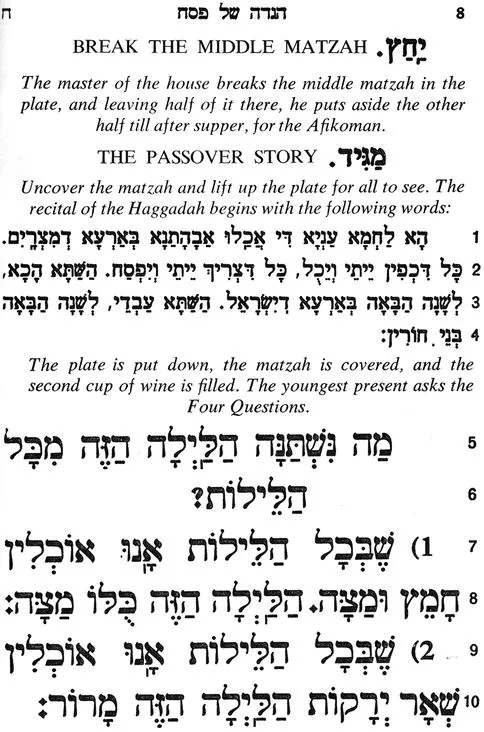
How is this book different from other books on discourse analysis? This may seem like an ordinary question, but the material in italics happens to be adapted from a small book, the Passover Haggadah, used in all Seder dinners (the term Seder means “order”) in which a wise son asks “Why is this night different from all other nights?” This question which I asked in the first sentence of this book is an example of what communication scholars call “intertextuality,” which means, roughly speaking, that all texts borrow from other texts or are intertwined with one another. I will have a lot more to say about this topic later. It is very important and plays a major role in the thinking of discourse analysts. According to the Russian scholar Mikhail Bakhtin, whose thinking is behind intertextual theory, all texts borrow—in various ways—from other texts, whether the borrowing is conscious or unconscious.
This book, then, like all books, if Bakhtin is correct, is full of borrowings—of quotations by discourse theorists and others of interest and with material revised, updated, and transformed in various ways from my writings over the years. In all cases, when I borrow from others, I quote them and tell who wrote the passage, so there is a difference between intertextuality and stealing someone else’s material, which we describe as plagiarism. I use quotations because I think that what the people I’m quoting have to say is important and is expressed in a distinctive way. Intertextuality suggests that we often imitate others by using their plots, themes or styles, or other things, and we are generally not conscious that we are doing so.
I cover a wide variety of topics in this book. You will learn about discourse theory, language, metaphor, narratives, culture, myths, rituals, genres, signs (and the science of semiotics), jokes, images, the psyche, Hamlet, fairy tales, dreams, and love, among other things, and I have included a number of learning games that will help you learn how to apply concepts and use them to make sense of the role discourse analysis plays in our lives, societies, and cultures. So this book differs from other discourse analysis books in that it focuses upon a wider range of topics relating to culture than you find in the typical discourse analysis book and applies concepts from discourse very broadly—perhaps more broadly than traditional discourse analysts do.
In their book, Discourse Analysis: Investigating Processes of Social Construction, Nelson Phillips and Cynthia Hardy write (2002:6):
Traditional qualitative approaches often assume a social world and then seek to understand the meaning of this world for participants. Discourse analysis, on the other hand, tried to explore how the socially produced ideas and objects that populate the world were created in the first place and how they are maintained and held in place over time. Whereas other qualitative methodologies work to understand or interpret social reality as it exists, discourse analysis endeavors to uncover the way in which it is produced. This is the most important contribution of discourse analysis: it examines how language constructs phenomena, how it reflects and reveals it. In other words, discourse analysis views discourse as constitutive of the social world—not a route to it—and assumes the world cannot be known separately from discourse.
Discourse analysis deals with our use of language and the way our language shapes our identities, our social relationships, and our social and political world. Discourse analysis is mostly done by linguistics professors, who used to be confined in their research to the sentence. When the linguists decided to move beyond the sentence to conversations and then to literary texts of one kind or another, and then to mass-mediated texts, linguists identified themselves as discourse analysts. When I searched “discourse analysis” on Google on August 8, 2015, I got 5,770,000 results. So there is a great deal of interest in the subject.
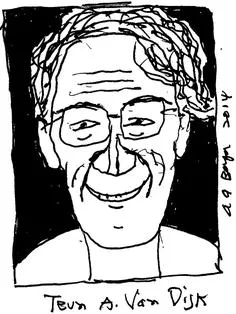
Image 2
Teun A. van Dijk
Teun A. van Dijk, a Dutch scholar who is one of the most prominent contemporary discourse analysts, writes in “The Study of Discourse” in Discourse as Structure and Process (1997:1):
What exactly is discourse, anyway?
It would be nice if we could squeeze all we know about discourse into a handy definition. Unfortunately, as is also the case for related concepts as “language,” “communication,” “interaction,” “society” and “culture” the notion of discourse is essentially fuzzy. As is so often the case for concepts that stand for complex phenomena, it is in fact the whole discipline, in this case the new cross-discipline of discourse studies (also called “discourse analysis”) that provides the definition of such fundamental concepts.
So understanding what discourse analysis isn’t easy because it is a “fuzzy” concept.
If you look in dictionaries, you’ll see discourse described as a conversation or a treatise on some subject. Discourse analysts are interested in how people use language and how this language shapes their relationships with others and the institutions in their societies. Many academic disciplines are interested in language but not the same way that discourse analysts are. Let me offer an example that will help you understand more about discourse analysis. In his book Story and Discourse, Seymour Chatman, a professor of rhetoric at the University of California in Berkeley, discusses narratives—texts that have a linear or time perspective to them. He writes (1978:19)
Each narrative has two parts: a story (histoire), the content or chain of events (actions, happenings), plus what might be called the existents (characters, items of settings); and a discourse (discourse), that is the expression, the means by which the content is communicated.
The story is the “what” and the discourse is the “how.” And it is the how that discourse analysis focuses attention on. We can see these relationships in the chart that I have made based on Chatman’s ideas:
Story
Discourse
Events
Expression
Content (what happens)
Form (how story is told)
Histoire
Discourse
Chatman’s discussion helps us understand how discourse analysis differs from other approaches to communication. The focus, in discourse analysis, is on style and on expression, not only content.
The quote by Phillips and Hardy in the epigraph suggests that discourse is basic to our social world. From the moment we start to talk, when we are little children, discourse shapes our existence. At a very early age children learn what words mean, and around the age of four can put words together in their own way, and make sentences they’ve never heard before. As I show in this book, discourse deals not only with words but also in newer versions of discourse analysis, with images. So this book will not only deal with theories and concepts related to discourse analysis but also will show you discourse in action in the real world.
As I suggested earlier, discourse analysis represents an effort by linguists to move beyond the sentence, which is where linguists traditionally have focused their attention. Discourse analysts worked on speech and conversation—spoken discourse—before moving on to written discourse and then, in our brave new world of Internet, to what they call multimodal discourse analysis. This kind of discourse analysis deals with images and videos—what is found on Facebook, Pinterest and other social media sites. A number of discourse analysts write from what they call a “critical” perspective, meaning an approach that deals with ideology and politics and is, generally speaking, critical of the political arrangements found in bourgeois capitalist societies. Since these scholars are interested in what is going on in contemporary societies they describe themselves as “Critical Multimodal Discourse Analysts.”
Van Dijk adds other insights into what discourse analysis is in a book he edited, Discourse as Structure and Process, the first of two volumes of Discourse Studies: A Multidisciplinary Introduction. In his chapter in this book titled “The Study of Discourse” he describes what discourse analysis deals with and discusses the three main dimensions of the field (1997:2):
(a) language use, (b) the communication of beliefs (cognition), and (c) interaction in social situations. Given these three dimensions, it is not surprising to find that several disciplines are involved in the study of discourse such as linguistics (for the specific study of language and language use), psychology (for the study of beliefs and how they are communicated), and the social sciences (for the analysis of interactions in social situations).
It is typically the task of discourse studies to provide integrated descriptions of these three main dimensions of discourse: how does language use influence beliefs and interaction, or vice versa, how do aspects of interactions influence how people speak, or how do beliefs control language use and interaction? Moreover, besides giving systematic descriptions, we may expect discourse studies to formulate theories that explain such relationships between language use, beliefs and interaction.
He reminds us that while discourse analysis pays attention to talk and oral communication, it also studies written language. And written texts. We can see that it is interested in all kinds of human communication, with a focus on people’s language use and the interactions among people who are talking with one another or writing texts of one kind or another. While scholars from many disciplines focus their attention on the content of discourse, discourse analysis are more interested in the styles used, in the way language and images are used and the role language plays in social interactions.
Discourse analysis is different from ethnomethodology, though both are interested in conversation. As Dirk vom Lehn, the author of a book on the ethnomethodologist Harold Garfinkel, explains (in a personal communication, 2015):
Ethnomethodologists are ethnomethodologists. Discourse Analysis in my book is a collection of research methods. Some discourse analysts use research methods, like conversation analysis, that have been derived from ethnomethodology. But often they do not use these methods in the spirit of ethnomethodology. In particular they ignore Garfinkel and Harvey Sack’s argument that people themselves in their conversations analyze the interaction as and when it happens. And it is this analysis that allows them to participate in the interaction. Discourse analysts tend to stick to the scientists perspective and use conversation analytic techniques to explore the organization of talk.
Van Dijk describes discourse analysis as a multi-disciplinary approach that encompasses semiotics, psychoanalytic theory, sociological theory, literary theory, and many other disciplines. So it is a field in which different kinds of scholars can work and do work, since language and communication are so central to many qualitative disciplines. Although many people have never heard the term, it is very popular in academic circles. One publisher, Routledge, has more than forty books on the subject and there are hundreds of books on discourse analysis at Amazon.com. So the question naturally arises—why another book on the subject?
My answer is that this bo...
Table of contents
Cover
Frontmatter
1. Introduction: Li’l Abner and Critical Multimodal Discourse Analysis
1. Communication
2. Texts
3. Concepts
Backmatter
Trusted by 375,005 students
Access to over 1.5 million titles for a fair monthly price.
Study more efficiently using our study tools.
Frequently asked questions
Yes, you can cancel anytime from the Subscription tab in your account settings on the Perlego website. Your subscription will stay active until the end of your current billing period. Learn how to cancel your subscription
No, books cannot be downloaded as external files, such as PDFs, for use outside of Perlego. However, you can download books within the Perlego app for offline reading on mobile or tablet. Learn how to download books offline
Perlego offers two plans: Essential and Complete
Essential is ideal for learners and professionals who enjoy exploring a wide range of subjects. Access the Essential Library with 800,000+ trusted titles and best-sellers across business, personal growth, and the humanities. Includes unlimited reading time and Standard Read Aloud voice.
Complete: Perfect for advanced learners and researchers needing full, unrestricted access. Unlock 1.5M+ books across hundreds of subjects, including academic and specialized titles. The Complete Plan also includes advanced features like Premium Read Aloud and Research Assistant.
Both plans are available with monthly, semester, or annual billing cycles.
We are an online textbook subscription service, where you can get access to an entire online library for less than the price of a single book per month. With over 1.5 million books across 990+ topics, we’ve got you covered! Learn about our mission
Look out for the read-aloud symbol on your next book to see if you can listen to it. The read-aloud tool reads text aloud for you, highlighting the text as it is being read. You can pause it, speed it up and slow it down. Learn more about Read Aloud
Yes! You can use the Perlego app on both iOS and Android devices to read anytime, anywhere — even offline. Perfect for commutes or when you’re on the go. Please note we cannot support devices running on iOS 13 and Android 7 or earlier. Learn more about using the app
Yes, you can access Applied Discourse Analysis by Arthur Asa Berger in PDF and/or ePUB format, as well as other popular books in Social Sciences & Film & Video. We have over 1.5 million books available in our catalogue for you to explore.