Whereas traditional scholarship assumed that William Shakespeare used the medieval past as a negative foil to legitimate the present, Shakespeare, Catholicism, and the Middle Ages offers a revisionist perspective, arguing that the playwright valorizes the Middle Ages in order to critique the oppressive nature of the Tudor-Stuart state. In examining Shakespeare's Richard II, The Merchant of Venice, Hamlet, King Lear, Macbeth, and The Winter's Tale, the text explores how Shakespeare repossessed the medieval past to articulate political and religious dissent. By comparing these and other plays by Shakespeare's contemporaries with their medieval analogues, Alfred Thomas argues that Shakespeare was an ecumenical writer concerned with promoting tolerance in a highly intolerant and partisan age.
Alfred ThomasShakespeare, Catholicism, and the Middle AgesThe New Middle Ageshttps://doi.org/10.1007/978-3-319-90218-0_1
Begin Abstract
1. Introduction: Maimed Rights in Shakespeare’s England
Alfred Thomas1
(1)
University of Illinois at Chicago, Chicago, IL, USA
End Abstract
In the preface to his controversial book The Swerve: How the World Became Modern (2011), Stephen Greenblatt asserts that the Renaissance marked a decisive and fundamental break with the medieval past:
Something happened in the Renaissance, something that surged up against the constraints that centuries had constructed around curiosity, desire, individuality, sustained attention to the material world, the claims of the body. The cultural shift is notoriously difficult to define, and its significance has been fiercely contested … the key to the shift lies not only in the intense, deeply informed revival of interest in the pagan deities and the rich meanings that once attached to them. It lies also in the whole vision of a world in motion, a world not rendered insignificant but made more beautiful by its transience, its erotic energy, and its ceaseless challenge.1
In his illuminating study Must We Divide History into Periods? (2015) Jacques Le Goff argues that there was no simple cut-off point between the Middle Ages and the Renaissance, and that this claim only arose with the writings of the French historian Jules Michelet (1798–1874) and the Swiss historian Jakub Burckhardt (1818–1897) in the nineteenth century, when we first witness the emergence of history as an academic field of study and the establishment of chairs of history in the European universities.2 Le Goff makes the convincing case that the Middle Ages and the Renaissance were really part of a cultural continuum and that the real break with the past only occurred in the eighteenth century. According to Le Goff, the emergence of Latin as the language of intellectual enquiry, admiration for classical learning, and the privileging of reason and individuality began not with the Renaissance but with the Middle Ages. Le Goff also shrewdly discerns in the writings of Michelet a personal and far from neutral response to history. Initially praising the medieval period, Michelet only put forward his belief that the Renaissance marked a new era of luminosity and rationality with his inaugural lecture at the Collège de France in 1840.
The same idea was taken up and developed by Jakob Burckhardt in his classic study Die Kultur der Renaissance in Italien (The Civilization of the Renaissance in Italy, 1860), which claimed that the Renaissance inaugurated a new era of modernity and individuality as opposed to the medieval period, which had been dominated by “childish” faith and superstition:
In the Middle Ages both sides of human consciousness—that which was turned within as that which was turned without—lay dreaming or half-awake beneath a common veil. The veil was woven of faith, illusion and childish prepossession, through which the world and history were seen clad in strange hues. Man was conscious of himself only as a member of a race, people, party, family or corporation—only through some general category. In Italy this veil first melted into air; an objective treatment and consideration of the state and of all the things of this world became possible. The subjective side at the same time asserted itself with corresponding emphasis; man became a spiritual individual, and recognized himself as such.3
As Peter Burke has stated in his introduction to Burckhardt’s classic work, the claim that medieval men did not feel themselves to be individuals “does not square with the existence of twelfth-century autobiographies such as those by Abelard and Guibert of Nogent” and “to describe Renaissance Italians as the first modern men encourages us to see them in our own image and forget the many differences between us and them” (13–14).
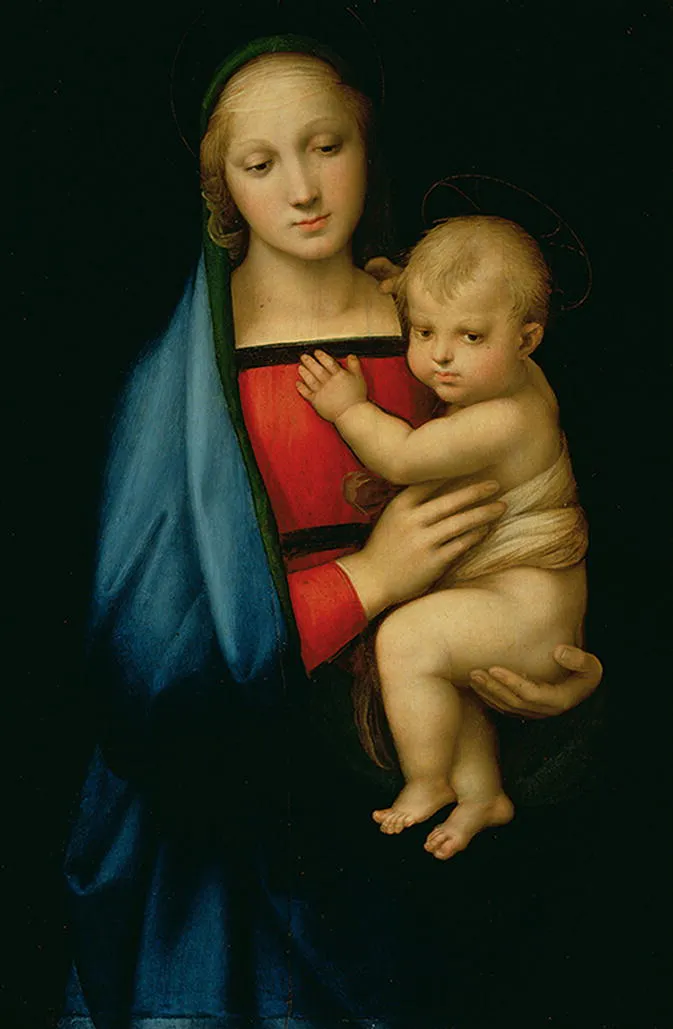
Thus the binaries which Greenblatt sets up to sustain his thesis that the Renaissance marked a fundamental swerve away from the medieval past (stasis/motion, conformity/individuality, sexual repression/erotic energy) are themselves historically contingent and far from neutral. In fact, they rehearse the largely discredited theses of Michelet and Burckhardt. To take a simple example: Greenblatt bases his opposition between the medieval period and the Renaissance on a simplistic contrast between Duccio’s painting of the Maestà in Siena, with its static enthroned Virgin and Child, and the swirling rhythms of Botticelli’s Renaissance masterpiece in the Uffizi Gallery in Florence. For Greenblatt, one is marked by serenity and calm, the other by frenetic motion and energy. But if one takes a cursory glance at many medieval paintings—for example, the popular motif of the flagellation of Saint Catherine of Alexandria—one sees all the qualities that Greenblatt overlooks in the medieval period: movement, erotic energy, and a total obsession with the body (Fig. 1.1). Conversely, if one looks at Raphael’s Madonnas, one finds the static calm that Greenblatt identifies with Duccio’s medieval masterpiece (Fig. 1.2). What we see is not a radical shift or swerve, but continuity as well as change: Raphael’s Madonnas do not mark a departure from Duccio’s, but are a refinement of them.
Fig. 1.1
St Catherineof AlexandriaTortured (1480). By Friedrich Pacher (ca. 1474–1508)
Fig. 1.2
Raphael: TheGrand Duke’sMadonna (ca. 1504–1505)
I shall be arguing in this book that the same dialectic of continuity and change characterizes English writing and culture between 1400 and 1620. Shakespeare, Marlowe, Jonson, and Webster may have been steeped in humanist learning and love of classical antiquity—both Shakespeare and Marlowe adored the Roman writer Ovid—but this was hardly a new phenomenon. The term “humanism” was first introduced in the later Middle Ages by the Italian poet Petrarch (1304–1374); and European writers’ love of Ovid is already manifested in the twelfth-century Arthurian romances of Chrétien de Troyes, as well as his French verse version of the tale of Philomena from the Metamorphoses; the Lays of Marie de France; and the fourteenth-century Canterbury Tales by Geoffrey Chaucer. To this extent Shakespeare and Marlowe were deeply attached to medieval traditions.
Another example of an English Renaissance writer embedded in a medieval sensibility is Sir Thomas More, author of the humanist classic Utopia (1516), but also a traditional Catholic who was prepared to die—and did so—for his religious beliefs and his commitment to a Catholic world view. What separates More from Shakespeare and Marlowe is not an epochal gulf between the Middle Ages and the Renaissance but a temperamental distinction that straddles that temporal marker: More was a fervent believer whereas Shakespeare was a skeptic in the tradition of Montaigne. But skepticism was not a unique preserve of the Renaissance, as a brief consideration of Chaucer’s writing shows. Like Shakespeare, Chaucer was deeply indebted to the classical past and translated Boethius’ Consolation of Philosophy into English. In this respect Chaucer is closer to Shakespeare than, say, his contemporary William Langland , author of Piers Plowman, or the mystics Julian of Norwich and Margery Kempe , all of whose works were typical of the religious fervor of the age. Conversely, Shakespeare is closer to Chaucer than he is to, say, the devotional writings of his contemporary Robert Southwell.
In this book I argue that Shakespeare and his fellow dramatists were not only familiar with the culture of their medieval forefathers (most obviously the mystery and morality plays that were still being performed in the English Midlands in the early years of Elizabeth I’s reign) but consciously revived other non-theatrical forms of medieval culture such as romances and saints’ lives in order to challenge the new constraints placed on public dissent by Tudor and Stuart absolutism. What many of these medieval genres—both dramatic and non-dramatic—have in common is the shared affirmation of the power of the powerless. For example, in the virgin-martyr narrative of St Catherine of Alexandria, which forms the basis of Chap. 5, we find a characteristic confrontation between a pagan despot and a Christian virgin martyr who resists his tyranny and speaks truth to power. Catherine’s adversary Emperor Maxentius becomes increasingly vulnerable to rages of madness as his power over the virgin diminishes. Equivalents to this medieval tyrannical figure are Leontes in The Winter’s Tale and Lear in King Lear, both men vanquished in argument by assertively eloquent women (Paul...
Table of contents
Cover
Front Matter
1. Introduction: Maimed Rights in Shakespeare’s England
2. Pride and Penitence: Political and Moral Allegory in Medieval Arthurian Romance and Richard II
3. Demonizing the Other: “The Prioress’s Tale,” The Jew of Malta, and The Merchant of Venice
4. Writing, Memory, and Revenge in Beowulf, Sir Gawain and the Green Knight, and Hamlet
5. Afterlives of the Martyrs: King Lear, The Duchess of Malfi, and The Virgin Martyr
6. “Remember the Porter”: Memorializing the Medieval Drama and the Gunpowder Plot in Macbeth
7. Conclusion: Shakespeare “Our Contemporary”
Back Matter
Trusted by 375,005 students
Access to over 1.5 million titles for a fair monthly price.
Study more efficiently using our study tools.
Frequently asked questions
Yes, you can cancel anytime from the Subscription tab in your account settings on the Perlego website. Your subscription will stay active until the end of your current billing period. Learn how to cancel your subscription
No, books cannot be downloaded as external files, such as PDFs, for use outside of Perlego. However, you can download books within the Perlego app for offline reading on mobile or tablet. Learn how to download books offline
Perlego offers two plans: Essential and Complete
Essential is ideal for learners and professionals who enjoy exploring a wide range of subjects. Access the Essential Library with 800,000+ trusted titles and best-sellers across business, personal growth, and the humanities. Includes unlimited reading time and Standard Read Aloud voice.
Complete: Perfect for advanced learners and researchers needing full, unrestricted access. Unlock 1.5M+ books across hundreds of subjects, including academic and specialized titles. The Complete Plan also includes advanced features like Premium Read Aloud and Research Assistant.
Both plans are available with monthly, semester, or annual billing cycles.
We are an online textbook subscription service, where you can get access to an entire online library for less than the price of a single book per month. With over 1.5 million books across 990+ topics, we’ve got you covered! Learn about our mission
Look out for the read-aloud symbol on your next book to see if you can listen to it. The read-aloud tool reads text aloud for you, highlighting the text as it is being read. You can pause it, speed it up and slow it down. Learn more about Read Aloud
Yes! You can use the Perlego app on both iOS and Android devices to read anytime, anywhere — even offline. Perfect for commutes or when you’re on the go. Please note we cannot support devices running on iOS 13 and Android 7 or earlier. Learn more about using the app
Yes, you can access Shakespeare, Catholicism, and the Middle Ages by Alfred Thomas in PDF and/or ePUB format, as well as other popular books in Literatura & Crítica literaria. We have over 1.5 million books available in our catalogue for you to explore.