Since 1954, Japan has become home to a vibrant but little-known tradition of Black Studies. Transpacific Correspondence introduces this intellectual tradition to English-speaking audiences, placing it in the context of a long history of Afro-Asian solidarity and affirming its commitments to transnational inquiry and cosmopolitan exchange. More than six decades in the making, Japan's Black Studies continues to shake up commonly held knowledge of Black history, culture, and literature and build a truly globalized field of Black Studies.
The concept, “Japan’s Black Studies,” is not at all an oddity. Far from it, it is a critical paradigm. It engages with the Black experience in all its fullness and complexity to respond to the fundamental problems of the modern world tethered to legacies of chattel slavery, imperialism, and colonialism. Much like a myriad of Black knowledge formations forged in the struggle across the African diaspora and beyond, Black studies in Japan has a history of its own, enabled by the translations of the Black intellectual tradition in a place rarely seen as one of the centers of Afrodiasporic political and cultural formations.1 This anthology introduces this intellectual formation that is at once singular and vibrant to English-speaking readership.
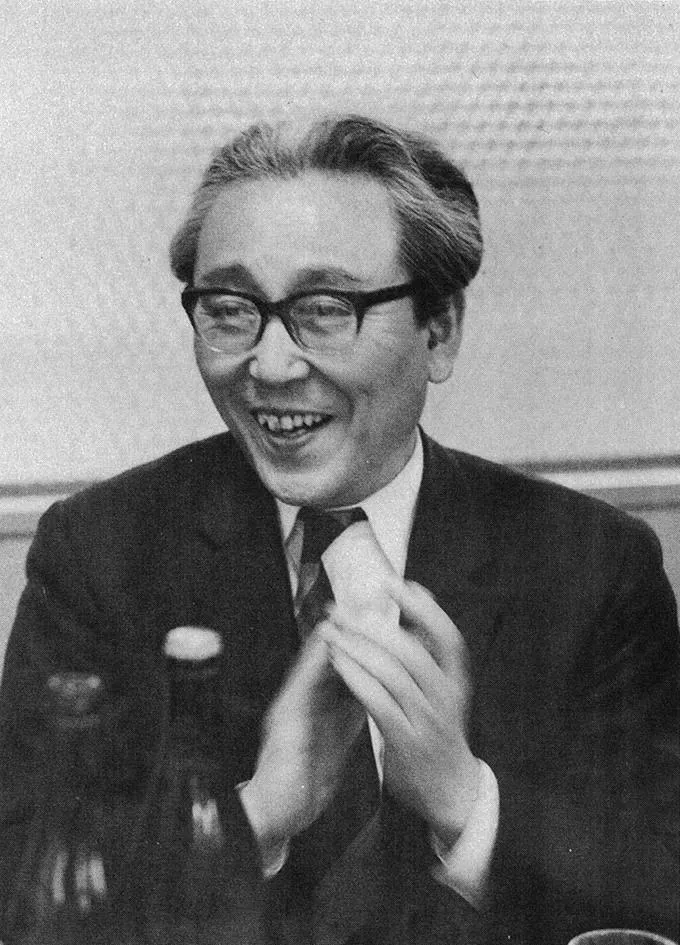
Japan’s Black Studies began in 1954 as a small study group calling itself Kokujin Kenkyu no Kai (Association of Negro Studies), a collective devoted to the international and diasporan study of African American history and culture. Led by Yoshitaka Nukina, a professor of nineteenth-century American literature teaching at Kobe Municipal College of Foreign Languages (later Kobe City University of Foreign Studies) and serious scholar of the abolitionist movement and Esperanto, Japan’s Black Studies brought into its fold individuals of diverse backgrounds—not just scholars, translators, and members of left-leaning political groups but also ordinary citizens interested in joining a group committed to antiracism.2
Once Nukina got a hold of the Japanese translation of W. E. B. Du Bois’sThe Negro(1915) in the mid-1950s, his outlook changed. This book was a rare find, originally published in 1944 during the resource-scarce wartime period under the Japanese title of Kokujinron (Negritude Theory). It recast Africans and peoples of African descent as agents shaping the movement of world history from earliest moments in human history to the turn of the twentieth century. Du Bois’sThe Negro upset the existing historiography and epistemology. Nukina, in response, began building a library of Black Studies literature and ultimately the study group itself in search of a new synthesis (Fig. 1.1).3
To frame this chance encounter between Du Bois’s text and Nukina as a moment of inauguration for Japan’s Black Studies is to insist that Du Bois’s critical thought is of utmost importance when highlighting longstanding Afro-Asian connections between Black America and Japan. Beginning at the turn of the twentieth century, Du Bois began charting the alternative historicity of the “Negro Problem” that linked Africans and peoples of African descent toward the directions of Japan, China, and India in global affairs with the following pronouncement: “The problem of the twentieth century is the problem of the color line; the relation of the darker to the lighter races of men in Asia and Africa, in America and the islands of the sea.”4 Such was the kernel of Du Bois’s Black internationalism. This very idea and framing, the “color line,” emerged during a particular phase in Du Bois’s life that coincided with an ascendant global modernity, just before the beginning of his prolific career that lasted for the next six decades. According to Nahum Dimitri Chandler, the foremost important scholar of Du Bois’ thought writing today, there existed a whole discursive terrain of the production of this specific idea and concept, the color line. Du Bois was then beginning to insert himself as an African American intellectual and activist in the aftermath of colonialism and amid rampant racial terror and violence to develop strategies to resolve this particular historical problem as a philosophical challenge that demanded reckoning at the dawn of the twentieth century: that is, to strive toward a resolution of the causes and consequences of antagonistic racial differences, that is, the problem of the color line, not just in the United States but also the world over.5
In the 1930s, for instance, Du Bois’s internationalism took the form of pro-Japan provocation, which was directed at the United States and Western Europe’s intransigence to delegitimize Japans’ ascent and expansion as a global power. He was not alone, however, in underscoring the significance of Japan and its leadership in international politics. The Black press coverage of Japan across the nation was often a favorable one, looking to this non-white global force with admiration, fascination, and even hope. For the followers of the Pacific Movement of the Eastern World, the Moorish Science Temple, and the Ethiopia Pacific Movement, moreover, the rise of Japan strengthened their religiosity, specifically their identification as “Asiatic” Black people. The pro-Japan sentiment further calcified their distinct vision of Black messianic nationalism, the precursor of the Nation of Islam, and in turn fueled state surveillance and repression against these groups.6
Du Bois’s identification with Japan, too, was deeply philosophical, but far from identical. Searchingly working to revise the blueprint of Western Marxism by way of developing the Afro-Asianphilosophy of world history, Du Bois sought to expand the horizon of possibility to advance Afro-Asian solidarity in the realm of discourse. He was at work in shaping an argument against the theory and practice of white supremacy, although his intervention into contemporary discourse proved impossible given Japan’s investment in its own race-making that was tightly bound up with empire building and colonialism.7
Despite errors in judgment, not to mention challenges of reconstructing democracy in the modern world where whiteness remained a cornerstone of capital’s expansion and even “a prerequisite for personhood,” to borrow from Charles W. Mills’s sharp critique of the underlying racism of Western political philosophy, the project of Afro-Asian solidarity that Du Bois pursued in the interwar period survived.8 It became the fertile ground from which participants of Japan’s Black Studies engaged in the study of the Negro Problem, seeing it as the totality of human sciences, a critical inquiry in the highest order; the objective of knowledge production rested on upholding the very fact of Black humanity in the world that denied diverse peoples of the darker world a solid foundation to stay human. They wrestled with the oft-quoted question that Du Bois famously posed in the opening chapter of The Souls of Black Folk, “Of Our Spiritual Strivings,” which appeared, at the same time, as a riddle of sorts: “How does it feel to be a problem?”9
This question was, in many ways, an invitation to ponder the matter of human existence for Africans and peoples of African descent in the diaspora not so much to mark “the Negro” as deviation from the norm, whiteness, or an object of condemnation, contempt, scrutiny, and pity. Rather, its orientation entailed sharpening a critical perspective called “second-sight” to bring about the radical transformation of existing epistemology, ethics, and ontology founded upon the principle of Herrenvolk, the German phrase that is defined as Anglo-Saxonism or master race.10 In other words, Du Bois characterized “the Negro” as a particular historical formation and even organization, invented by Europe, referring to the historicity of this subjectivity as integral to the very story of Europe’s becoming.11 Ruminating the meaning of European civilization and especially the place of Black worlds in it, Du Bois insisted that the exploration of the alternative historicity of the Negro problem to mean “a riddle of human life.”12 In the opening pages of The Souls of Black Folk, he, thus, wrote, “After the Egyptian and Indian, the Greek and Roman, the Teuton and Mongolian, the Negro is a sort of seventh son born with a veil, and gifted with second-sight in this American world.”13 Like other human organizations that forged civilization on the world’s stage, “the Negro,” he reminded, was constitutive of “the vast and eternal strivings of myriad of lives blended into one varying but continuous whole, which embodies in itself the Ideas and Ideals which have guided and are guiding humanity.”14 “For this,” Du Bois explained, “the greatest study to which the human mind has yet attained, is in reality a view of the answer of the mankind to the mystery of human existence.”15 Du Bois regarded the struggles of Africans and African-descended peoples to achieve salvation as “a gift” to the New World because it would ultimately help unlock “a mystery of human existence.”
Such was a deeper philosophical task that Nukina, the principal architect of Japan’s Black Studies, seized to make knowledge formations generative, particularly in conversations with Black Left discourse. Along with writings of Du Bois, the participants of this newly formed study group read and discussed the materials drawn from such progressive periodicals as Political Affairs, Masses & Mainstream, Monthly Review, and the Nation and books published by the International Publishers, the Communist Party of the United States of America (CPUSA)’s organ. They also read African American literature, especia...
Table of contents
Cover
Front Matter
1. Introduction
Part I. A Primer for Transpacific Correspondence
Part II. Crossing Over
Part III. Transpacific Black Freedom Studies
Back Matter
Trusted by 375,005 students
Access to over 1.5 million titles for a fair monthly price.
Study more efficiently using our study tools.
Frequently asked questions
Yes, you can cancel anytime from the Subscription tab in your account settings on the Perlego website. Your subscription will stay active until the end of your current billing period. Learn how to cancel your subscription
No, books cannot be downloaded as external files, such as PDFs, for use outside of Perlego. However, you can download books within the Perlego app for offline reading on mobile or tablet. Learn how to download books offline
Perlego offers two plans: Essential and Complete
Essential is ideal for learners and professionals who enjoy exploring a wide range of subjects. Access the Essential Library with 800,000+ trusted titles and best-sellers across business, personal growth, and the humanities. Includes unlimited reading time and Standard Read Aloud voice.
Complete: Perfect for advanced learners and researchers needing full, unrestricted access. Unlock 1.5M+ books across hundreds of subjects, including academic and specialized titles. The Complete Plan also includes advanced features like Premium Read Aloud and Research Assistant.
Both plans are available with monthly, semester, or annual billing cycles.
We are an online textbook subscription service, where you can get access to an entire online library for less than the price of a single book per month. With over 1.5 million books across 990+ topics, we’ve got you covered! Learn about our mission
Look out for the read-aloud symbol on your next book to see if you can listen to it. The read-aloud tool reads text aloud for you, highlighting the text as it is being read. You can pause it, speed it up and slow it down. Learn more about Read Aloud
Yes! You can use the Perlego app on both iOS and Android devices to read anytime, anywhere — even offline. Perfect for commutes or when you’re on the go. Please note we cannot support devices running on iOS 13 and Android 7 or earlier. Learn more about using the app
Yes, you can access Transpacific Correspondence by Yuichiro Onishi, Fumiko Sakashita, Yuichiro Onishi,Fumiko Sakashita in PDF and/or ePUB format, as well as other popular books in Historia & Historia africana. We have over 1.5 million books available in our catalogue for you to explore.