This book explores the social history of training and development and describes how ordinary training systems were linked to extraordinary events. Using instrumental case studies, the author explores the direct and indirect motives behind famous and infamous training systems of history such as the methods used by John Lennon and Paul McCartney in the Beatles, those used by the Third Reich in training forced labor, and in the social guidance films of the 1950's, among others. This book links modern-day themes of corporate and community social responsibility and social justice to historical cases of workplace and community training; in addition, it offers a unique view of business history that students and scholars can relate to, and contributes to a more thorough and robust inquiry into critical human resource development, ethics in the workplace, and the nature of training adults, in general.
Recently, I watched a job training video produced by the organization APAC. The 14-minute-plus orientation video not only detailed what a new worker could expect on the job, but also offered advice on topics such as how to manage finances, job safety, and performance improvement. Indeed, as a training professional and academic, I thought it was a well-done, first-rate piece of asynchronous training; however, what makes this training—parsimoniously defined here as activities that engender new behaviors—notable is not the training method itself, but the context of said training: APAC is the acronym for the Adult Performer Advocacy Committee and their training video1 is entitled, Porn 101.
That the pornography industry would even have a traditional employment training video is an example of the counterintuitive collocations that this book explores, that is, typical training juxtaposed against atypical context and vice versa. Broadly speaking, this book examines how the ordinary was situated within the extraordinary2 and, while this book is not the first to explore such a dynamic,3 it is sui generis in considering how common community-based and/or workplace training systems were linked to certain events or eras by contextualizing them as part of a social history of training.
By exploring a social history of training in situ within its socio-cultural context , we can also better position ourselves to reflect upon another theme I proffer, specifically, one that considers the axiology of training : is training amoral? Indeed, similar to the concept of truth, there is also no capital T in training; in other words, the construct of training, like with food, water, and oxygen, is—prima facie—value neutral until placed into a context.
As learning is often held within a specific setting (Tessmer & Richey, 1997), I take the position that, often times, training systems were, in practice, the means to facilitate the ends of what might be stratified as the good, the bad, and the dubious of society. So, for example, the value neutral training propositions of “properly utilizing an individual’s unused capabilities,” and “using small ratios of trainees to trainers” seamlessly transmogrify to bad training after we learn that these are excerpted from the al Qaeda training manual (U.S. Department of Justice, 2000, pp. 15, 47). And, in the same way, we may consider the good training used by the not-for-profit Dress for Success organization that empowers women by training them on life skills such as interviewing techniques and résumé writing so as to promote economic independence and self-sufficiency (Dress for Success, 2006).
By anthropomorphizing training —treating training itself as one of the human participants—and then ascribing subjective morality to it, we can more effectively step back and reflect on training’s fitness and virtue within a social context. This tests Waytz, Epley, and Cacioppo’s (2010) assertion that when something is anthropomorphized, it renders it worthy of moral care and consideration and, for our purposes, it allows us to better understand not only the processes of the training, but so, too, the goals.
For example, consider a thought experiment where training is a scoundrel, aiding and abetting sexism and the objectification of women as deliberately4 memorialized in the Hooters™ restaurant’s training handbook with its directives to the female servers:
Look wholesome, yet sexy … and, white bras only with make-up to be worn at all times. Approved shorts are to be tight-fitting also but should fit so that the buttocks of the server are not showing … jewelry and body piercings are to be subtle, yet sexy. (Hooters, 1999, 2007, pp. 5–6)
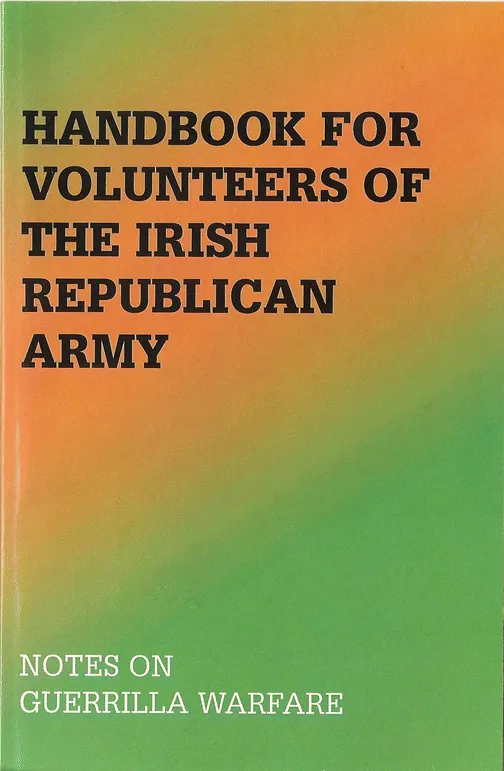
Consider, too, training as the plotting facilitator of fervid fundamentalism movements as documented in the Irish Republican Army’s (IRAs) training booklet (Irish Republican Army & Army, 1996) with its goal to unify all of Ireland by overthrowing British rule of Northern Ireland, or, as will be discussed, in the Hitler Youth training manual (Brennecke, Childs, & Dodd, 1938) where there were not only tips for recalling the working parts of a rifle and the correct way to perform flag-based semaphore, but also training that supported the narratives of social Darwinism and eugenics, the study of improving the qualities of the (Aryan) population by discouraging reproduction by persons having genetic defects or undesirable traits (e.g., Jews) (Childs & Brennecke, 2007).
However, one must take care when anthropomorphizing historical training as there is a risk of waxing too nostalgic. That is, it could be tempting to view even dysfunctional training, by way of training manuals or films from by-gone eras, with a certain amount of fondness; in fact, cultural historian Ron Robin warns, “final documents are often eulogies rather than autopsies” (Robin, 1995, p. 12). On the other hand, we, too, must be mindful not to hold harmless the actual human actors who carried out dysfunctional training solely because of a theoretical claim that there be no judgment as they were just following the instructions of a training manual (ala, The Banality of Evil, Arendt, 1963). Thus, while we can anthropomorphize these artifacts, we must remember that the training was created by humans for humans, so the training manual could be viewed as an actual proxy for the human trainer; as a result, we may evaluate the performance of artifacts in reflecting on past behavioral systems because the person/object boundaries are blurred (Gilchrist, 2012; Schiffer, 2002). To be sure, the historical record has documented training systems ’ active role in human events both in triumph and ignominy; this can be both gratifying and anxiety-provoking.
Finally, as a tertiary theme , this book explores historical examples of community-based and workplace training systems from a critical theory perspective. That is to say, I keep in mind the underlying contexts, assumptions, and frameworks of training programs from particular worldviews guided by the social, economic, and political systems in place at the time (Ritchie, Lewis, Lewis, Nicholls, & Ormston, 2013). By doing this, we are able to question that status quo and “give voice” to aspects of injustices, inherent power differentials, or oppressions that may have existed at that time. Marcuse described this as the dialectic of liberation and domination (Marcuse, 1971), and it is what Gaventa (1982) referred to as the roles of power and powerlessness.
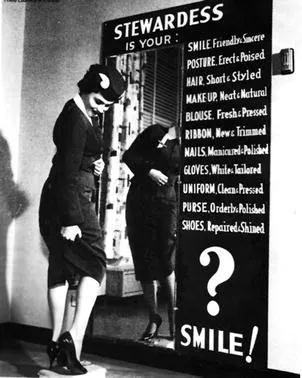
We can also glean the norms of the day that may be hidden within text using a critical hermeneutics and semiotics approach. So, for example, in the training manual How to be a flight stewardess; a handbook and training manual for airlinehostesses [emphasis added] (Smith, 1966),5 we quickly pick up on the not-so-veiled point that in the 1960s and 1970s it was understood that flight attendants were female, and females were flight attendants [not pilots].
The essays presented in this book were chosen for their instrumentality. That is, as instrumental cases they can provide the reader insight into not only the specific proposition—the social history of training —but also facilitate an understanding of the larger issues the cases themselves may present (Yin, 2013). The review of the training and...
Table of contents
Cover
Frontmatter
1. Introduction: On the Axiology of Training and Development—Is Training Value Neutral?
2. What Is Training?
3. Physiognomy: Training’s Woeful Countenance
4. Rosie the Riveter
5. Nazi Germany: Training Forced Labor
6. Self-Directed Training: John Lennon and Paul McCartney
7. “Pregnant Mothers Should Avoid Thinking of Ugly People”: Parenting Education and Child-Rearing Advice of the Nineteenth and Early Twentieth Centuries
8. When Job Aids Attack
9. Mental Hygiene Guidance Films and Duck and Cover
10. Social Responsibility and Final Thoughts
Backmatter
Trusted by 375,005 students
Access to over 1.5 million titles for a fair monthly price.
Study more efficiently using our study tools.
Frequently asked questions
Yes, you can cancel anytime from the Subscription tab in your account settings on the Perlego website. Your subscription will stay active until the end of your current billing period. Learn how to cancel your subscription
No, books cannot be downloaded as external files, such as PDFs, for use outside of Perlego. However, you can download books within the Perlego app for offline reading on mobile or tablet. Learn how to download books offline
We are an online textbook subscription service, where you can get access to an entire online library for less than the price of a single book per month. With over 1.5 million books across 990+ topics, we’ve got you covered! Learn about our mission
Look out for the read-aloud symbol on your next book to see if you can listen to it. The read-aloud tool reads text aloud for you, highlighting the text as it is being read. You can pause it, speed it up and slow it down. Learn more about Read Aloud
Yes! You can use the Perlego app on both iOS and Android devices to read anytime, anywhere — even offline. Perfect for commutes or when you’re on the go. Please note we cannot support devices running on iOS 13 and Android 7 or earlier. Learn more about using the app
Yes, you can access Famous and (Infamous) Workplace and Community Training by David M. Kopp in PDF and/or ePUB format, as well as other popular books in Business & Etica aziendale. We have over 1.5 million books available in our catalogue for you to explore.