As a hart longs for flowing streams,
so longs my soul for thee, O God.
My soul thirsts for God, for the living God…
Deep calls to deep
at the thunder of thy cataracts;
all thy waves and thy billows have gone over me.
Psalm 42:1–2, 6
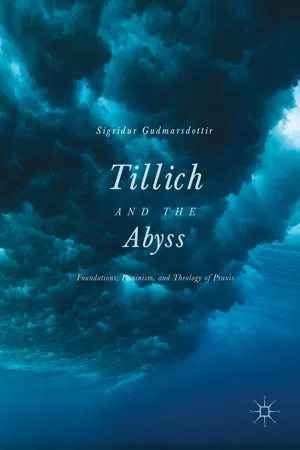
Abyssus abyssum invocat. Deep calls to deep. The painting above the altar showed Jesus sitting in the shade of a tree at some distance, surrounded by the disciples. A stream was flowing and the hart was drinking from it. The wooden frame gave the inscription: “Lord, teach us to pray.” She imagined that the disciples represented the human soul longing for God, much in the same way as the hart drinks from the water in Psalm 42. Only, in Icelandic, her native language, there is no hart in Psalm 42, but a hind. “Eins og hindin þráir vatnslindir, svo þráir sál mín þig, ó Guð.” The animal drinking from the watery deep at the other side of the altar appealed to her. When she prepared the Eucharist and kneeled in prayer, they would look at each other. Sometimes, when she was alone in the church, waiting for parents to bring a child to baptism, a bride and groom, the bereaved to bring a body of a loved one for burial, or a troubled soul looking for consolation, she would look up and talk to the hind. In this mutual longing and joy for the running water, abyss called to abyss.
Abyss invokes abyss. While she recited Psalm 42 and her eyes drank from the flowing streams from the abysmal painting in the old country church, she was gradually getting acquainted with a more sinister aspect of the abyss. The fishing vessels would sail in and out of the narrow fjord in the sweet breeze of summer as well as the wild winds of fall. She experienced the fecundity and the sheer terror of the ocean. Fierce storms and high waves would from time to time wipe out the road and throw rocks and dirt over the narrow strip of ground between mountain and sea. But this infinite horizon of multiplicities would also bring the boats home full of fish, the silver currency which kept all of the local and most of the national economy going. On this narrow strip of land between the mountain and the sea, life and death, nurture and destruction, were no strangers to each other. On Seaman’s Day, the first Sunday of June, the church would be crowded with fishermen and their families, asking for blessing, celebrating the gifts of nature’s womb, remembering those who were lost at sea and whose bodies were never found. In her language, those bodies lost in the abyss were said to have “received a wet tomb.” Strangely, womb and tomb go by the same word in Icelandic. They are called leg, that is, “lay.”
On the evening of Seaman’s Day, there was a loud banging on the door of the vicarage. A fisherman was at the door, slightly drunk. He had slept during the morning service and was going out to sea. He was frantic, and it took her some time to find out what he wanted. From early childhood he had gone to church on this day, to receive a blessing with his father and his family. And now the trawler was leaving to sail on the abyss, and he had not been blessed. She lifted up her hands in blessing and he lowered his head. She watched him walk light-footed down to the harbor, a little less afraid of the abyss.
Gazing into the Abyss
Paul Tillich wrote one poem in his life, a poem of the abyss.
1 He was at the tender age of seventeen, and his mother had just died of cancer. The poem contains only six verses, yet it enunciates many of the themes that later made its author a world-famous theologian, themes of being afraid of the deep and yet fascinated by it. The poem poses questions about meaning, identity, relation to the world, existence, and death. It offers no answers to the questions. The young poet pauses, sighs, and calls upon an abyss of dark depth, into which he regrets having directed his gaze:
Am I then I, who tells me that I am?
Who tells me what I am and what I shall become?
What is the world’s and what life’s meaning?
What is being and passing away on earth?
O abyss without ground, dark depths of madness!
Would that I had never gazed upon you and were sleeping like a child. 2
In his youthful verse, Tillich depicts himself as glimpsing a groundless abyss of misery and madness, which produces excruciating questions. This view offers no way back to security, to what he would later call “dreaming innocence.” The language of the passage into adulthood is familiar, mediated through mythic symbols and fairy tales in the Western tradition, in stories of figures such as Eve, Pandora, Bluebeard’s wife, each of whom had paid the ultimate price of their curiosity and knowledge. The apple shows bite marks, the box is agape, the bloody chamber swings its door open, and young Tillich has asked an ontological question of groundless proportions.
A few decades earlier, Nietzsche had warned his readers that if they gazed long enough into an abyss, the abyss would gaze back at them. 3 Tillich may not have been an ardent Nietzsche-reader during these first years of the twentieth century, but the horrific and fascinating shadow of the Nietzschean abyss likely loomed about in his intellectual and emotional surroundings. Tillich later inscribed the temptation to gaze and to know, in ontological terms as “the fall into finite freedom,” or as the “estranged,” anxious freedom of humans in language. 4 More than half a century after his sleepless night of staring into the abyss, Tillich defined ontological courage by citing Nietzsche: “He who seeth the abyss but with eagle’s eyes, he who with eagle’s talons graspeth the abyss: he hath courage.” 5 Tillich continues: “These words reveal the other side of Nietzsche, that in him which makes him an Existentialist, the courage to look into the abyss of nonbeing in the complete loneliness of him who accepts the message that ‘God is dead.’” Although claiming a mediating stance on the boundaries of the essential and the existential, 6 Tillich remained firmly by Nietzsche’s side in terms of abyss-gazing. The nocturnal terror of the adolescent Tillich, where the gazer suddenly becomes the one gazed upon, became a recurring theme in his adult theology. The image he used for approaching the numinous character of the abyss is Nietzsche’s ocular metaphor. Gazing occurs, according to Tillich, at the most primary level of human individuation. “The question,” Tillich writes, “‘What precedes the duality of self and world, of subject and object?’ is a question in which reason looks into its own abyss—an abyss in which distinction and derivation disappear.” 7
The practice of looking into the abyss has a long and rich history, emerging at the intersections of theology and philosophia prima, especially around inquiries of the mystical. In classical Greek he abyssos is used as an adjective to designate something “bottomless” or “unbounded” (bythos means ‘bottom’ in Greek). In the Septuagint, he abyssos is a translation of the Hebrew tehom. 8 In the New Testament, the word is used for the place of the dead and the demons, but, for mystical writers of the thirteenth century, such as Hadewijch, Meister Eckhart, and John Tauler, it became one of the chief images for the depth of the Godhead. 9 When the concept of the creative forces of the Hebrew tehom in Gen. 1:2 was related to the khora of Plato’s Timaeus, the linguistic affiliation gave rise to a fruitful metaphysical exploration of the connections between God, the human self, and the world. Timaeus’ account of the creation of the world was the privileged cosmological text of antiquity. The marriage of the biblical tehom and the platonic khora was forged in the Christian neoplatonism in which Western metaphysics is heavily invested. In theology and philosophy, the concept of the abyss has been used throughout the ages to denote a groundlessness of being, the depth structure of the human condition, and the reality of God.
Abyss-gazing in the twentieth century launched into new depths and anxieties about the faltering of truth foundations. Tillich famously called the experience of the sinking of modern certainties, such as those of science and of human potentials of progress, “the shaking of the foundations.”
[It ]is only now, in the decade in which the most horrible social earthquake of all times has grasped the whole of mankind, that the eyes of the nations have been opened to the depth below them and to the truth about their historical existence. Yet still there are people, even in high places who turn their eyes from this depth, and who wish to return to the disrupted surface as though nothing happened. 10
For Tillich, “the disrupted surface” offered no shelter in the face of non-being. He seems to be looking for a mirror with unexpected depth instead of a sheer surface reflection.
Like hit and run drivers, we injure our souls by the speed in which we move on the surface; and then we rush away, leaving our bleeding souls alone. We miss therefore, our depth and our true life. And it is only when the picture we have of ourselves breaks down completely, only when we find ourselves acting against all expectations we had derived from that picture, and only when an earthquake shakes and disrupts the surface of our self-knowledge, that we are willing to look into a deeper level of our being. 11
Tillich’s next move, however, is very different from Nietzsche. If looking into the abyss had signaled the death of God for Nietzsche, Tillich maintained that the courage to gaze into those cracks and depths of non-being, to accept finitude with all its horror, brings one to the question of God. Instead of being cynical about the shaking of the foundations, or clinging to the surface for shelter, Tillich advises his audience to keep on looking and diving. “Let us rather plunge more deeply into the ground of our historical life, into the ultimate depth of history. The name of this infinite and inexhaustible ground is God.” 12 Thus, for Tillich, cynicism and surface clinging are methods used to shy away from the abyss. Instead, he uses Nietzsche as a theological resource and advocates more courage, more looking, more abyss.
The abyss is one of the main metaphors of the postmodern condition, and is often used to depict relativism, imbalance, and the dissolution of values, foundations, and natural resources. Michael M’Gonigle argues that this imbalance is being countered by several movements, including groups of “ecologists, feminists, First Nations, human rights, social justice advocates, peace activists, anti-racists, community groups, labour and poverty organizations and others.”
13 M’Gonigle claims that these counter-movements form a certain unity which is difficult to circumscribe because of the postmodern distrust of unities, grounds, and metaphysics. This distrust is symbolized by the figure of the abyss in the very title of M’Gonigle’s article. Instead of the abyss of postmodern imbalance, M’Gonigle suggests a new kind of naturalism that focuses on divine immanence.
It is to an awareness of this immanence to which a being in-relation might be drawn and toward which a value of r...