- 220 pages
- English
- PDF
- Available on iOS & Android
eBook - PDF
About this book
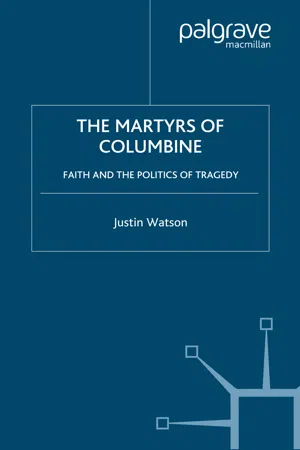
On April 20, 1999, Eric Harris and Dylan Klebold killed twelve fellow students and one teacher at Columbine High School in Littleton, Colorado. Two of the victims of the Columbine massacre, Cassie Bernall and Rachel Scott, reportedly were asked by the gunmen if they believed in God. Both supposedly answered 'Yes' and were killed. Within days of their death, Cassie and Rachel were being hailed as modern-day martyrs and are seen by many American evangelicals as the sparks of a religious revival among teenagers. Cassie and Rachel, as innocents martyred for faith, also became useful symbols for those seeking to advance a conservative political agenda and to lay the blame for Columbine at the feet of their liberal opponents. According to police investigators, however, Cassie and Rachel may never have been asked by their killers about God. They may have been simply victims of a senseless crime rather than martyrs to a cause. The Martyrs of Columbine provides a careful examination of the available evidence and attempts to discover what really occurred. Despite these questions the martyr-stories continued to be told and the religious and political use of Cassie and Rachel continues. The popular significance of the martyrs of Columbine persists, and may even be growing. How and why is this happening? The Martyrs of Columbine is a groundbreaking investigation of what this tragedy has come and will come to mean in American religion, politics, and culture.
Information
Table of contents
- Cover
- THE MARTYRS OF COLUMBINE
- Contents
- Preface
- Introduction
- Chapter 1 Martyrdom
- Chapter 2 Cassie Bernall
- Chapter 3 Rachel Scott
- Chapter 4 The Politics of Tragedy
- Chapter 5 Defenders and Debunkers
- Chapter 6 Conclusions
- Notes
- INDEX
Trusted by 375,005 students
Access to over 1.5 million titles for a fair monthly price.
Study more efficiently using our study tools.
Frequently asked questions
Yes, you can cancel anytime from the Subscription tab in your account settings on the Perlego website. Your subscription will stay active until the end of your current billing period. Learn how to cancel your subscription
No, books cannot be downloaded as external files, such as PDFs, for use outside of Perlego. However, you can download books within the Perlego app for offline reading on mobile or tablet. Learn how to download books offline
Perlego offers two plans: Essential and Complete
- Essential is ideal for learners and professionals who enjoy exploring a wide range of subjects. Access the Essential Library with 800,000+ trusted titles and best-sellers across business, personal growth, and the humanities. Includes unlimited reading time and Standard Read Aloud voice.
- Complete: Perfect for advanced learners and researchers needing full, unrestricted access. Unlock 1.5M+ books across hundreds of subjects, including academic and specialized titles. The Complete Plan also includes advanced features like Premium Read Aloud and Research Assistant.
We are an online textbook subscription service, where you can get access to an entire online library for less than the price of a single book per month. With over 1.5 million books across 990+ topics, we’ve got you covered! Learn about our mission
Look out for the read-aloud symbol on your next book to see if you can listen to it. The read-aloud tool reads text aloud for you, highlighting the text as it is being read. You can pause it, speed it up and slow it down. Learn more about Read Aloud
Yes! You can use the Perlego app on both iOS and Android devices to read anytime, anywhere — even offline. Perfect for commutes or when you’re on the go.
Please note we cannot support devices running on iOS 13 and Android 7 or earlier. Learn more about using the app
Please note we cannot support devices running on iOS 13 and Android 7 or earlier. Learn more about using the app
Yes, you can access The Martyrs of Columbine by J. Watson in PDF and/or ePUB format, as well as other popular books in Social Sciences & Personality in Psychology. We have over 1.5 million books available in our catalogue for you to explore.