- 432 pages
- English
- ePUB (mobile friendly)
- Available on iOS & Android
eBook - ePub
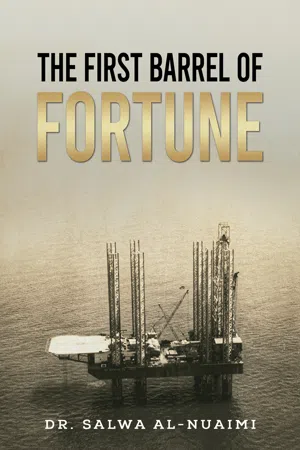
The First Barrel of Fortune
About this book
In the span of one generation, the nation witnessed the rapid modernisation, following the discovery of oil, from a scattered tribal land with a primitive economic structure to the regional and global economic powerhouse the UAE became by the late twentieth century. Through interviews from those who steered and experienced the changes, The First Barrel of Fortune explores the development of not only the economy but also the changes on Emirati society's three pillars – the tribe, Islam and the family. "He who does not know his past cannot make the best of his present and future, for it is from the past that we learn." – Sheikh Zayed bin Sultan Al Nahyan
Information
Chapter One
Introduction
1.1. General Introduction
Modernisation is the phenomenon of this and the last century: all cultures and societies have witnessed and are still undergoing revolutionary change. In the second half of the twentieth century, the United Arab Emirates (UAE) changed rapidly from scattered isolated tribes to a united modern country. This book explains how this change occurred, and why it is unique, not only by comparison with western societies but also other Middle Eastern oil-rich countries.
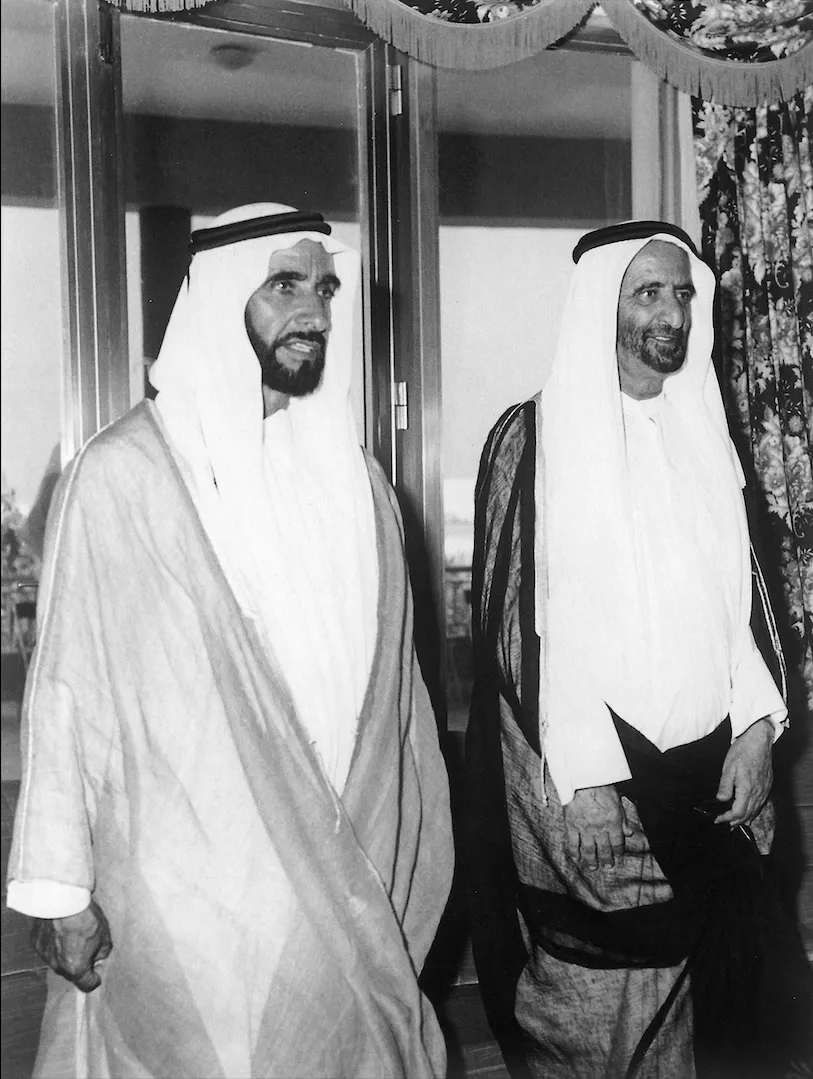
Sheikhs Zayed bin Sultan Al Nahyan and Rashid bin Saeed Al Maktoum, Life-long companion in the path of the union. ‘Source: Al-Khaleej newspaper’
The role of the oil industry in the transformation of the UAE was substantial and vital and this book will highlight its impact and that of other significant players. UAE political leadership contributed to this change through its efforts to develop the country. The government used the oil revenues to construct the basic infrastructure, to fund education, health services, social services and housing and to improve the living standards of the community. The other major player in this task was Abu Dhabi National Oil Company (ADNOC) which, through its unique relations with the Government, succeeded in transforming its identity from a commercial oil company whose main concern was to earn revenue into a more comprehensive mission. ADNOC has played an important role in the development of the UAE, investing its revenues in a wide range of modernisation schemes.
The relationship between ADNOC and the Government is unique. On one hand ADNOC is a commercial organisation and part of the global economic network yet at the same time has close links with the Abu Dhabi Government with self-assigned national obligations.
This book seeks to shed light on the leadership role of the oil industry in meeting the demands of the developing UAE society. It also probes the complexities of the Emirati character; the changes to this identity and how it has been able to cope with the stresses of modernisation. The study evaluates the challenges and opportunities brought about by modernisation and more lately by globalisation. It concludes that appropriate tools, techniques, and strategies will be developed to maintain the UAE’s growth and development.
1.2. Literature and Sources
The book draws on a variety of sources: academic books, official papers and reports published by ADNOC and its Group of Companies, and government publications of the UAE Government. It also includes a series of semi-structured interviews based on questionnaires presented to ADNOC employees and various categories of people who personally experienced the process of modernisation. Various secondary resources, mainly Arabic with some European and American, have been used. Some of these books were used in the purpose of documenting historical events that took place in the region. Others were used to analyse case studies on different societies beside the UAE. Mohammed Al-Faris, Fatima Al-Sayegh, Mohammed Al-Fahim and Faleh Hanzal were some of the sources used for documenting the period the Emirates witnessed before the oil boom and shortly after. Lorimer and Fenelon were another source for documenting the old era. However, the main limitation of these books is that they tended to stop around the 1960s. Many writings in this area have covered this period but do not try to link older events to the situation at the end of the twentieth century.
Development is a multi-faceted concept in terms of its meaning, its aims, its methods and its results. Ali Khalifa Al-Kuwari defines development as a ‘direct process creating essential changes to the majority of the population, providing a decent standard of living’. But this process needed other factors to be translated into an improvement in the conditions of the individuals living in the society. Where Al-Kuwari refers to changes to the economic power, Mohamed Al-Jawhari maintains that development is the utilisation of universal effort for the benefit of everybody at three levels:
- Technological development, which involves changing the means of production, transport, communications and distribution.
- Economic development, which requires a more productive and effective way in the fields of organisation, planning and distribution.
- Social development, as the social system is activated and mobilised.
Ahmad Zaki Badawi defines social development as the bringing about of a series of vital structural and functional changes. And while this is valid, the experience of the Emirates is unique.
Rafia Ghubash and Amneh Khalifeh, Aisha Al Sayar, Yousif Al-Hasan and other authors have all studied the Emirates, and the Emirati process of modernisation. But these studies were descriptive and were mostly about the impact of oil on the social life of the people: they failed to ascertain the attitude of the UAE’s population to the modernisation process. This task is undertaken in the book. Mana Al-Otaiba’s publications describe the events surrounding the establishment of OPEC and ADNOC. Yousif Al-Sayigh, Mazin Al-Bindik and Sameer Al-Tinear also studied the dramatic changes in the 1970s and the shift in the power relationship between the oil-producing countries and the international oil companies. However, these studies did not go far beyond the 1970s. This book illustrates the events from the 1970s to beginning of the twenty-first century, analysing of the changes in the personality and political culture of the UAE people.
Non-Arabic scholars have also studied the Middle East and the development of the oil industry. Lorimer and Fenelon described the Arabian Gulf before the advent of oil; Pierre Trizean wrote about the changes that took place in the seventies and the unfair conditions that Arabs had to go through in demanding their legal rights. This book also considers some of the theories explaining social change and modernisation. Herbert Spencer, who is considered the leader of the classical development school, argued that societal change and progress moved societies from simplicity to become more complicated social organisms. Henry Maine interpreted social change by describing it as ‘development from status to contract’. Weber provides the most perceptive theory of institutional change. Another theorist taken in consideration was Parsons, who was able to provide a much more compelling reconstruction of the modern world as he demonstrated the extraordinary distance that has been travelled from band societies to the societies of the twenty-first century. Smelser discussed differentiation in terms of distinctive historical events and elaborated specific processes of change, and his definition was taken as a model for the changes in UAE society.
This book also considers political culture and socialisation, reviewing several classic literatures on this subject, such as Almond and Verba. But the problem with these theories is that they are Eurocentric and fail to fully comprehend the differences of Arab culture. Nor do they specifically relate to the Arab experience both pre and post the discovery of oil, nor can they take full account of the unique experiment in the UAE where the state in conjunction with ADNOC has defined a ‘new theory of change’.
What is unique about the UAE is that it has experienced economic modernisation while safeguarding its traditional cultural values. The new generation, while adopting the western culture, has preserved the heritage and traditional values of previous generations. To date it has been a unique success story.
1.3. Organisation of the Book
The book first presents an historical review of the development of the UAE in the pre-oil period. It examines the three basic elements or pillars of traditional Arab society: the tribe, Islam and the family. It also describes and explains the dramatic impact of the discovery of oil, and its effect on the economy, politics and culture including the role of women in modern UAE. The book presents interviews with local people who witnessed the transitional period and its impact on society. It briefly reviews theories explaining social change and modernisation and then focuses on the second major actor in promoting social change, the national oil company in the UAE, namely ADNOC. It describes its organisation structure, gives the historical background of the company and illustrates its objectives. In particular the book shows the other side of ADNOC: serving the Emirati community, educating and training the Emirati workforce, and promoting environmentally friendly policies. In part this is based upon a schedule of interviews with ADNOC managers.
The book aims to achieve the following objectives:
- Documentation and evaluation of the oil story in the Emirates with all the surrounding consequences.
- Analysis of the changing Emirati personality from the 1960s to the end of the twentieth century.
- Clarification of the impact of the oil industry as the leading agent of modernisation and the direction setter in the Gulf State.
- Evaluation of the role of strategic decision-makers in the transformational process and the choices available to them in their leadership challenge.
- Identification of suitable strategies to meet ongoing challenges and to sustain the industry’s main objective of serving the country’s interest, growth and development.
Chapter Two
The UAE — An Overview
2.1. Introduction
This chapter sets the context of the book by describing, in Section One, the traditional basis of UAE society within the parameters of the Arab-Islamic milieu during the pre-oil period. In Section Two it examines the dramatic impact of the discovery of oil on traditional society and its subsequent rapid modernisation; the effect on the economy, politics and culture will also be described. An attempt has also been made to analyse the dichotomy of the western-style bureaucratic organisation of the oil industry within the traditional cultural framework of the country. Against this backdrop, the factors that contributed to the emergence of the UAE as an independent state in 1971 have been traced. Furthermore, attention has been drawn to the parallel existence of modern constitutional forms of government with traditional tribal institutions in order to define the unique political culture of the UAE. This descriptive analysis provides a suitable background for an understanding of the leading role that the oil industry played in meeting the transformation demands of society.
2.1.1. The UAE at a Glance
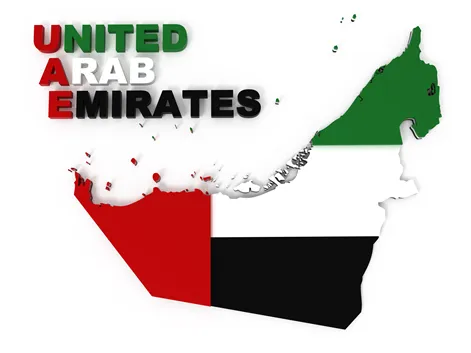
The UAE occupies a strategic geographical position. It comprises a broad strip of land flanking the southern shores of the Arabian Gulf between the Qatar peninsula and the Gulf of Oman with 800km of coastline. By virtue of this location, the region of the Emirates has lain in close proximity to the great centres of civilisation and the leading maritime trade routes since the eighteenth century. Within the confines of a relatively narrow area, the country has different topographical zones – desert, mountains, coastal areas and inland oases. For thousands of years, the inhabitants of the region have practised a variety of different subsistence strategies – such as hunting, agriculture, pasturing and most importantly, fishing and pearling in the waters of the Gulf. From pearls to oil, the UAE’s link with the sea has remained crucial from prehistoric times to the present.
The UAE includes the seven emirates of Abu Dhabi, Dubai, Sharjah, Ajman, Umm Al Quwain, Ras Al Khaimah and Fujairah. Although the united country was only created in 1971, the origins of these political entities go back to the beginning of the eighteenth century. Their people are descendants of the nomadic Bedouin of the desert, of the semi-settled agriculturists in the inland oases and of the maritime tribal groups on the Arabian Peninsula coast. It is clear, therefore, that the traditions which dominate the new states can be traced back many thousands of years. Even though the ruling families and inhabitants of the seven emirates comprising the UAE can trace their origins to separate tribal or dynastic roots, they nonetheless form part of a common heritage. The geographical area supports inhabitants who share the same occupational strategies and cultural orientation. This is further reinforced by a common faith in Islam, a common language – Arabic – and similar historical experiences. These are important factors which made possible their subsequent integration.
2.2. Section One: Life in The Pre-Oil Period
Prior to the discovery of oil, the inhabitants of the region, faced with a harsh climate and environment and very limited resources, had to fight for survival. There was nothing but desert, sea and camels, their only means of transport. Trade and seafaring were the two main occupations of Gulf inhabitants, which combined with simple subsistence agriculture in the scattered inland oases to form the basis of the economy of the emirates. Until the mid-1950s, the means of production was primitive and limited; it varied with the natural environmental characteristics of each area. This was reflected in the lifestyles and mentality of the people at that time, which have been depicted by many people. Al-Fahim, a successful businessman, writes in his autobiography that people used to live on dates, camel milk and fish throughout the year. He also remarks that the difficult living conditions both in the desert and at sea was exacerbated by their extreme poverty and destitution (1996). Thesiger, a well-known traveller in the Arab world, describes Abu Dhabi in the fifties as a small-dilapidated town (1959). Al-Hassan recounts that people used to travel on camelback for seven days to complete the distance between Abu Dhabi and Al Ai...
Table of contents
- Title Page
- About the Author
- Dedication
- Copyright Information ©
- Acknowledgments
- Foreword
- Biography of H.E. Ahmed Bin Khalifa Al-Suwaidi
- Important Abbreviations
- Chapter One Introduction
- Chapter Two The UAE — An Overview
- Chapter Three The Detour in Local Industry: 1930s to 1960s
- Chapter Four The Challenges, Opportunities and Threats
- Chapter Five Development In the United Arab Emirates (1970-1995)
- Chapter Six Abu Dhabi National Oil Company (Adnoc)
- 6.5. Conclusion
- Chapter Seven ADNOC’s Role in Serving the Emirates Community
- Chapter Eight Summary And Conclusion
- Bibliography
- Appendix One
- Appendix Two
- Equipment Hiring Agreement
- End Notes
Trusted by 375,005 students
Access to over 1.5 million titles for a fair monthly price.
Study more efficiently using our study tools.
Frequently asked questions
Yes, you can cancel anytime from the Subscription tab in your account settings on the Perlego website. Your subscription will stay active until the end of your current billing period. Learn how to cancel your subscription
No, books cannot be downloaded as external files, such as PDFs, for use outside of Perlego. However, you can download books within the Perlego app for offline reading on mobile or tablet. Learn how to download books offline
Perlego offers two plans: Essential and Complete
- Essential is ideal for learners and professionals who enjoy exploring a wide range of subjects. Access the Essential Library with 800,000+ trusted titles and best-sellers across business, personal growth, and the humanities. Includes unlimited reading time and Standard Read Aloud voice.
- Complete: Perfect for advanced learners and researchers needing full, unrestricted access. Unlock 1.5M+ books across hundreds of subjects, including academic and specialized titles. The Complete Plan also includes advanced features like Premium Read Aloud and Research Assistant.
We are an online textbook subscription service, where you can get access to an entire online library for less than the price of a single book per month. With over 1.5 million books across 990+ topics, we’ve got you covered! Learn about our mission
Look out for the read-aloud symbol on your next book to see if you can listen to it. The read-aloud tool reads text aloud for you, highlighting the text as it is being read. You can pause it, speed it up and slow it down. Learn more about Read Aloud
Yes! You can use the Perlego app on both iOS and Android devices to read anytime, anywhere — even offline. Perfect for commutes or when you’re on the go.
Please note we cannot support devices running on iOS 13 and Android 7 or earlier. Learn more about using the app
Please note we cannot support devices running on iOS 13 and Android 7 or earlier. Learn more about using the app
Yes, you can access The First Barrel of Fortune by Dr. Salwa Al-Nuaimi in PDF and/or ePUB format, as well as other popular books in History & 20th Century History. We have over 1.5 million books available in our catalogue for you to explore.