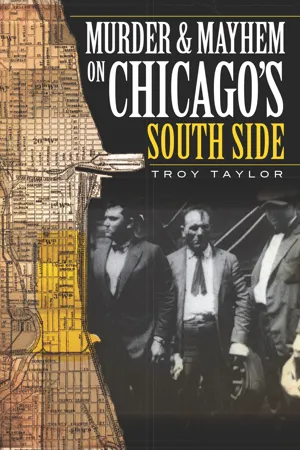
- 253 pages
- English
- ePUB (mobile friendly)
- Available on iOS & Android
eBook - ePub
Murder & Mayhem in Chicago's South Side
About this book
Lurking below the Loop, behind the industry-driven energy of Chicago, lies the mysterious criminal underworld of the South Side. Recounting criminal exploits of legends like Alphonse Capone, as well as lesser-known stories like the Car Barn Bandits, Troy Taylor captures the intricacies of the most infamous stories of Chicago's South Side. From the gruesome murders committed by the unassuming H.H. Holmes to the mysterious death of Marshall Field Jr., join Taylor as he revisits the South Side's prosperous middle-class days and vividly depicts the strange and horrific crimes that have cast new light on the character of these too often overlooked neighborhoods.
Information
Topic
StoriaSubtopic
Storia nordamericanaTHE RISE AND FALL OF AL CAPONE
There is no name in Chicago history that is as recognizable as that of Al Capone. The South Side gang leader virtually ruled the city for years and amassed an unimaginable fortune during Prohibition. Capone’s story actually begins with two of the most prominent criminals in pre-Prohibition Chicago, John Torrio and Jim Colosimo.
Torrio was born in Italy and came to New York as a child in 1884. His family settled on the Lower East Side, and while still in his early teens, Torrio led his own gang and gained a reputation for viciousness. More importantly, though, he gained a reputation for being intelligent and quick thinking. He never carried a gun—a fact that speaks volumes about him during a time when even the lowliest street thug carried at least one weapon—because he always surrounded himself with men who carried out his dirty work. By age twenty-two, he owned his own bar and whorehouse and became known as a fixer for politicians.
Torrio had a cousin in Chicago named Vittoria Moresco, who was one of the city’s leading brothel keepers. In 1902, Vittoria married the flamboyant Jim Colosimo, an Italian who had worked his way up from cleaning streets to head the Street Laborer’s Union and the City Streets Repairer’s Union. At this point in his career, Colosimo was befriended by the two most powerful political bosses in Chicago: First Ward committeeman Michael Kenna and alderman John Coughlin. Within the First Ward lay the notorious Levee District, an area filled with whorehouses, saloons and gambling parlors. Kenna and Coughlin employed Colosimo as their collector in return for the votes of all of the members of his unions. This ensured his political clout and maintained his ability to operate his criminal enterprises without interference.
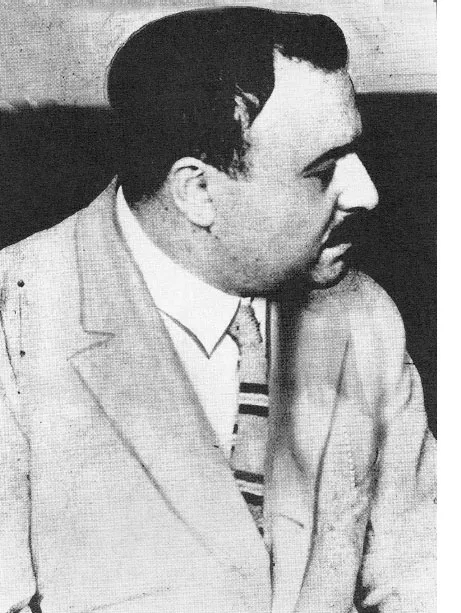
“Big Jim” Colosimo set the stage for organized crime in Chicago and brought John Torrio to the city. Courtesy of the Chicago Daily News.
Colosimo’s marriage to Torrio’s cousin Vittoria made him even more prosperous. By 1912, he and his wife owned more than two hundred brothels, catering to all income levels. His base of operations, Colosimo’s Café, was decorated in the most lavish style and was one of the most popular restaurants in Chicago. He entertained wealthy residents, city officials and even show business types like Enrico Caruso, the famous Italian tenor.
Colosimo’s wealth made him a target for extortionists, and three different attempts were made on his life. In 1909, Vittoria convinced her husband to call John Torrio, her cousin in New York. Torrio took the train to Chicago and dealt with the extortionists by subcontracting two gunmen to kill them at the money drop. Torrio was asked to stay on in Chicago, and out of gratitude Colosimo put the young man in charge of his empire of saloons, whorehouses and gambling dens. In 1915, he also gave Torrio permission to set up his own criminal organization. Torrio purchased a building at 2222 South Wabash Avenue, which would be known from then on by the number of its address, the Four Deuces. Torrio set up a brothel on the top floor, gambling operations on the second and third and a bar at street level. The Four Deuces soon became the headquarters for a criminal enterprise far beyond anything that Colosimo could have imagined. Within a short time, Torrio was controlling over one thousand enterprises that were all devoted to drinking, gambling or sex. His stable of gunmen eliminated anyone who opposed him.
When Prohibition arrived in 1920, Torrio was determined to profit from the opportunities that it presented. He soon realized that the only way for his organization to operate was by sitting down with rival gangs and marking out territory; otherwise the battle to supply illegal liquor to the thousands of speakeasies that sprang up would lead to chaos and ongoing war. He went to his mentor, Colosimo, and presented his plans to him.
Colosimo, though, was not interested in Torrio’s plans. At the time, he was distracted by his romantic interest in a woman named Dale Winters, a young musical comedy actress who had been stranded in Chicago after an unsuccessful theatrical tour. She accepted an invitation to perform in one of Colosimo’s establishments, and the two fell in love. In 1920, he divorced his wife and married Dale three weeks later. Torrio was astonished to find that Colosimo couldn’t be bothered to protect his operations from his rivals. This left only one solution to the problem in Torrio’s mind: Colosimo had to be eliminated.
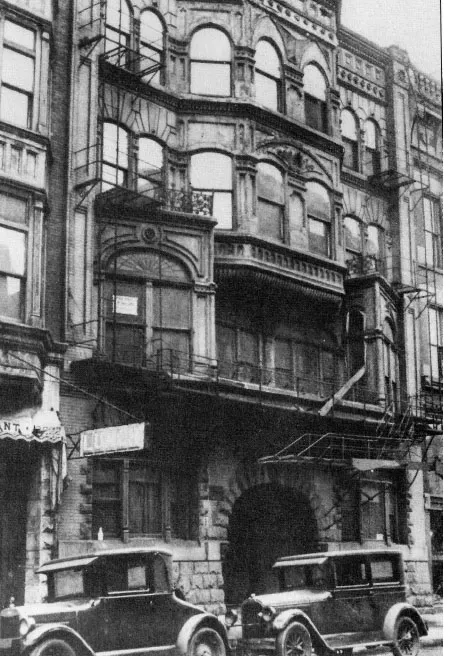
The notorious Four Deuces was the headquarters for the Torrio-Capone gang on the South Side. Courtesy of the Chicago Historical Society.
On the afternoon of May 11, 1920, Colosimo left for his restaurant with plans to meet his new wife later that night for dinner. When he arrived, he went to his office and spoke with his secretary, Frank Camilla, who had been meeting with the chef about that evening’s dinner. Colosimo spoke with them for a few minutes and then, about 4:30 p.m., he allegedly took a telephone call from Johnny Torrio, who explained that a shipment of whiskey was being delivered to the restaurant and that Colosimo had to sign for it personally. Colosimo left the office and walked out into the lobby. A moment later, two shots were fired. Frank Camilla went to investigate the sounds and found Colosimo’s dead body lying on the floor of the lobby with a bullet wound in the back of the head. The second bullet was lodged in the plaster wall. From the angle of the shots, the killer, the police concluded, must have been hiding in the cloakroom.
The funeral of Big Jim Colosimo was held on May 15 and was the first of the gaudy burial displays that were the fashion in Chicago’s underworld throughout the 1920s. Thousands attended, including both gangsters and politicians, further underscoring the alliances between the two.
After Colosimo’s death, Torrio immediately took over the dead man’s entire operation. He had an army of between seven and eight hundred men working for him, but he always had room for more. One of the soldiers he recruited was a young man from Brooklyn whom he had known since he was fourteen. In 1921, Torrio invited this man to come to Chicago and work for him. His name was Alphonse Capone.
Capone was born in Naples, Italy, in 1899, and his parents immigrated to America shortly after the turn of the century. The family—father, mother, five sons and one daughter—settled in Brooklyn. As a child, Capone was given little education and almost no parental supervision. As he grew older, he made a name for himself as a slugger and a gunman with the famous Five Pointers gang in New York, of which several of his cousins were members. In his final days in Brooklyn, friends remembered him as a good-looking, affable, soft-spoken young man, distinguished only by his flashy clothes and skill as a dancer. His good looks were marred in a tangle with a knife-wielding Sicilian that left a long scar on his left cheek that ran from the top of his ear to the corner of his mouth.
Capone started out on the bottom rung of the ladder in Chicago, working as a promoter outside one of Torrio’s whorehouses. At that time, Capone met Jake Guzik, a member of a large Jewish family involved in prostitution. They became friends, and Guzik went on to become the treasurer for the Torrio-Capone organization. Capone’s esteem for Guzik was clearly shown in 1924, when Joe Howard, a hijacker, made an anti-Semitic remark to Guzik. Capone shot Howard six times in front of witnesses in a saloon on South Wabash Avenue. Capone was interrogated about the shooting by Assistant State’s Attorney William McSwiggin but was released for lack of evidence after all of the witnesses developed memory loss.
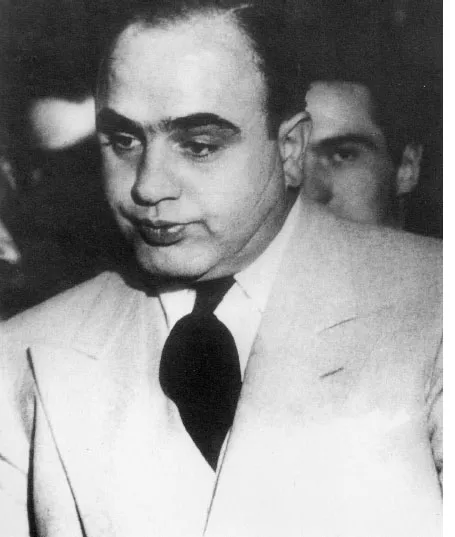
Al Capone, “King of Chicago.” Courtesy of the Chicago Historical Society.
In 1922, Capone became Torrio’s first lieutenant and the chief of his gunmen. They took over a number of breweries and then began to organize the major Chicago gangs, assigning each its own territory. In return, the gangs forced saloons to stock Torrio alcohol and also protected shipments and assisted distribution. The North Side of the city fell to Dion O’Banion. The West Side was divided between Terry Druggan and Frankie Lake, leaders of the Valley Gang. Torrio controlled the South Side, and the rest was divided among mobsters Ralph Sheldon, Danny Stanton, Frank McErlane and Joe Saltis.
Two gangs left out of Torrio’s syndicate were the Klondike O’Donnell gang, based in Cicero, and the unrelated O’Donnell brothers, led by Spike O’Donnell, who at the time was in prison for bank robbery. When he got out, Spike began hijacking Torrio’s trucks and moving in on the territory of Frank McErlane and Joe Saltis. Spike O’Donnell and his men were massacred and driven out of the city between 1923 and 1925.
In 1923, Torrio and Capone, motivated by the election of a reform mayor, William E. Dever, who closed down thousands of speakeasies, decided to move their headquarters from the Four Deuces to the Hawthorne Inn, located in the suburb of Cicero. This independent township was outside the jurisdiction of the mayor of Chicago. The area was dominated by the Western Electric plant, which paid its employees well, meaning that the local populace had plenty of money to spend in the gambling parlors and saloons. Cicero also had a large number of Czech immigrants, who were accustomed to thick, Bohemian beer. This was supplied by the West Side O’Donnells, who had not joined the Torrio-Capone syndicate.
Torrio struck a deal with them, and soon the South Side gang was firmly entrenched in Cicero. Soon after, Torrio left everything in Capone’s hands and traveled to Italy with his mother and several million dollars. He bought his mother a villa and deposited the money in an Italian bank. He then returned to Chicago.
The first challenge that awaited Capone in Cicero was taking over the city government. His chance came with the mayoral election of 1924 between Democrat Rudolph Hurt and Republican Joseph Z. Klenha. The election took place on April 1, and Capone threw the weight of the syndicate behind Klenha. By this time, Capone had brought his entire family to Chicago, and his brothers, Ralph and Frank, helped bring out the vote for Klenha and other syndicate candidates. They were assisted in this task by more than two hundred gunmen, who stationed themselves at polling booths and made sure that voters only cast ballots for the candidates of choice. Those who opposed them were violently beaten, and those who went along were allowed to vote as many times as they wished.
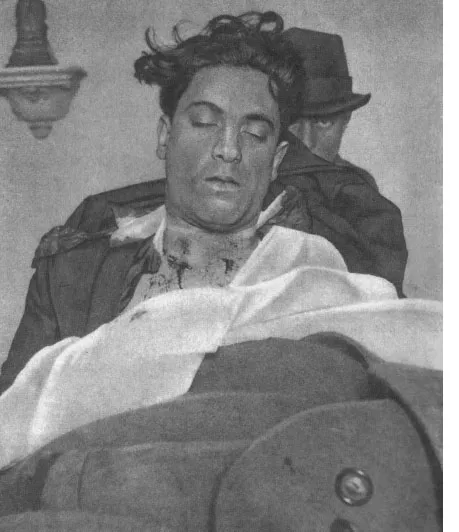
Frank Capone was killed during election day violence in Cicero in 1924. Courtesy of the Chicago Daily News.
News of the violence and voter fraud reached county judge Edmund K. Jarecki, who ordered seventy policemen to go into Cicero and stop it. They wore plainclothes and arrive in unmarked cars. As they drove past the Western Electric plant, the first mobster they spotted was Frank Capone. The officers stopped and jumped out of their cars. Frank, thinking that they had come to kill him, reached for his gun and was cut down by shotgun blasts before he could get to it. The police then emptied their revolvers into his body as he lay bleeding on the street.
Frank was twenty-nine years old and was given a magnificent gangland funeral. He was placed in a silver-plated casket, and the modest Capone home on South Prairie Avenue was filled with more than $20,000 worth of flowers. A procession of one hundred cars took the casket to Mount Carmel Cemetery. Capone had lost a brother, but he had won the election. The mob was now in charge of Cicero.
Not long after Capone made inroads into Cicero politics, trouble began to brew in Chicago. Problems had started to develop between Torrio-Capone ally Dion O’Banion, leader of an eccentric legion of mostly Irish gunmen, and the Gennas, a family of Sicilian brothers from Taylor Street who supplied Torrio with poorly made liquor that was manufactured in neighborhood stills. The Gennas had started selling their cheap whiskey on the North Side of Chicago, O’Banion’s territory, in a clear infringement of the agreement that had been made. O’Banion complained to Torrio, who was reluctant to intervene. The Gennas were extremely violent and politically well connected, so Torrio did not want to provoke them. Impatient, O’Banion hijacked a Genna delivery truck in retaliation. Torrio used his diplomatic skills to keep the Gennas from violence but couldn’t stop them from flooding other territories with their liquor. O’Banion was fed up, and it was clear that the Torrio truce was breaking down.
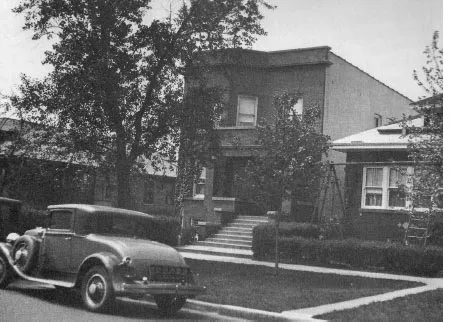
Capone’s modest two-flat home on South Prairie Avenue. The house still stands today as one of the last remaining relics of the Capone era in Chicago. Courtesy of the Chicago Historical Society.
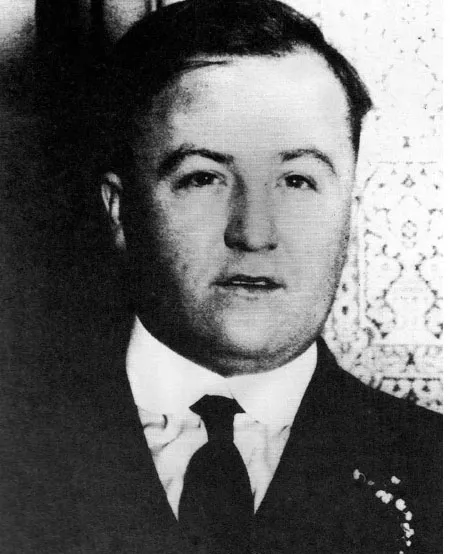
Dion O’Banion, the eccentric leader of Chicago’s North Side gang. Along with Hymie Weiss and George “Bugs” Moran, he used political influence and violence to control operations in his part of the city.
O’Banion went on the offensive, selling his beer and liquor all over the South Side. Torrio constantly tried to negotiate with him rather than use the violence that Capone began to urge. Dozens of meetings were held between Torrio, Capone and O’Banion, and each ended with the same results. O’Banion always promised to recognize the territory of the South Side operation, but he never kept the promise. The Gennas wanted to hit O’Banion and so did Capone, but Torrio asked them to wait. Torrio knew that if he killed O’Banion, it would mean all-out war in Chicago.
Unfortunately for Torrio, his hesitation to move against O’Banion led to his arrest on liquor charges. O’Banion convinced Torrio that he wanted to sell off one of his whiskey distilleries, and when Torrio arrived to inspect the property, Police Chief Collins, leading twenty officers, raided the place and arrested O’Banion, Earl “Hymie” Weiss and Torrio. O’Banion and Weiss escaped serious charges, but this was Torrio’s second arrest for violating Prohibition, which meant that he would be serving mandatory jail time. It was time, Torrio finally decided, to get rid of O’Banion.
On November 10, 1924, O’Banion was shot to death in a flower shop that he owned in downtown Chicago. The Genna brothers, Capone and Torrio were all questioned about the murder, but all were released after supplying airtight alibis. The investigation, headed by ace detective Captain William “Shoes” Shoemaker, went nowhere.
O’Banion’s death ignited an all-out war in Chicago. A few days after the gang leader’s lavish funeral, the first of a dozen or more attempts were made to kill Capone. Gunmen in a closed car overtook his limousine one evening, crowded it to the curb and raked it with bullets from front to back. Luckily, Capone was not in the automobile at the time. His driver was seriously injured.
Two months later, Torrio was shot twice outside of his home at 7011 Clyde Avenue. He survived the attack and, in February, was prosecuted on Prohibition charges and sentenced to serve nine months at the Waukegan County Jail. When Torrio got out of prison, he decided to turn his operations over to Capone and leave Chicago for good. He spent time in Italy and then moved to New York, where he went into the real estate business with the blessing of Meyer Lansky and Charles “Lucky” Luciano. He also helped to establish a liquor cartel along the Atlantic seaboard and established himself as an elder statesman of the underworld. He died (of natural causes) in a barber’s chair in 1957.
Torrio’s departure from Chicago shoved Al Capone into the violent spotlight of the Chicago underworld, and it made him the top man in the city at only twenty-five years of age. He had a lavish lifestyle, more money than he could spend and a bloody gang war on his hands. The new leader of the O’Banion operation, Hymie Weiss, offered to stem further violence by having Capone hand over John Scalise and Albert Anselmi to him. It was a poorly kept secret that the two Capone mobsters had been in the flower shop when O’Banion was murdered. Capone refused and tried to knock off Hymie Weiss instead. He was ambushed on Michigan Avenue in the middle of the afternoon but, despite a storm of machine-gun fire, escaped unharmed.
Weiss and former O’Banion sidekick George “Bugs” Moran retaliated next. On May 26, 1925, they murdered Angelo Genna, one of Capone’s supporters. A month later, Mike Genna was killed by the police as he, John Scalise and Albert Anselmi were about to ambush George Moran. Scalise and Anselmi killed two police officers before escaping. Tony Genna was murdered soon after by the Gennas’ own gunman, Giuseppe Nerone, who Moran may have paid to assassinate him. The surviving Gennas soon left for Italy.
Hymie Weiss struck again on September 20, 1926. Capone was sitting in the restaurant of the Hawthorne Hotel in Cicero when the next assassination attempt took place. With the street outside packed with shoppers and automobiles, no one noticed as cars filled with North Side gangsters slowly cruised down Twenty-Second Street. One of the cars accelerated away from the others, and as it passed the restaurant...
Table of contents
- Front Cover
- Half Title
- Title Page
- Copyright
- Contents
- Acknowledgements
- Introduction
- The Rise and Fall of Al Capone
- The Murder Castle
- The Car Barn Bandits
- The Mysterious Death of Marshall Field Jr.
- “Il Diavolo”
- Chicago’s “Thrill Killers”
- Death of a Union Leader’s Wife
- The Cold Case of the Grimes Sisters
- Richard Speck—Born to Raise Hell
- Bibliography
- About the Author
Trusted by 375,005 students
Access to over 1.5 million titles for a fair monthly price.
Study more efficiently using our study tools.
Frequently asked questions
Yes, you can cancel anytime from the Subscription tab in your account settings on the Perlego website. Your subscription will stay active until the end of your current billing period. Learn how to cancel your subscription
No, books cannot be downloaded as external files, such as PDFs, for use outside of Perlego. However, you can download books within the Perlego app for offline reading on mobile or tablet. Learn how to download books offline
Perlego offers two plans: Essential and Complete
- Essential is ideal for learners and professionals who enjoy exploring a wide range of subjects. Access the Essential Library with 800,000+ trusted titles and best-sellers across business, personal growth, and the humanities. Includes unlimited reading time and Standard Read Aloud voice.
- Complete: Perfect for advanced learners and researchers needing full, unrestricted access. Unlock 1.5M+ books across hundreds of subjects, including academic and specialized titles. The Complete Plan also includes advanced features like Premium Read Aloud and Research Assistant.
We are an online textbook subscription service, where you can get access to an entire online library for less than the price of a single book per month. With over 1.5 million books across 990+ topics, we’ve got you covered! Learn about our mission
Look out for the read-aloud symbol on your next book to see if you can listen to it. The read-aloud tool reads text aloud for you, highlighting the text as it is being read. You can pause it, speed it up and slow it down. Learn more about Read Aloud
Yes! You can use the Perlego app on both iOS and Android devices to read anytime, anywhere — even offline. Perfect for commutes or when you’re on the go.
Please note we cannot support devices running on iOS 13 and Android 7 or earlier. Learn more about using the app
Please note we cannot support devices running on iOS 13 and Android 7 or earlier. Learn more about using the app
Yes, you can access Murder & Mayhem in Chicago's South Side by Troy Taylor in PDF and/or ePUB format, as well as other popular books in Storia & Storia nordamericana. We have over 1.5 million books available in our catalogue for you to explore.