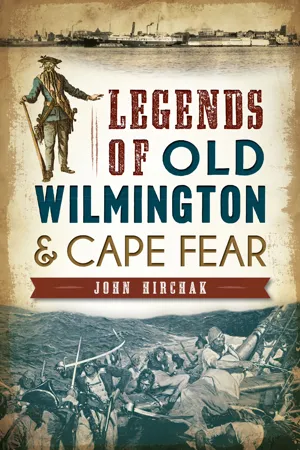
- 204 pages
- English
- ePUB (mobile friendly)
- Available on iOS & Android
eBook - ePub
Legends of Old Wilmington & Cape Fear
About this book
Situated on the banks of the Cape Fear River, Wilmington is awash in unusual tales and legends. A prevalent pirate hideaway, the area harbored the infamous Blackbeard and the cunning Calico Jack Rackham. Since its initial settlement, the region has witnessed an abundance of fantastical lore, including passionately fought duels, explosive train wrecks, Revolutionary and Civil War heroes and some legends that are said to take the form of apparitions. At the local Cape Fear Wine & Beer pub, the ghost of a fallen redcoat can't seem to get enough of a frothy porter brewed from yeast salvaged from an early nineteenth-century shipwreck. Wonder at these and other fascinating and strange tales as local author John Hirchak reveals the legendary history of Wilmington and Cape Fear.
Information
Topic
GeschichteSubtopic
Nordamerikanische Geschichte1
THE YEAST THAT BINDS
My father met Pee Wee in 1950 in basic training. The two men, along with tens of thousands of others, were preparing for what looked like inevitable war in Korea. By the time my father and Pee Wee were deployed, they were fast friends. They, like many young men who prepare for battle, had come to terms with their own mortality. The two friends agreed that if, for any reason, one of them failed to make it through the war, the survivor would forever offer the first sip of a newly popped beer to the memory of the one who had fallen. Pee Wee did not survive the war. So no matter where my father was or what the occasion, whenever he opened a beer, he would bow his head; whisper, “To Pee Wee”; and then spill the first sip to the ground. As a little boy, watching my father ritually pay homage to a fallen comrade, I began to understand the intrinsic spiritual and patriotic value of beer as it related to the American experience.
AN AMERICAN TRADITION
The history of beer in America began in 1587, when colonists brewed their first ale with corn. In 1607, the first imported beer reached the New World, but for the most part, the colonists could not afford such costly goods. So in 1609, the colonies began recruiting English brewers to join them in America. Yet in 1620, when the Mayflower arrived at Plymouth Rock, beer was still in short supply. The crew, fearing they might not have enough beer for their return voyage, quickly ushered the Pilgrims ashore and set sail. Eventually, trade with mother England reached the point where most colonists, especially along the coast, were able to afford the finer British beers, and imports steadily rose. By the mid-1700s, porter, a mix of light and dark malts, was created and quickly became a favorite with dockhands, soldiers and the working class. By 1770, the average colonist consumed thirty-four gallons of beer, five gallons of distilled spirits (mainly rum) and one gallon of wine annually.
Porter, like all other beers, is dependent on yeast to carry out fermentation. Yeast essentially converts carbohydrates into alcohol and carbon dioxide. Before yeast is added during the final stages of brewing, the liquid concoction is called “hopped wort.” It’s only after the yeast is added and the fermentation is complete that it officially becomes “beer.” For many eighteenth-century brewers, their yeast strain was their most protected secret ingredient.
THE ROUSE’S TAVERN MASSACRE
Taverns, often referred to as public houses or “pubs,” played an important role in colonial America. The tavern was a gathering place and a link to the overall world. It was a place to socialize, share news of the day, administer law and conduct business. It was also an ideal environment to discuss insurrection. In fact, much of the planning and organizing for the American Revolution took place in taverns.
Rouse’s Tavern was located eight miles north of Wilmington on the Old New Bern Road (present-day Market Street, near Ogden). Before and during the war, the tavern was a gathering place for many revolutionaries such as Cornelius Harnett, known as the Samuel Adams of North Carolina and the colony’s most influential revolutionary; William Hooper, a signer of the Declaration of Independence; Major General Robert Howe, who later was in command of the Continental army’s Southern Department; Lieutenant Colonel Thomas Bludworth, a former tavern owner and gunsmith who proved merciless against Wilmington’s Loyalist and Tory factions; and Major James Love, who, like his good friend Bludworth, was ruthless in his treatment of Loyalists, Tories and, later, British troops.
After the British occupied Wilmington on January 29, 1781, Bludworth and Love led a campaign of harassment against the occupiers. A popular tactic was to kill the British sentries along the roads leading into Wilmington and then hide out and ambush the dragoons that were sent to capture them. By February, Major James Craig, who was in charge of the occupation, had issued orders for the capture or killing of both Bludworth and Love.
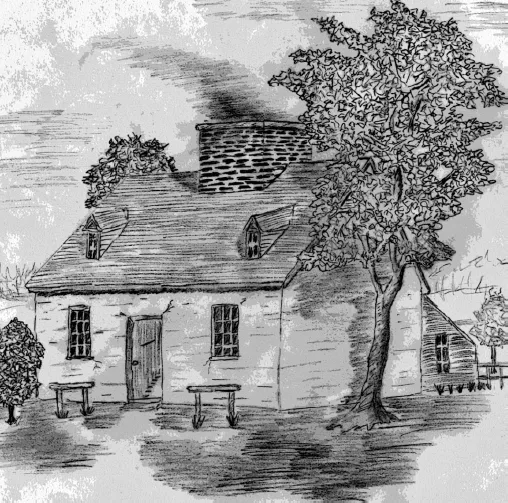
Pubs like Rouse’s Tavern (also known as the Eight Mile House because of its distance from Wilmington), were an important gathering place for revolutionaries before and during the War for Independence. Illustration by John Hirchak.
In March, Major Love and about a dozen Patriots, under orders from Brigadier General Alexander Lillington, were busy rustling cattle in the vicinity of present-day Military Cutoff Road in order to keep them out of British hands. After one typical foray, Love and his men stopped by Rouse’s Tavern for a taste of brew. Despite an act of war, no man was beyond partaking in a pint of fine English porter. As the men drank, laughed and regaled one another with recent wartime escapades, evening enveloped them. It was just after midnight when the men decided that, rather than return to camp, they would sleep on the tavern floor and ride out at first light. Feeling secure in their surroundings, a sentry was not posted.
Unbeknownst to Major Love, Major Craig had been made aware of the militiamen’s presence at Rouse’s Tavern. Craig led at least sixty redcoats on a quick march to the pub. Upon their arrival, Craig issued an order that no quarter be given. The redcoats quietly entered the tavern and bayonetted and shot to death at least ten men, many of whom were still asleep. Major Love was awakened and attempted to escape, slashing wildly with his cutlass and using his saddle as a shield. He made it out the front door, but the redcoats quickly surrounded him, forcing him to retreat to a mulberry tree about thirty yards from the tavern. The redcoats attacked en masse, goring Love to death with their bayonets.
When Bludworth, who was camped perhaps a mile away, heard shots being fired, he gathered his militia and rode in the direction of Rouse’s Tavern. By the time the Patriots arrived, the British were long gone. Bludworth and his men immediately came upon the gored remains of Major Love. The militiamen entered the tavern and discovered the bloody carnage. An old woman and several children who were witness to the massacre were found huddled near the fireplace. The old woman told Bludworth how the redcoats had murdered the men in their sleep. She also said one Patriot was taken alive and questioned about the whereabouts of other militiamen, assured that he would be released unharmed if he cooperated. The Patriot told the redcoats that three militiamen could be found at a farm a few miles up the road. The redcoats then shot the Patriot through the head. Bludworth was incensed and swore revenge for those who died in what was to become known as the Rouse’s Tavern Massacre.
OLD BESS
Over the next few months, Bludworth designed and built an especially long-barreled rifle capable of accurately carrying a special two-ounce ball up to seven hundred yards distance. He named the rifle “Old Bess” and practiced until he was proficient. On July 4, Bludworth; his eldest son, Tim; and Jim Paget, a family friend, paddled a canoe with a week’s worth of rations out to Point Peter, just north of the city where the two branches of the Cape Fear River converged. Upon their arrival, Bludworth shared his plan to snipe British soldiers in revenge for the Rouse’s Tavern Massacre. He told Tim and Paget that if either man wished to leave, they could do so without reprisal. They all agreed to remain together.
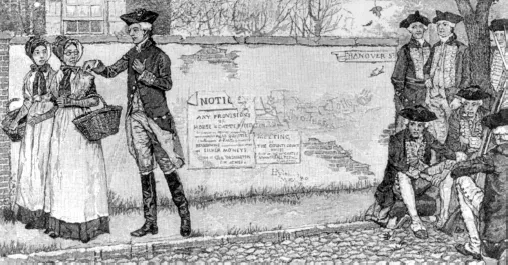
British redcoats along Hanover Street, directly across the river from Point Peter. From The British in Wilmington, Howard Pyle (1853–1911). Courtesy of Library of Congress.
At the time, Point Peter was studded with old-growth cypress trees. The monarch (or largest) tree was a seven-foot-diameter behemoth that rose at least seventy feet in height before coming to the first of its branches. From all outward appearances, this cypress was solid; however, the lower portion was actually hollow. The hollow could be accessed only from a well-concealed tunnel a few feet from the base. Once inside the tree, the men built a platform and used an auger to drill several holes through the trunk, both for light and for a clear view of the Wilmington docks that ran along the eastern shore of the Cape Fear River. Bludworth was confident that the prevalent downriver winds would help mask the smoke from each shot and conceal their whereabouts.
Twice a day, British troops gathered along the docks between Princess and Grace Streets in order to receive their rum rations. The British had long issued daily alcohol rations to their troops. Up until 1655, British sailors were issued a daily ration of one gallon of beer. After 1655, when Jamaica was brought under British rule, some naval captains began issuing rum. By 1740, the Royal Navy officially issued half a pint of strong rum daily—half at noon and half at sunset. By 1756, the British military had switched to grog (two parts water to one part rum) and, shortly thereafter, began adding lime or lemon juice to combat scurvy (thus the nickname “limey”).
Though the rum ration ceremony implies that only rum or grog were served, the army often substituted other alcoholic beverages, including French brandy, strong wine, claret, spruce beer or porter. In 1775 alone, British troops received 375,000 gallons of porter for their daily rations. Whatever the drink, the men would be called to gather and the ration distributed. Typically an ornate, brass-lined barrel or rum tub was used to serve the drink. After the men received their rations, toasts would be raised, and then the men would consume their liquor.
As the redcoats and dragoons gathered in the vicinity of Nelson’s Pub, Bludworth took aim and fired. The redcoats were taken by surprise when a fellow soldier’s head snapped back from a bloody head shot. Four soldiers quickly grabbed the downed man and dragged him into Nelson’s. The remaining soldiers scanned the surrounding area, unsure from which direction the shot had come. Moments later, a second soldier’s head snapped back, and he, too, fell. As he was dragged into Nelson’s, the remaining redcoats and dragoons quickly began searching the shoreline, but a third shot sent them scurrying.
For days, Bludworth and his accomplices used Old Bess to great effect, shooting and killing British soldiers up and down the Wilmington riverfront. Though the British searched the eastern shore of the river and along Eagles Island, they never crossed over to Point Peter, believing it was simply too great a distance for anyone to snipe from. It wasn’t until a week of terror had passed and dozens of redcoats and dragoons had fallen that a Loyalist arrived in town and mentioned seeing three men with an extremely long rifle canoeing out to Point Peter. That afternoon, twenty redcoats were dispatched with orders to cut down every tree on the point. As one tree after another fell, Bludworth and his accomplices remained hidden in their hollow. At nightfall, the troops bedded down, and the three men crawled out of the tunnel and made their way to their hidden canoe. A sleeping British sentinel awoke to the sounds of rustling reeds and called out, “Who goes there?” Bludworth imitated the snort of a wild pig, and the sentinel was fooled into believing it was nothing more than an animal. The guard eventually fell back to sleep, and the three men escaped.
THE BOTTLE WRECK
On the eastern shore of the River Arun in West Sussex, England, sits the village of Littlehampton. In 1825, an English brig carrying casks and bottles of a special porter bound for America was lost in the rough seas of the English Channel just offshore of Littlehampton. The loss of a single ship was of little notice since over one thousand British ships sank in 1825 alone. It wasn’t until 163 years later that the ship, or at least its cargo, became significant.
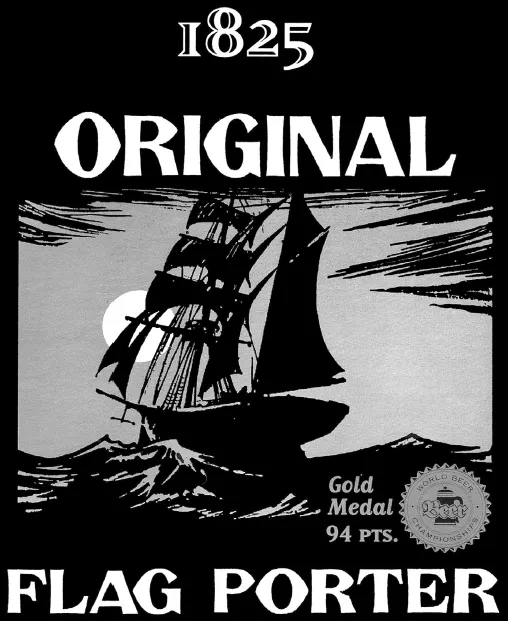
The Original Flag Porter 1825. The ship on the label is a depiction of the English brig that sank off Littlehampton, today known as the Bottle Wreck. Courtesy of Darwin Brewery.
In 1988, Dr. Keith Thomas, a prominent microbiologist who worked for an English brewing, analysis and training company named Brewlab, was attending a workshop on the history and brewing techniques for classic English porter. Dr. Thomas was interested in re-creating a porter based on an original, early nineteenth-century recipe and was looking for ideas on how to reclaim the integrity of this particular beer. While at the workshop, Dr. Thomas overheard a conversation about an English brig that went down off the coast of Littlehampton in 1825. In 1983, divers discovered the wreck and recovered a significant number of half-pint porter bottles. Though the wreck is officially listed as Site 5013, due to the number of bottles scattered throughout the debris field, divers affectionately refer to the site as the “Bottle Wreck.”
Shortly after the workshop, Brewlab sponsored a dive on the Bottle Wreck in hopes of finding something that would help them re-create their nineteenth-century porter. To Dr. Thomas’s delight, the dive team successfully recovered two unbroken half-pint bottles with intact corks and wax seals. Intact seals meant the contents were uncompromised, and there was a chance the original strain of yeast used to brew the porter might have survived.
Under normal conditions, it would be highly unlikely for a yeast fungus to survive for 163 years. Light, air and heat would eventually break down the yeast. However, because the Bottle Wreck rested in sixty feet of dark, frigid English Channel water and the bottles were sealed closed, it was possible for a few cells of yeast to survive. There was concern the first bottle had become contaminated, so tests were carefully conducted on the contents of the second bottle. Culturing initially resulted in nothing but bacteria and mold growth, but then, after numerous failed attempts, a single strain of yeast was produced. By using the original recipe, early nineteenth-century brewing techniques and this original strain of yeast, Dr. Thomas was able to create (not re-create), an original porter. Darwin Brewery, UK, bought the rights to the recipe and began brewing and aging the beer as the Original Flag Porter 1825. In 1991, the beer was reintroduced to the world.
WALT
After British troops withdrew from Wilmington on November 18, 1781, the riverfront developed around the shipping industry’s needs: docks, warehouses and offices. After the state docks opened a few miles farther downriver in 1952 and the departure of the railroad in 1960, Wilmington fell into a period of indifference. One by one, the old shipping and railroad structures were torn down. The riverfront, for the most part, grew stagnant from disinterest and disuse. Then, in the early 1990s, Wilmington began to experience a renaissance. A strong downtown revitalization effort, as well as a keen interest in saving the city’s past, brought new life to the riverfront.
In 1999, half of a hideous riverfront parking deck—built in 1966 atop the stretch of land near where Nelson’s Pub once sat and where dozens of British soldiers fell to Thomas Bludworth’s long rifle—was torn down. The following year, a nine-story condominium complex was built, with the upper eight floors reserved for residential use and the ground floor for retail. It was in one of these units that Cape Fear Wine & Beer opened in 2003. The pub’s goal was to introduce locals to hundreds of rare, interesting, classic and exotic beers from around the country and the world. And so it was fitting that shortly after opening, a brewery rep, whose portfolio happened to include hard-to-find English beers, dropped in.
As the staff gathered, the rep went into his sales pitch. He started to rattle off a few of the more common English beers and why he thought they might be a good fit for the pub. But it was soon evident that the folks at Cape Fear Wine & Beer weren’t interested in a sales pitch. So the rep stopped talking, reached into his bag and withdrew a bottle of Original Flag Porter 1825. He placed it on the bar, and the demeanor of the group suddenly changed.
The rep told them the story of how the porter came to be. He showed off the bottle’s label, which depicted a drawing of the English brig that became known as the Bottle Wreck after it sank all those years ago. He then popped the bottle and almost reverently poured a few ounces into several glasses, commenting on the dark mahogany color and frothy head. “This,” he said, “is the closest you will come to a traditional porter.” And though the staff heartily agreed that the porter would be a welcome addition to their pub, what proved to be most memorable about that day was something the rep said just before he downed his portion of the porter. One of his ancestors (whom he called Walt), served under Major James Craig, and, he said, it is quite possible that Walt drank this exact same porter while here in Wilmington. Perhaps, he added, even while sitting at or near this very spot, for this is just how original this recipe is.
When the first shipment of the Original Flag Porter 1825 arrived at Cape Fear Wine & Beer, it was assigned a narrow berth in one of the wall-to-wall coolers that ran the entire length of the south side of the pub. The beer was one of over three hundred available, and with so many siblings, it would need to prove it was special in order to stand out from the crowd. And indeed, this is exactly what happened.
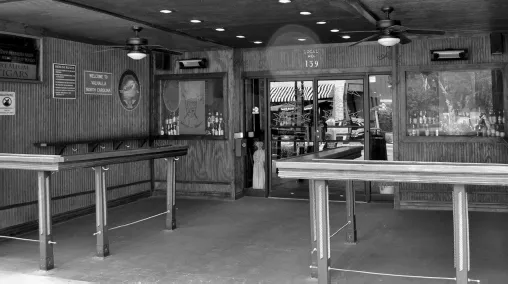
The alcove to Cape Fear Wine & Beer. Beyond these doors, the ghost of Walt can still be found, seeking out his daily ration of porte...
Table of contents
- Front Cover
- Title Page
- Copyright
- Dedication
- Contents
- Acknowledgments
- Introduction
- 1. The Yeast That Binds
- 2. Topsy
- 3. Maggie Holladay
- 4. The Duel
- 5. Pirates of Cape Fear
- 6. Cannons and Characters
- 7. Abraham Galloway
- 8. The Children of Bulluck Hospital
- 9. Widow Moores Creek
- 10. The Unusual Tale of Captain John Harper
- 11. Scald Head
- 12. Rattlesnake Grade
- 13. The Boy from Hamburg
- Bibliography
- About the Author
Trusted by 375,005 students
Access to over 1.5 million titles for a fair monthly price.
Study more efficiently using our study tools.
Frequently asked questions
Yes, you can cancel anytime from the Subscription tab in your account settings on the Perlego website. Your subscription will stay active until the end of your current billing period. Learn how to cancel your subscription
No, books cannot be downloaded as external files, such as PDFs, for use outside of Perlego. However, you can download books within the Perlego app for offline reading on mobile or tablet. Learn how to download books offline
Perlego offers two plans: Essential and Complete
- Essential is ideal for learners and professionals who enjoy exploring a wide range of subjects. Access the Essential Library with 800,000+ trusted titles and best-sellers across business, personal growth, and the humanities. Includes unlimited reading time and Standard Read Aloud voice.
- Complete: Perfect for advanced learners and researchers needing full, unrestricted access. Unlock 1.5M+ books across hundreds of subjects, including academic and specialized titles. The Complete Plan also includes advanced features like Premium Read Aloud and Research Assistant.
We are an online textbook subscription service, where you can get access to an entire online library for less than the price of a single book per month. With over 1.5 million books across 990+ topics, we’ve got you covered! Learn about our mission
Look out for the read-aloud symbol on your next book to see if you can listen to it. The read-aloud tool reads text aloud for you, highlighting the text as it is being read. You can pause it, speed it up and slow it down. Learn more about Read Aloud
Yes! You can use the Perlego app on both iOS and Android devices to read anytime, anywhere — even offline. Perfect for commutes or when you’re on the go.
Please note we cannot support devices running on iOS 13 and Android 7 or earlier. Learn more about using the app
Please note we cannot support devices running on iOS 13 and Android 7 or earlier. Learn more about using the app
Yes, you can access Legends of Old Wilmington & Cape Fear by John Hirchak in PDF and/or ePUB format, as well as other popular books in Geschichte & Nordamerikanische Geschichte. We have over 1.5 million books available in our catalogue for you to explore.