This book provides a definition of dampness in each of its forms, details the various potential sources, and causes that can result in damage to the building, and importantly, the threats to the health of the occupiers. It is practical, providing an outline of the possible solutions looking at aspects of building design and construction that can reduce or avoid the risk of dampness. It also discusses why dampness is a risk to the health of occupiers and so justifies the need to protect health by reducing or removing it. Co-authored by a medical doctor and environmental health practitioners with combined experience of over 50 years, this book includes:
Explanations and justifications for why dampness is important, and why remedial action must be taken.
Up-to-date information on the causes, effects, and remedies of damp in the housing environments.
Dampness in Dwellings is a pivotal resource for professionals in the housing, medical, and legal sectors.
Frequently asked questions
Yes, you can cancel anytime from the Subscription tab in your account settings on the Perlego website. Your subscription will stay active until the end of your current billing period. Learn how to cancel your subscription.
No, books cannot be downloaded as external files, such as PDFs, for use outside of Perlego. However, you can download books within the Perlego app for offline reading on mobile or tablet. Learn more here.
Perlego offers two plans: Essential and Complete
Essential is ideal for learners and professionals who enjoy exploring a wide range of subjects. Access the Essential Library with 800,000+ trusted titles and best-sellers across business, personal growth, and the humanities. Includes unlimited reading time and Standard Read Aloud voice.
Complete: Perfect for advanced learners and researchers needing full, unrestricted access. Unlock 1.4M+ books across hundreds of subjects, including academic and specialized titles. The Complete Plan also includes advanced features like Premium Read Aloud and Research Assistant.
Both plans are available with monthly, semester, or annual billing cycles.
We are an online textbook subscription service, where you can get access to an entire online library for less than the price of a single book per month. With over 1 million books across 1000+ topics, we’ve got you covered! Learn more here.
Look out for the read-aloud symbol on your next book to see if you can listen to it. The read-aloud tool reads text aloud for you, highlighting the text as it is being read. You can pause it, speed it up and slow it down. Learn more here.
Yes! You can use the Perlego app on both iOS or Android devices to read anytime, anywhere — even offline. Perfect for commutes or when you’re on the go. Please note we cannot support devices running on iOS 13 and Android 7 or earlier. Learn more about using the app.
Yes, you can access Dampness in Dwellings by David Ormandy,Veronique Ezratty,Stephen Battersby in PDF and/or ePUB format, as well as other popular books in Biological Sciences & Environmental Law. We have over one million books available in our catalogue for you to explore.
There are different causes of dampness that can affect dwellings and a series of names to describe them – penetrating, traumatic, rising, condensation, and so on. But, whatever the cause, dampness has long been recognised as an important issue, and its potential to have a negative impact on health has become an increasingly important issue.
The aim of this monograph is to summarise the structural and design matters that can lead to dampness; describe some of the structural problems that result from or are encouraged by dampness; and discuss and highlight the potential threats to health from dampness. As well as looking at the problems associated with dampness, the aim is to be practical by suggesting possible solutions. This will include looking at aspects of building design and construction that can reduce or avoid the risk of dampness, and the remedies that can solve problems.
The idea is to provide information about dampness without too much technical jargon. But, unlike many publications, it will stress and explain why dampness is a risk to the health of occupiers and highlight the need to avoid or remedy dampness to protect health.
Unfortunately, as in many areas of housing and health, there is limited up-to-date information that can be relied on by surveyors, local authority officers, building owners, and lawyers. This monograph aims to provide a resource both for those involved in the technical aspects of dampness and dwellings, and for those who want relatively non-technical information.
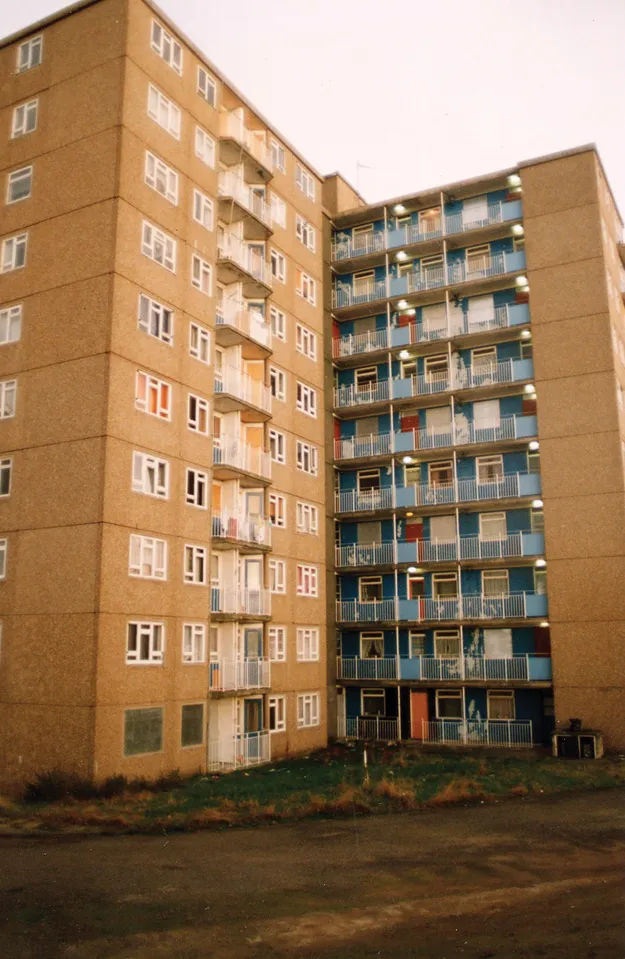
Figure1 The 1960s purpose-built blocks of flats (single-level dwellings).
2 What Is Dampness?
DOI: 10.1201/9781003080237-2
There is no internationally recognised or agreed definition of what constitutes ‘dampness’. So here, we explain what we mean by the term ‘dampness’.
Water (moisture) is naturally present in many of the materials used in the construction of buildings. Provided that the moisture stays within certain limits (depending on the particular material), it will not cause any problems. If the moisture exceeds the upper limit for that material, problems will occur, and this is what is referred to here as ‘dampness’.
Water vapour, a gas, is always present in the atmosphere. Below certain upper limits, it will cause no problems. But, above those limits, there can be problems with both the building materials and health, and these problems (threats) can occur before there are any signs of visible condensation. Above the upper limits and visible condensation are referred here as ‘dampness’.
Moisture in Building Materials
Moisture is held in building materials in several ways. Water is combined with some building materials such as concrete and plaster. In the construction of a (say) two-storey, two-bedroom house, this can be in excess of 2,000 litres (depending on the form of construction). Most of this will dry out, but it may take at least 12 months, and what is left is chemically combined with the material (and will not cause any problems).
Porous building materials, including plaster, concrete, bricks, and timber, will exchange moisture with the adjacent atmosphere as a result of vapour pressure. Vapour pressure attempts to keep a balance in the moisture levels, as moisture from high-pressure areas will force moisture into low-pressure areas. Normally, this vapour pressure will not disrupt the natural moisture levels of building materials, and as the porous materials are never ‘truly dry’ (i.e. there is always some moisture present as well as any chemically bonded water), their normal state is usually referred to as ‘air-dry’.
Examples of the moisture levels for some air-dry materials in a relatively moist, but not ‘damp’ atmosphere, are – common bricks (not the very dense engineering bricks) will be between 1.5% and 2.5%, plaster around 1.0%, and timber around 11.0% (depending on the type of timber).
Hygroscopic Salts
Porous materials, such as brick, plaster, and concrete, can become contaminated by inorganic hygroscopic salts. These salts have an affinity for moisture and will absorb moisture from the air disrupting the balance, making the material visibly damp. There are two potential sources. One is where there is a solid fuel heating unit discharging into an unlined flue, where the flue gases cool and condense, passing salts into the chimney breast. Salt staining can also occur on the outside and inside of walls, the salts being drawn from the soil by rising dampness and left as the moisture evaporates (on which see below).
Rising Dampness
Porous materials are riddled with very fine hair-line pores, and these pores are so fine that the surface tension of water will become strong enough to draw the water upwards against gravity (the same effect as a wick or blotting paper). This effect, capillary attraction, means that materials such as bricks and concrete will ‘draw’ moisture out of the ground to heights of about 1 m above ground level. As noted above, the moisture can contain hygroscopic salts which, as well as the damaging effect of the moisture, will further damage the wall structure. Rising dampness can also have a dramatic effect on a solid floor that is in direct contact with soil.
It is to prevent rising dampness that damp-proof courses and damp-proof membranes are or should be incorporated into walls and floors in direct contact with the ground. In older houses (those built over 100 years old), there was often a dado, wood panelling from floor level to just less than 1 m (approx. 3 feet) above. The dado was a decorative finish that hid the damage caused by rising dampness, did not cure the problem.
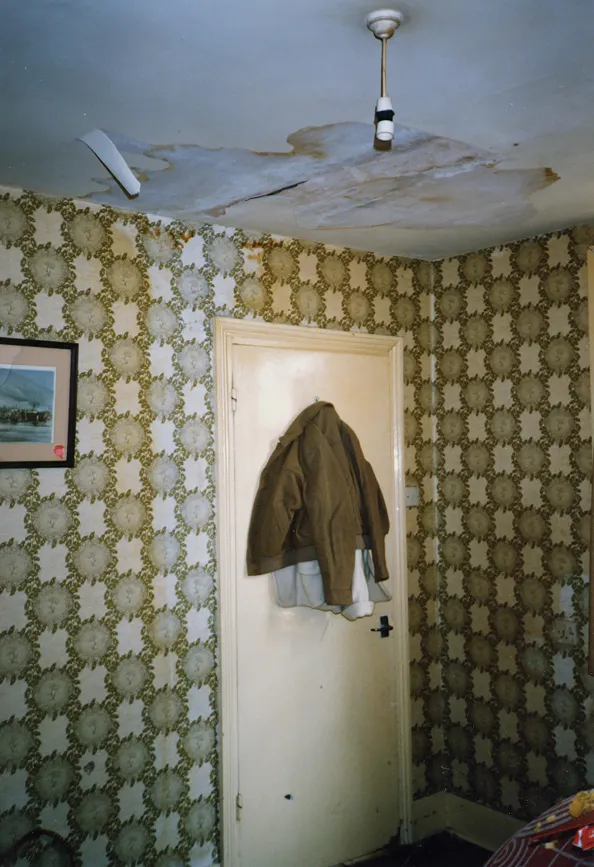
Figure2 Dampness from either penetration or a burst pipe/tank (traumatic).
Penetrating Dampness
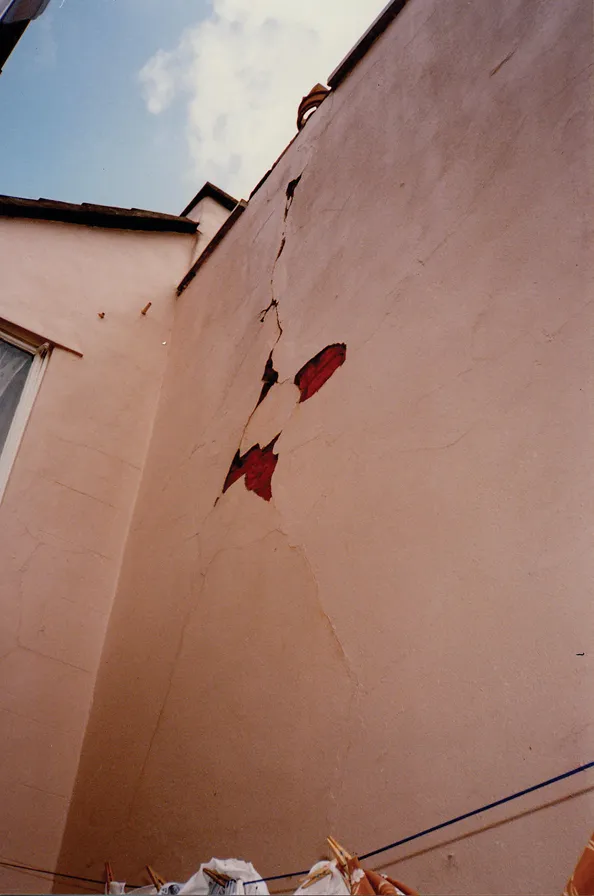
Holes and gaps in the external fabric, the walls and roofs that should protect the interior, will allow water through that protection. Such holes and gaps may be a result of despair and lack of maintenance, or ineffective weatherproofing at the time of construction or refitting. Some gaps can be obvious, such as a slipped roof slate or tile. Often, particularly in older properties, walls will have a coating of external render (a waterproof concrete skim) to protect walls constructed of brickwork. Cracks in such render will draw water in when it rains, and as that water will not evaporate outwards, it will soak into the wall to affect the internal surfaces.
Of particular importance is the prevention of water penetration at the joints around window and door openings. These must be properly and completely sealed, and, for windows, there should be a sill at the base of the opening to throw any water running down the glazing safely away from the wall below.
Figure3 Cracked and missing protective render to the rear main wall of a terraced house.
Traumatic Dampness
This is when a water pipe or tank leaks or bursts, or as a result of a leak to a drainage or waste pipe serving a water-closet, sink, bath, or shower. The effect can be slow, where the leak (often at a poorly made joint) is relatively minor, but this will be enough to cause a problem over a period. Or, it can be dramatic, such as when a water tank bursts.
Problems can also occur if the water in an uninsulated pipe or water tank freezes. Frozen water (ice) expands and can break a joint or burst a pipe, and a leak resulting from this freezing...
Table of contents
Cover
Half Title
Title Page
Copyright Page
Table of Contents
Foreword
Series Preface
1 Introduction
2 What Is Dampness?
3 Sources of Dampness and the Potential Effect on the Structure
4 Health Effects of Dampness
5 Identifying and Remedying the Cause(s) to Protect Health
Annex: Investigating the Cause/Sources of Dampness