The #1
New York Times Bestseller
An
Entertainment Weekly Top Ten Book of the Year
Now a Major Motion Picture
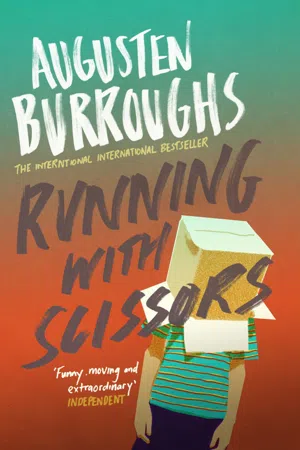
This is the true story of a boy who wanted to grow up with the Brady Bunch, but ended up living with the Addams Family. Augusten Burroughs's mother gave him away to be raised by her psychiatrist, a dead ringer for Santa Claus and a certifiable lunatic into the bargain. The doctor's bizarre family, a few patients and a sinister man living in the garden shed completed the tableau.
In the perfect squalor of their dilapidated Victorian house, there were no rules and there was no school. The Christmas tree stayed up until summer and Valium was chomped down like sweets. And when things got a bit slow, there was always the ancient electroshock therapy machine under the stairs...
'This is the Brady Bunch on Viagra... it is impossible not to laugh at all the jokes; to admire the sardonic, fetid tone; to wonder, slack-jawed and agog, at the sheer looniness of the vista he conjures up' -- Rachel Cooke,
Observer
- English
- ePUB (mobile friendly)
- Available on iOS & Android
eBook - ePub
About this book
Information
Subtopic
Literary BiographiesIndex
LiteratureSCHOOL DAZE
HER DESK WAS IN THE CENTER OF THE ROOM AND EVERYONE who sat next to her, behind her and in front of her was her best friend in the whole wide world. They would pass her folded notes, which she would unfold, read and then pass to someone else, giggling. I often saw her leaning over and whispering something in someone’s ear. I was sure it was something nice. “Let’s surprise Heather after school and take her to a movie!” She had a puffy black afro that she adorned with combs and I used to sit there wishing I could touch it. I imagined it would feel woolly, like a sheep. But also lighter like cotton candy. I knew if I actually did reach across the two desks between us and touch her afro, she would scream. She was the whitest girl in school, even though she was black. She was Bill Cosby’s daughter and I loathed her for this.
“He’s sooooooo cute,” she would say when one of her friends handed her a blue Smurf key chain. Or, “Venus was the goddess of love,” she would correctly answer in Greek mythology class, her bright white smile occupying one-third of her face.
This girl was everything in life that I wasn’t. She was smart, articulate, outgoing and popular. She came from the best of families and never wore the same clothes two days in a row. And I was positive she did not have razor burn on her face from kissing a man twice her age. She made me sick.
One of us had to go.
“I just don’t know what to do with you, you’re making me frantic,” my mother said, chewing her thumbnail down to the quick.
“Well, I’m not going back to that school ever again. I don’t fit in there and I never will. I have to get out now.”
“But you have to stay in school until you’re sixteen. It’s the law.”
“I can’t stay there for another three years,” I screamed. “God, I wish I were dead. I should just kill myself.” I felt like a trapped animal.
My mother said, “Don’t even joke about suicide.”
“What makes you think I’m joking?” Maybe I could just kill myself and get it over with. Maybe that was my only way out.
She stopped typing and reached for her Wite-Out. “I don’t have the emotional energy right now to deal with you when you’re all wild like this.”
I had been chain-smoking all night and pacing around the house, consumed with dread about school the following morning. I had gone over my list of options in my head and the list was short: leave school now forever.
My mother was in the middle of writing what she considered to be an important poem. “It’s fifty pages long and I truly do believe it’s going to make me a very famous woman,” she said out of the corner of her mouth that wasn’t wrapped around her More.
“I don’t care about that fucking poem. I’m miserable. You have to do something.”
She exploded. “Well, I care very much about this fucking poem as you call it. I am putting everything I have into this writing. I have worked hard all my life to be able to claim my writing as my own.”
“Well, what about me?” I bellowed. I wanted to shove her typewriter on the floor. I hated it and I hated her. I wanted to be a Cosby.
“You are an adult,” she said. “You’re thirteen years old. You’ve got a mind and a will of your own. And I have my own needs right now. My writing is very important to me and I should hope that it would be important to you.”
Somehow, my mother had managed to turn this all around to her. She had a knack for this.
“I’m not one of your fans,” I shouted. I had heard Christina Crawford say this to her mother in Mommie Dearest and I knew my mother hadn’t seen the movie, so it would seem original.
“Well, at the moment,” she said, “I’m not one of your fans, either.” She turned away from me and began typing.
I unplugged her typewriter, freezing it.
“Goddamn it, Augusten. What’s the matter with you? Why are you doing this to me? I need support right now. Not attacks from you.”
I told her to fuck herself and then I stormed out of the room and went outside to sit on the front porch and fume. A moment later she appeared at the door. “Dr. Finch would like to speak with you on the telephone.” Her voice was calm, composed, like a receptionist’s.
“Fine,” I said. I worried I might be in trouble for terrorizing my mother. He might tell me that I’d pushed her too hard and now she would go psychotic again, unraveling all the hard work he had done on her.
“Hello?”
“Well, hello there, Augusten. What’s this I hear about you not wanting to go to school?”
I couldn’t believe it. He was talking about me.
I told him about how miserable I was, how I didn’t feel that I fit in and how I felt trapped and depressed and just wanted to be left alone so I could go to movies and write in my journal.
He listened to me without interrupting except with the occasional, “Uh huh,” and “I see.” Then he said, “Well, the compulsory education laws are such that you have to attend school until you’re sixteen years old.”
“I know but I can’t,” I said. I was desperate. He had to help me.
“Well,” he said with a deep sigh. I could picture him leaning back, massaging his forehead with his free hand. “The only loophole, or way that I can see to get you out of school for any length of time, would be a suicide attempt. If you tried to kill yourself, then I could legally remove you from school.”
“What do you mean?”
“Well, if you were to attempt suicide, I could explain to the school board that you were psychologically unfit to attend school, that you needed intensive treatment. I don’t know how long they’d buy it for. Maybe a month, two, three.”
“Well, how . . .” I was confused. “How does this happen? I mean, what do I have to do? You don’t mean, like, I have to slit my wrists or something?”
“No, no, no, that’s not what I mean. It would be a staged suicide attempt. A ruse.”
“Oh,” I said.
“But you would have to be committed to a psychiatric hospital. Basically what would have to happen is that your poor mother would have to find you—” He chuckled under his breath, amused by the scenario. “—and drive you to the hospital. You’d have to remain there for, oh, probably two weeks for observation.”
I confessed that I did not find the idea of staying at a psychiatric hospital that much more appealing than school. Only slightly.
“It’ll be like a mini vacation,” he said. Then, “Where’s your spirit for adventure?”
Now that sounded better. Even if I wasn’t exactly free to go to movies and see Bookman, I wasn’t in school. And that was the main thing. He was right, it would be an adventure.
“Okay, let’s do it.”
“Now let me speak to your mother,” he said.
When she hung up she said, “The doctor is on his way over.” She looked pleased. And I realized immediately the reason for this was because I would be out of her hair for awhile. She would have nobody in the house to tell her, “Stop listening to that fucking Auntie Mame. It’s been fifty times already.” She would no longer have to defend her need to compulsively sketch the Virgin of Guadeloupe in lip liner over and over for days at a time until she got the eyes right. She would be able to gorge herself on mustard sandwiches with the crusts cut off.
It was the ideal arrangement for both of us, it seemed.
I was upstairs in my rarely occupied room, staring out the window at the street thinking about that little Cosby bitch. She certainly didn’t have to choose between a mental hospital or the seventh grade. Why couldn’t I be like that? I told myself, All I want is a normal life. But was that true? I wasn’t so sure. Because there was a part of me that enjoyed hating school, and the drama of not going, the potential consequences whatever they were. I was intrigued by the unknown. I was even slightly thrilled that my mother was such a mess. Had I become addicted to crisis? I traced my finger along the windowsill. Want something normal, want something normal, want something normal, I told myself.
But there were things in my life so much more interesting than school. So much more consuming. Bookman didn’t have a regular job. He filled in for Hope at the doctor’s office as receptionist when she needed to run an errand. Together, they were his secretarial pool. So most of his days were open. Once I was free from school we could be together constantly. The thought made me ache with want.
That whole thing at his apartment really brought us closer together. “I realize that was wrong of me. It was almost abusive; I’m sorry,” he had cried.
“It’s okay,” I told him. Secretly I wanted revenge, but I also wanted his companionship, and that won out.
Bookman gave me attention. We would go for long walks and talk about all sorts of things. Like how awful the nuns were in his Catholic school when he was a kid and how you have to roll your lips over your teeth when you give a blowjob. Then we’d go back to the barn behind the house and fool around upstairs on his musty old mattress.
When I was sitting in school, surrounded by all those painfully normal, Cabbage Patch–owning kids, all I could think about was Bookman. Kissing him, touching him, hearing him say to me, “God, you’re becoming my whole world.”
How could I just sit there obediently pinning a butterfly’s wings to a lab tray or memorizing prepositional phrases? When the other boys in the locker room were showering and talking about their weekends playing soccer, what was I supposed to say? “Oh, I had a great time. My thirty-three-year-old boyfriend said he wished they could package my cum like ice cream so he could eat it all day.”
Bookman was the only person who gave me attention, besides Natalie and Hope. My mother certainly didn’t. Unless I was holding a spare typewriter ribbon or standing next to the record player when she needed the needle moved back to the beginning of a song, she had no use for me.
And my father wouldn’t even accept my collect calls.
As I was picking the paint off the windowsill I saw an unfamiliar station wagon pull up in front of our house. The engine was killed but nobody stepped out. I watched for a few minutes until the passenger window opened and a pink helium balloon escaped and rose up into air. I wondered where he got the helium, and if he had any left over.
The doctor had made a house call.
My mother called me downstairs and Dr. F shook my hand. He said, “You have a fiercely independent spirit, young man.”
My mother said, “He certainly does.”
“Are you ready?” he asked.
“Ready for what?”
He cleared his throat and rubbed his hands together. “We need to take a little drive. We have to pick up some supplies from a friend in order for this to work. In the car, we can talk about what we’re going to do, what the plan is.”
My mother kept glancing back at her typewriter, like it was calling her. I knew it was hard for her to be separated from it for even five minutes.
“You’ll need to come with us,” the doctor said.
My mother looked alarmed, like she’d just been diagnosed with a disease that would prevent her from ever being able to talk about herself again. She hesitated, then she said, “Okay. I just need to get my bag.”
Finch drove, my mother sat in the passenger seat and I was in the back, my forehead pressed against the window. I was beginning to worry about what, exactly, I had agreed to. As soon as we were out of Amherst and onto the highway my mother opened her bag and began searching for something. She pulled some typed pages out and arranged them on her lap. She cleared her throat and turned to the doctor. “Would you like to hear some of this new poem I’ve been working on?”
He nodded. “Certainly, Deirdre. If you’d like to read it.”
“May I smoke?” she asked, sticking a More between her lips and poising her lighter.
“By all means.”
“Thank you,” she replied almost flirtatiously. I half-expected her to stick a dogwood blossom behind her ear.
For the next half hour, I endured a mandatory poetry reading. She read in her melodic, Southern voice, enunciating perfectly, each inflection practiced. I knew she must have wished there were a microphone clipped to her shirt collar or a camera pointed at her profile.
I couldn’t help but think, This car is taking me to a mental hospital and my mother is treating it like open-mic night at a Greenwich Village café.
We drove to a farmhouse in the country, surrounded by pastures. Dr. F pulled into the half-circle gravel driveway and stopped the car. He looked at me in the rearview mirror. “It’s very important,” he began, “that you not ever tell anybody about this.”
I wiped my sweaty palms on my jeans and agreed even though I didn’t know what I was agreeing to.
“I could lose my medical license,” he said.
What was he going to do? And w...
Table of contents
- Cover
- Author biography
- Title page
- Copyright page
- Dedication page
- Epigraph page
- Contents
- Something Isn't Right
- Little Boy Blue Navy Blazer
- The Masturbatorium
- Imagine My Shock
- The Cleaning Lady
- Just Add Water
- The Burning Bush
- Pure Projection
- He was Raised Without a Proper Diagnosis
- The Joy of Sex (Preteen Edition)
- School Daze
- The Seven-and-a-Half-Inch Disaster
- Queen Helene Cholesterol
- Toilet Bowl Readings
- Phlegmed Before a Live Audience
- Here, Kitty Kitty
- I Would Dye For You
- A Family Affair
- Inquire Within
- Life in the Great Outdoors
- You are Nothing But a Sex Object
- Thin Air
- All-Star Running Back
- Pennies From Heaven
- Oh, Christmas Tree
- Running with Scissors
- You're Gonna Make It After All
- Epilogue
- Acknowledgments
Trusted by 375,005 students
Access to over 1.5 million titles for a fair monthly price.
Study more efficiently using our study tools.
Frequently asked questions
Yes, you can cancel anytime from the Subscription tab in your account settings on the Perlego website. Your subscription will stay active until the end of your current billing period. Learn how to cancel your subscription
No, books cannot be downloaded as external files, such as PDFs, for use outside of Perlego. However, you can download books within the Perlego app for offline reading on mobile or tablet. Learn how to download books offline
We are an online textbook subscription service, where you can get access to an entire online library for less than the price of a single book per month. With over 1.5 million books across 990+ topics, we’ve got you covered! Learn about our mission
Look out for the read-aloud symbol on your next book to see if you can listen to it. The read-aloud tool reads text aloud for you, highlighting the text as it is being read. You can pause it, speed it up and slow it down. Learn more about Read Aloud
Yes! You can use the Perlego app on both iOS and Android devices to read anytime, anywhere — even offline. Perfect for commutes or when you’re on the go.
Please note we cannot support devices running on iOS 13 and Android 7 or earlier. Learn more about using the app
Please note we cannot support devices running on iOS 13 and Android 7 or earlier. Learn more about using the app
Yes, you can access Running With Scissors by Augusten Burroughs in PDF and/or ePUB format, as well as other popular books in Literature & Literary Biographies. We have over 1.5 million books available in our catalogue for you to explore.