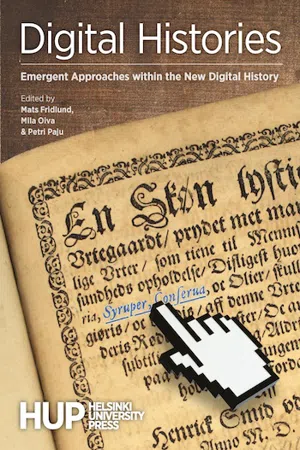
Historical scholarship is currently undergoing a digital turn. All historians have experienced this change in one way or another, by writing on word processors, applying quantitative methods on digitalized source materials, or using internet resources and digital tools.Digital Histories showcases this emerging wave of digital history research. It presents work by historians who – on their own or through collaborations with e.g. information technology specialists – have uncovered new, empirical historical knowledge through digital and computational methods. The topics of the volume range from the medieval period to the present day, including various parts of Europe. The chapters apply an exemplary array of methods, such as digital metadata analysis, machine learning, network analysis, topic modelling, named entity recognition, collocation analysis, critical search, and text and data mining.The volume argues that digital history is entering a mature phase, digital history 'in action', where its focus is shifting from the building of resources towards the making of new historical knowledge. This also involves novel challenges that digital methods pose to historical research, including awareness of the pitfalls and limitations of the digital tools and the necessity of new forms of digital source criticisms.Through its combination of empirical, conceptual and contextual studies, Digital Histories is a timely and pioneering contribution taking stock of how digital research currently advances historical scholarship.
eBook - ePub
Digital Histories
Emergent Approaches within the New Digital History
- English
- ePUB (mobile friendly)
- Available on iOS & Android
eBook - ePub
Digital Histories
Emergent Approaches within the New Digital History
About this book
Information
Print ISBN
9789523690202
Table of contents
- Cover
- Title
- Copyright
- Table of Contents
- Acknowledgements
- Contributors
- Foreword
- Part I: The Beginning
- Part II: Making Sense of Digital History
- Part III: Distant Reading, Public Discussions and Movements in the Past
- Part IV: Conclusions
- Index
Trusted by 375,005 students
Access to over 1.5 million titles for a fair monthly price.
Study more efficiently using our study tools.