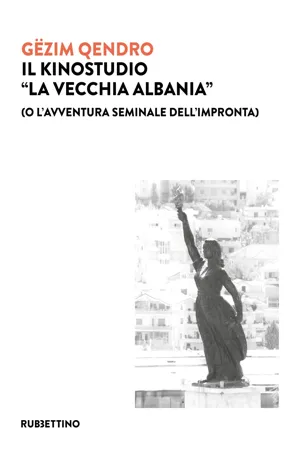
a cura di Caterina ZuccaroIl Kinostudio "Vecchia Albania", (oggi sede del Ministero della Cultura albanese), è stato inaugurato a Tirana nel 1952. In questo saggio Gëzim Qendro affronta in modo multidisciplinare ed interdisciplinare il tema singolare del significato della presenza massiccia di codici simbolici religiosi in un edificio pubblico, progettato in un Paese marxista (l'URSS), realizzato in un altro Paese marxista (l'Albania) e destinato ad essere sede dell'industria cinematografica albanese, una macchina di propaganda del regime. Un edificio che doveva, perciò, essere emblematico della nuova mentalità, della nuova epoca, quindi anche del suo laicismo e anzi, meglio, del suo ateismo. L'autore ha indagato le possibili motivazioni alla base di questa contraddizione palese ma tuttavia "autorizzata" ricorrendo agli strumenti della storia, della storia delle religioni, della storia e della critica dell'arte e dell'architettura in particolare, della filosofia, della filosofia dell'arte e dell'epistemologia, attingendo con passione e competenza a fonti testimoniali e di archivio e ad una vastissima e qualificata letteratura dei diversi campi coinvolti. Ne è emerso un saggio di alto profilo scientifico, che si legge come un romanzo.
- English
- ePUB (mobile friendly)
- Available on iOS & Android
eBook - ePub
About this book
Information
Table of contents
- Cover
- Sinossi
- Frontespizio
- Colophon
- Nota preliminare alla traduzione di Caterina Zuccaro
- Il volo della nottola (In luogo del prologo)
- Capitolo primo L’Impronta sulla cera
- Capitolo secondo Il processo di impressione (Τύπος)
- Capitolo terzo L’avventura seminale dell’impronta
- La memoria come spazio eterotopico (in luogo dell’epilogo)
Trusted by 375,005 students
Access to over 1.5 million titles for a fair monthly price.
Study more efficiently using our study tools.
Frequently asked questions
Yes, you can cancel anytime from the Subscription tab in your account settings on the Perlego website. Your subscription will stay active until the end of your current billing period. Learn how to cancel your subscription
No, books cannot be downloaded as external files, such as PDFs, for use outside of Perlego. However, you can download books within the Perlego app for offline reading on mobile or tablet. Learn how to download books offline
Perlego offers two plans: Essential and Complete
- Essential is ideal for learners and professionals who enjoy exploring a wide range of subjects. Access the Essential Library with 800,000+ trusted titles and best-sellers across business, personal growth, and the humanities. Includes unlimited reading time and Standard Read Aloud voice.
- Complete: Perfect for advanced learners and researchers needing full, unrestricted access. Unlock 1.5M+ books across hundreds of subjects, including academic and specialized titles. The Complete Plan also includes advanced features like Premium Read Aloud and Research Assistant.
We are an online textbook subscription service, where you can get access to an entire online library for less than the price of a single book per month. With over 1.5 million books across 990+ topics, we’ve got you covered! Learn about our mission
Look out for the read-aloud symbol on your next book to see if you can listen to it. The read-aloud tool reads text aloud for you, highlighting the text as it is being read. You can pause it, speed it up and slow it down. Learn more about Read Aloud
Yes! You can use the Perlego app on both iOS and Android devices to read anytime, anywhere — even offline. Perfect for commutes or when you’re on the go.
Please note we cannot support devices running on iOS 13 and Android 7 or earlier. Learn more about using the app
Please note we cannot support devices running on iOS 13 and Android 7 or earlier. Learn more about using the app
Yes, you can access Il Kinostudio "La vecchia Albania" by Gëzim Qendro in PDF and/or ePUB format, as well as other popular books in Politique et relations internationales & Liberté politique. We have over 1.5 million books available in our catalogue for you to explore.