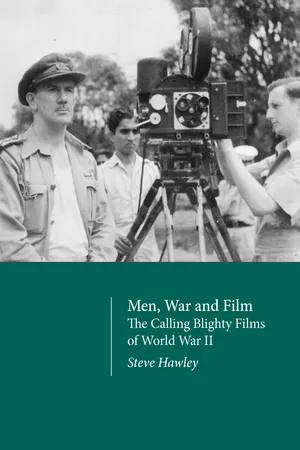
The Calling Blighty series of films produced by the Combined Kinematograph Service produced towards the end of the Second World War were one-reel films in which soldiers gave short spoken messages to the camera as a means of connecting the front line and the home front. These are the first ever films where men speak openly in their regional accents, and they have profound meaning for remembrance, documentary representation and the ecology of film in wartime.
Of the 400 films (or 'issues') made, 64 survive. Each of those contained around 25 individual messages. Men – and a very few women - from a particular city, town or region were grouped together for the films to make regional screenings back in UK cinemas and town halls possible. Personnel from all three services are featured, but the men are predominantly from the army units. Screenings took place at a cinema in the subjects' local area and were usually organised by the regional Army Welfare Committee. The names and addresses of those to be invited to the screenings were sent to the UK along with the films.
Until now, these films have barely been researched, and yet are a valuable source of social history as well as representing a different mode from the mainstream of British wartime documentary. This book expands the history of Calling Blighty and places it in a broader context, both past and present. New research reveals the origins of the film series and draws comparisons with written and oral contemporary sources.
Steve Hawley is an artist/filmmaker whose work has been screened worldwide, and has collaborated closely with the North West Film Archive UK. He is emeritus professor at the Manchester Metropolitan University UK.
Using memoirs and diaries, Steve Hawley has researched the roles in the Burma campaign of participants in the surviving films, and traced over 160 of the families of the men – and two men still alive – and recreated these wartime screenings.
Hawley's book is part description of the films, part reclamation of a largely unknown genre of wartime filmmaking, partly an account of the Burma campaign, and partly a discussion of war and memory. Engagingly and warmly written.
It will be of interest to scholars and researchers in the areas of war studies, especially those specializing in the social rather than military history of warfare and historians of British wartime cinema and documentary. Also useful for an undergraduate audience, in history, media/film studies.
Potential for readers with an interest in the Second World War, particularly the war in Burma, and those with an interest in family history of the period.