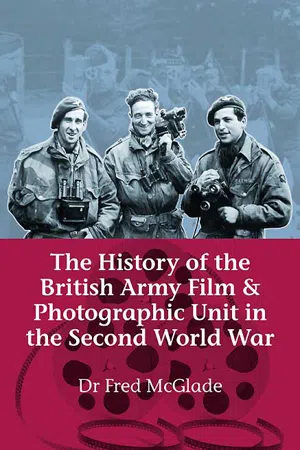
At the beginning of the Second World War the Nazi hierarchy at an early stage, had fully recognized the importance of controlling the depiction of military conflict in order to ensure the continued morale of their combat troops by providing a bridge between the soldiers and their families. Promoting the use of photographic record also allowed the Nazis to exercise control over negative depictions of the war. In contrast, the British military and political decision makers were reluctance to embrace any potential propaganda benefits of film and photographic material in the build up to and the early months of the Second World War. Military commanders in the field were conscious that their tactical blunders could be recorded on film and still photographs and made available to the British public. Visions such as the First World War use of troops as fodder for machine guns and the ensuing mud-coated corpses of British troops were not the sort of record of the conflict that British generals in the field were willing to contemplate. British politicians and their generals feared that a realistic presentation of the horror of war could have an adverse effect on recruiting. However, pressure was to come from across the Atlantic where the refusal to allow reporting of the war was harming Britain's cause in the United States and British diplomats overseas reported that the Germans were winning the propaganda war throughout the unoccupied countries of Europe. This belated acceptance of the need for open reporting of the conflict meant that when it was finally accepted as useful the P.R.2 Section (Public Relations) at the War Office and the British Military found itself in a 'catch up' situation. Despite the disadvantages of such a slow start, the British combat cameramen grew in strength throughout the conflict, producing films such as Desert Victory, Tunisian Victory, Burma Victory, The True Glory and a huge stock of both cine and still material lodged as 'Crown Property' in the Imperial War Museum, London. The British Army Film and Photographic Unit's material represents some of the most frequently used records of historical events and key figures of the period. It is utilized by film producers and television program makers without the camera men who shot the footage being listed in program credits. This book does not seek to denigrate the work of others such as Accredited War Correspondents but it does seek to accord to the combat camera men of the A.F.P.U. the recognition they are entitled to, but have never received, for their enormous and unique contribution to the historical record of the Second World War. Based on memoirs, personal letters and interviews with the AFPU camera men, this book reveals the development of the unit and tells the human story of men who used cameras as weapons of war.
eBook - ePub
The History of the British Army Film and Photographic Unit in the Second World War
- 216 pages
- English
- ePUB (mobile friendly)
- Available on iOS & Android
eBook - ePub
The History of the British Army Film and Photographic Unit in the Second World War
About this book
Information
Subtopic
British HistoryIndex
HistoryTable of contents
- Cover
- About the Author
- Title Page
- Copyright
- Contents
- List of photographs
- Acknowledgements
- List of abbreviations
- 1 An Introduction
- 2 The Origins of the British Army Film and Photographic Unit
- 3 The Development of the AFPU at Home and in North Africa to the Battle for El Alamein
- 4 From El Alamein to Victory in the Desert
- 5 The Italian Campaign
- 6 The D-Day landings and the Battle for Europe
- 7 The Southeast Asia Campaign
- 8 Conclusion
- Filmography
- Bibliography
- eBooks Published by Helion & Company
Trusted by 375,005 students
Access to over 1.5 million titles for a fair monthly price.
Study more efficiently using our study tools.
Frequently asked questions
Yes, you can cancel anytime from the Subscription tab in your account settings on the Perlego website. Your subscription will stay active until the end of your current billing period. Learn how to cancel your subscription
No, books cannot be downloaded as external files, such as PDFs, for use outside of Perlego. However, you can download books within the Perlego app for offline reading on mobile or tablet. Learn how to download books offline
Perlego offers two plans: Essential and Complete
- Essential is ideal for learners and professionals who enjoy exploring a wide range of subjects. Access the Essential Library with 800,000+ trusted titles and best-sellers across business, personal growth, and the humanities. Includes unlimited reading time and Standard Read Aloud voice.
- Complete: Perfect for advanced learners and researchers needing full, unrestricted access. Unlock 1.5M+ books across hundreds of subjects, including academic and specialized titles. The Complete Plan also includes advanced features like Premium Read Aloud and Research Assistant.
We are an online textbook subscription service, where you can get access to an entire online library for less than the price of a single book per month. With over 1.5 million books across 990+ topics, we’ve got you covered! Learn about our mission
Look out for the read-aloud symbol on your next book to see if you can listen to it. The read-aloud tool reads text aloud for you, highlighting the text as it is being read. You can pause it, speed it up and slow it down. Learn more about Read Aloud
Yes! You can use the Perlego app on both iOS and Android devices to read anytime, anywhere — even offline. Perfect for commutes or when you’re on the go.
Please note we cannot support devices running on iOS 13 and Android 7 or earlier. Learn more about using the app
Please note we cannot support devices running on iOS 13 and Android 7 or earlier. Learn more about using the app
Yes, you can access The History of the British Army Film and Photographic Unit in the Second World War by Fred McGlade in PDF and/or ePUB format, as well as other popular books in History & British History. We have over 1.5 million books available in our catalogue for you to explore.