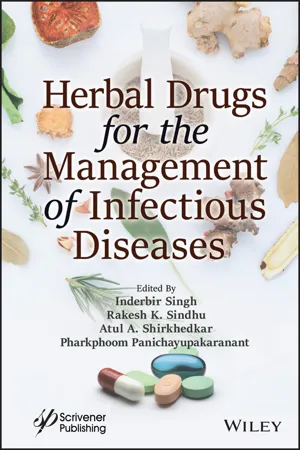
Herbal Drug for the Management of Infectious Diseases
The book is a comprehensive compilation of herbal drug applications for the treatment and management of infectious diseases and addresses issues related to development, challenges, and future prospects associated with the use of herbal medicine.
The use of herbal medicines has evolved in various cultures around the world over many millennia. In many developing Asian and African countries, the use of herbal medicines, as supplied by traditional medicinal practitioners, has always been popular. In the last two to three decades, many people in developed countries have begun to turn to alternative or complementary therapies, including the use of herbal medicines, nutraceuticals, functional foods, and other supplements. This resurgence in interest in plant-derived medicines is partly due to the growing dissatisfaction with allopathic medicines, as well as the perception that plant-derived medicines are natural and therefore pure and without side effects, and the progress in the production of higher quality herbal medicines including some with proven clinical efficacy and safety.
Infectious diseases are generally caused by pathogenic microorganisms, like bacteria, viruses, parasites, or fungi, and are a significant cause of morbidity and mortality worldwide. Therefore, the 16 chapters of this book have been intentionally sequenced to cover the therapeutic potential and applications of herbal extracts and phytochemicals for the management of various infectious diseases. Disease pathophysiology, an overview of current medication or treatment, in-vitro and in-vivo evaluations of relevant biological activities of herbal extracts and phytochemicals, mechanisms of action, clinical trials, and novel technologies for the delivery of herbal bioactive compounds as well as patents have also been included.
Audience
Chemists, pharmaceutical scientists, biologists, herbal/Ayurvedic/medicinal practitioners, as well all those in the medical sciences working on medicinal plants and infectious diseases.