- 996 pages
- English
- PDF
- Available on iOS & Android
About this book
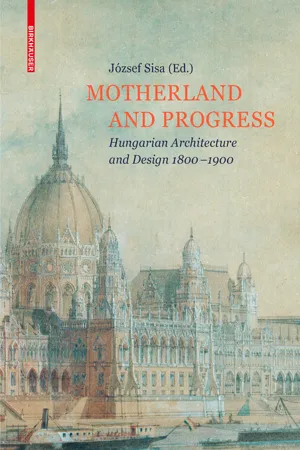
In the 19th century Hungary witnessed unprecedented social, economic and cultural development. The country became an equal partner within the Dual Monarchy when the Austro-Hungarian Compromise of 1867 was concluded. Architecture and all forms of design flourished as never before. A distinctly Central European taste emerged, in which the artistic presence of the German-speaking lands was augmented by the influence of France and England. As this process unfolded, attempts were made to find a uniquely Hungarian form, based on motifs borrowed from peasant art as well as real (or fictitious) historical antecedents.
"Motherland and Progress" – the motto of 19th-century Hungarian reformers – reflected the programme embraced by the country in its drive to define its identity and shape its future.
Frequently asked questions
- Essential is ideal for learners and professionals who enjoy exploring a wide range of subjects. Access the Essential Library with 800,000+ trusted titles and best-sellers across business, personal growth, and the humanities. Includes unlimited reading time and Standard Read Aloud voice.
- Complete: Perfect for advanced learners and researchers needing full, unrestricted access. Unlock 1.4M+ books across hundreds of subjects, including academic and specialized titles. The Complete Plan also includes advanced features like Premium Read Aloud and Research Assistant.
Please note we cannot support devices running on iOS 13 and Android 7 or earlier. Learn more about using the app.
Information
Table of contents
- Contents
- Preface
- Introduction
- Part One. Neo-Classicism (1800–1840)
- Part Two. Romanticism (1840–1870)
- Part Three. Historicism (1870–1900)
- Notes
- Bibliography
- Picture Credits
- Name Index
- Place Index