The modern world was not created by the civilization of Renaissance Italy, the advent of the printing press, or the marriage restrictions imposed by the medieval church. Rather, it was widespread reading that brought about most of the cognitive, psychological, and social changes that we recognize as peculiarly modern.
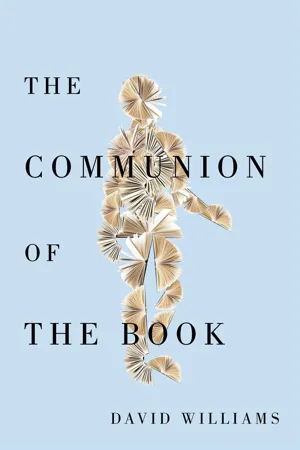
David Williams combines book and communications history with readings of major works by Petrarch, Bruni, Valla, Reuchlin, Erasmus, Foxe, and Milton to argue that expanding literacy in the Renaissance was the impetus for modern civilization, turning a culture of arid logic and religious ceremonialism into a world of individual readers who discovered a new form of communion in the act of reading. It was not the theologians Luther and Calvin who first taught readers to become what they read, but the biblical philologist Erasmus, who encountered the divine presence on every page of the gospels. From this sacramental form of reading came other modes of humanist reading, particularly in law, history, and classics, leading to the birth of the nation-state. As literacy rates rose, readers of all backgrounds gained and embodied the distinctly modern values of liberty, free speech, toleration, individualism, self-determination, and democratic institutions. Communion and community were linked, performed in novel ways through revolutionary forms of reading.
In this conclusion to a quartet of books on media change, Williams makes a compelling case for readers and acts of reading as the true drivers of social, political, and cultural modernity – and for digital media as its looming nemesis.
- English
- ePUB (mobile friendly)
- Available on iOS & Android
eBook - ePub
About this book
Information
Table of contents
- Cover
- Copyright
- Contents
- Prolegomenon to a History of Reading
- Acknowledgments
- A Note on Archival Sources
- Introduction: The State as a Work of Art
- 1 A Printing Revolution or a Reading Revolution?
- 2 Bread, Blood, and Paper: The Incarnate Text and the Early Modern Crisis
- 3 Philological Reading: The Iconic Word and the Word as Speech
- 4 Sacramental Reading: Foxe’s Book of Actes and Milton’s Fifth Gospel
- 5 Juridical Reading: John Lilburneand the Contradictions of English Law
- 6 Historiographical Reading: The Tragedy of History in Milton and Ludlow
- 7 Classical Reading: Milton’s Euripidean Tragedy
- 8 The Communion of the Book: A Dialectic of Presence and Absence
- Works Cited
- Index
Trusted by 375,005 students
Access to over 1.5 million titles for a fair monthly price.
Study more efficiently using our study tools.
Frequently asked questions
Yes, you can cancel anytime from the Subscription tab in your account settings on the Perlego website. Your subscription will stay active until the end of your current billing period. Learn how to cancel your subscription
No, books cannot be downloaded as external files, such as PDFs, for use outside of Perlego. However, you can download books within the Perlego app for offline reading on mobile or tablet. Learn how to download books offline
Perlego offers two plans: Essential and Complete
- Essential is ideal for learners and professionals who enjoy exploring a wide range of subjects. Access the Essential Library with 800,000+ trusted titles and best-sellers across business, personal growth, and the humanities. Includes unlimited reading time and Standard Read Aloud voice.
- Complete: Perfect for advanced learners and researchers needing full, unrestricted access. Unlock 1.5M+ books across hundreds of subjects, including academic and specialized titles. The Complete Plan also includes advanced features like Premium Read Aloud and Research Assistant.
We are an online textbook subscription service, where you can get access to an entire online library for less than the price of a single book per month. With over 1.5 million books across 990+ topics, we’ve got you covered! Learn about our mission
Look out for the read-aloud symbol on your next book to see if you can listen to it. The read-aloud tool reads text aloud for you, highlighting the text as it is being read. You can pause it, speed it up and slow it down. Learn more about Read Aloud
Yes! You can use the Perlego app on both iOS and Android devices to read anytime, anywhere — even offline. Perfect for commutes or when you’re on the go.
Please note we cannot support devices running on iOS 13 and Android 7 or earlier. Learn more about using the app
Please note we cannot support devices running on iOS 13 and Android 7 or earlier. Learn more about using the app
Yes, you can access The Communion of the Book by David Williams in PDF and/or ePUB format, as well as other popular books in Literature & English Literary Criticism. We have over 1.5 million books available in our catalogue for you to explore.