- 420 pages
- English
- ePUB (mobile friendly)
- Available on iOS & Android
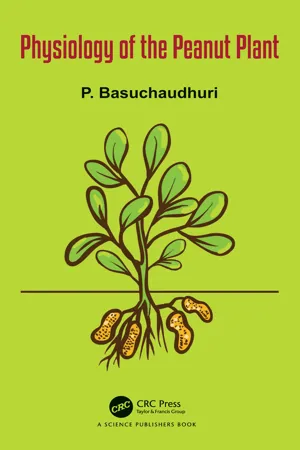
Physiology of the Peanut Plant
About this book
Peanut is an important crop in the semi-arid regions of the world. Both, irrigation and well water can provide the water necessary for it. It is a nutritious seed nut crop and has manyfold uses. As such, research on this crop is imperative.
This book reviews physiological aspects, keeping in mind the changing agroclimatic conditions. Growth, development and yield are described on the basis of cellular and morphological manifestations. Being a C3 plant, the photosynthesis and respiration in peanuts is critically viewed specially under varying environment conditions and genotypes. The study of nitrogen assimilation and biological nitrogen fixation have been presented in light of the prevalent environmental and gene effects. The role of plant growth regulators in peanuts is elaborated on, stating up-to-date mode of actions. Special emphasis has been given to mechanisms of abiotic stress effects. The chapters (13) are arranged on the basis of physiology, cellular structure, biochemistry, molecular and genomics concepts.
Frequently asked questions
- Essential is ideal for learners and professionals who enjoy exploring a wide range of subjects. Access the Essential Library with 800,000+ trusted titles and best-sellers across business, personal growth, and the humanities. Includes unlimited reading time and Standard Read Aloud voice.
- Complete: Perfect for advanced learners and researchers needing full, unrestricted access. Unlock 1.4M+ books across hundreds of subjects, including academic and specialized titles. The Complete Plan also includes advanced features like Premium Read Aloud and Research Assistant.
Please note we cannot support devices running on iOS 13 and Android 7 or earlier. Learn more about using the app.
Information
Table of contents
- Cover Page
- Title Page
- Copyright Page
- Dedication
- Preface
- Contents
- 1. Introduction
- 2. Seed Dormancy and Germination
- 3. Vegetative Growth
- 4. Reproductive Development
- 5. Pod Growth and Yield
- 6. Plant Nutrition
- 7. Photosynthesis
- 8. Respiration
- 9. Nitrogen Metabolism and Biological Nitrogen Fixation
- 10. Lipid Metabolism
- 11. Plant Growth Regulators
- 12. Abiotic Stresses
- 13. Source–Sink Relationships
- Index