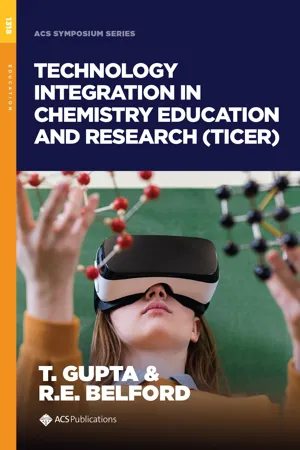
eBook - PDF
Technology Integration in Chemistry Education and Research (TICER)
- 328 pages
- English
- PDF
- Available on iOS & Android
eBook - PDF
Technology Integration in Chemistry Education and Research (TICER)
Information
Print ISBN
9780841234383
Table of contents
- Technology Integration in Chemistry Education and Research (TICER)
- ACS Symposium Series1318
- Foreword
- Preface
- Acknowledgements
- Introduction: Technology Integration in Chemistry Education and Research
- Category 1: Augmented Reality and Virtual Reality Applications in Chemistry Education and Research
- Augmented Reality Applications for Teaching Chemistry across the K-20 Curriculum
- Teaching and Learning Chemistry via Augmented and Immersive Virtual Reality
- AR Chemistry: An Undergraduate, Technology-Based Research and Development Initiative To Incorporate AR Molecular Models in the Chemistry Curriculum
- Game-Based Learning in Chemistry: A Game for Chemical Nomenclature
- Category 2: Technology in Laboratory Instruction
- Enhancing Students’ Laboratory Experiences in Undergraduate Chemistry
- Practical Considerations for Advancing Undergraduate Digital Literacy through Digital Laboratory Notebooks
- Open-Access Chemical Assessments for Students and Educators:
- Category 3: Technology and Project-Based Learning
- Resources for Teaching Project-Based Undergraduate Medicinal Chemistry Courses
- A Technology-Centered, Project-Based Approach in Physical and Computational Chemistry Curriculum
- Category 4: Active Learning and Assessment of Student Learning Using Technology
- Ensuring That Test Takers Can Use New Chemistry Assessments Made Possible by Technology
- Incorporating Paper Clicker (Plicker) Questions in General Chemistry Courses To Enhance Active Learning and Limit Distractions
- Category 5: Comprehensive Technologies: Diverse Tools and Approaches for Teaching and Learning
- Social Media in Chemistry: Using a Learning Management System and Twitter To Improve Student Perceptions and Performance in Chemistry
- The Right-Tech Approach for Integrating Technology into Teaching and Learning
- The Impact of Technology-Assisted “Scaffolding” on Student Learning in General Chemistry
- The Next Generation Digital Learning Environment for Chemistry
- Discovering Multiple Uses of Mobile Technology for Instructional Improvement: Lessons Learned and Serendipitous Encounters from the cCWCS iPads in Chemistry Workshop
- Conclusion: Technology Integration in Chemistry Education and Research: What Did We Learn and What Can We Expect Going Forward?
- Editors’ Biographies
- Indexes
- Author Index
- Subject Index
- Preface
- Acknowledgements
- Introduction: Technology Integration in Chemistry Education and Research
- Category 1: Augmented Reality and Virtual Reality Applications in Chemistry Education and Research
- Augmented Reality Applications for Teaching Chemistry across the K-20 Curriculum
- Teaching and Learning Chemistry via Augmented and Immersive Virtual Reality
- AR Chemistry: An Undergraduate, Technology-Based Research and Development Initiative To Incorporate AR Molecular Models in the Chemistry Curriculum
- Game-Based Learning in Chemistry: A Game for Chemical Nomenclature
- Category 2: Technology in Laboratory Instruction
- Enhancing Students’ Laboratory Experiences in Undergraduate Chemistry
- Practical Considerations for Advancing Undergraduate Digital Literacy through Digital Laboratory Notebooks
- Open-Access Chemical Assessments for Students and Educators:
- Category 3: Technology and Project-Based Learning
- Resources for Teaching Project-Based Undergraduate Medicinal Chemistry Courses
- A Technology-Centered, Project-Based Approach in Physical and Computational Chemistry Curriculum
- Category 4: Active Learning and Assessment of Student Learning Using Technology
- Ensuring That Test Takers Can Use New Chemistry Assessments Made Possible by Technology
- Incorporating Paper Clicker (Plicker) Questions in General Chemistry Courses To Enhance Active Learning and Limit Distractions
- Category 5: Comprehensive Technologies: Diverse Tools and Approaches for Teaching and Learning
- Social Media in Chemistry: Using a Learning Management System and Twitter To Improve Student Perceptions and Performance in Chemistry
- The Right-Tech Approach for Integrating Technology into Teaching and Learning
- The Impact of Technology-Assisted “Scaffolding” on Student Learning in General Chemistry
- The Next Generation Digital Learning Environment for Chemistry
- Discovering Multiple Uses of Mobile Technology for Instructional Improvement: Lessons Learned and Serendipitous Encounters from the cCWCS iPads in Chemistry Workshop
- Conclusion: Technology Integration in Chemistry Education and Research: What Did We Learn and What Can We Expect Going Forward?
- Editors’ Biographies
- Indexes
- Author Index
- Subject Index
Trusted by 375,005 students
Access to over 1.5 million titles for a fair monthly price.
Study more efficiently using our study tools.