eBook - ePub
Microbial Symbionts
Functions and Molecular Interactions on Host
- 964 pages
- English
- ePUB (mobile friendly)
- Available on iOS & Android
eBook - ePub
About this book
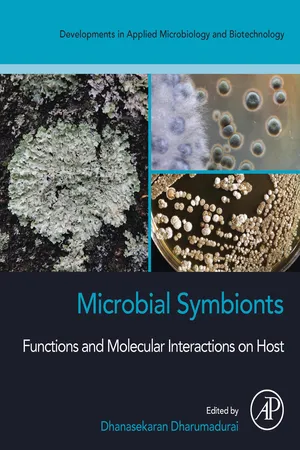
Microbial Symbionts: Functions and Molecular Interactions on Host focuses on microbial symbionts of plants, animals, insects and molecular methods in the identification of microbial symbionts. The book describes the molecular mechanism and interactions of symbiosis of microbiome in plants, animals and humans. It brings the latest techniques for identification, localization and functional characterization of host-associated microbes and explains the role/importance of microbial symbionts. This comprehensive reference covers a wide range of symbiotic microorganisms used for basic and advanced techniques associated with the isolation, characterization and identification of microbial symbiotic microorganisms and their functions and molecular interactions on the host.
The book will also helps users plan and execute experiments with appropriate knowledge rather than experimental trial and error in a wide range of disciplines, including Microbiology, Biotechnology, Botany and Zoology.
- Provides basic knowledge and working protocols for a wide range of disciplines like Microbiology, Biotechnology, Botany and Zoology
- Presents the most current information in symbiotic microbiome and holobiome
- Includes color photos pertaining to techniques
Information
Topic
Ciencias biológicasSubtopic
MicrobiologíaTable of contents
- Cover
- Table of Contents
- Title Page
- Copyright
- List of contributors
- About the editor
- Preface
- Chapter 1 Cyanobacterial symbiotic interaction in pteridophytes
- Chapter 2 Cyanobacterial symbiosis with bryophytes
- Introduction to cyanobacterial symbiosis
- Chapter 3 Symbiotic cyanobacteria in gymnosperms
- Chapter 4 Cyanobacterial symbionts from angiosperm
- Introduction
- Chapter 5 Frankia from actinorhizal plants
- Chapter 6 Conventional and unconventional symbiotic nitrogen fixing bacteria associated with legumes
- Introduction
- Chapter 7 Ensifer meliloti is the main microsymbiont of Prosopis chilensis in arid soils of Eastern Morocco
- Introduction
- Chapter 8 Fungal mycorrhizae from plants roots
- Introduction
- Chapter 9 Photobiont symbiotic association in lichens
- Chapter 10 Endolichenic actinobacterial association in fruticose, foliose, and crustose lichens
- Introduction
- Chapter 11 Epibionts and endolichenic microbial communities
- Introduction
- Chapter 12 Mycobionts interactions in lichen
- Chapter 13 Symbiotic functional molecules in endophytic actinobacteria in actinorhizal plants
- Introduction
- Chapter 14 Bacterial symbiosis in edible mushrooms
- Introduction
- Chapter 15 Symbiotic microbial interactions in medicinal mushroom
- Introduction
- Chapter 16 Molecular symbiotic interactions of cyanobacterial association in nonvascular seedless plants
- Chapter 17 Microbial symbionts from Algae
- Chapter 18 Screening of symbiotic ability of Rhizobium under hydroponic conditions
- Chapter 19 Arbuscular mycorrhizal community analysis from a grassland ecosystem
- Introduction
- Chapter 20 Mass production of cyanobacterial symbiont
- Introduction
- Chapter 21 Exploration of Rhizobium for its mass production and plant growth promoting properties
- Chapter 22 Symbiotic associations of Frankia in actinorhizal plants
- Introduction
- Chapter 23 Symbiotic microbes from ciliates
- Chapter 24 Symbiotic microbes from corals
- Introduction
- Chapter 25 Symbiotic microbes from pig gut
- Chapter 26 Symbiotic functions of rumen microbial community in dairy cows
- Introduction
- Chapter 27 Microbial symbionts in ruminants
- Introduction
- Chapter 28 Vibrio fischeri in squid light organ
- Chapter 29 Symbiotic microbial interactions in fish gut
- Introduction
- Chapter 30 Symbiotic microbes from the human gut
- Introduction
- Chapter 31 Symbiotic association of gut microbiome in health and diseases at ageing
- Introduction
- Chapter 32 Microbial symbionts in polar animals
- Chapter 33 Primary and secondary endosymbionts aphid
- Chapter 34 Wolbachia
- Chapter 35 Endosymbionts
- General aspects of Wolbachia
- Chapter 36 Endosymbiotic interactions of actinobacteria with the insects
- Chapter 37 Termitomyces fungus combs—formation, structure, and functional aspects
- Introduction
- Chapter 38 Host–microbial symbiotic relationships in sponges
- Chapter 39 Functional metagenomics profiling of symbiotic microbiome
- Introduction
- Chapter 40 Key model systems in animal–microbe beneficial interactions
- Chapter 41 Culture-independent and culture-dependent approaches in symbiont analysis
- Introduction
- Chapter 42 Culture-independent and culture-dependent approaches in symbiont analysis
- Introduction
- Chapter 43 In situ techniques to study noncultivable microbial symbionts
- Introduction
- Chapter 44 Transcriptome analysis of symbiotic microbes
- Introduction to transcriptome analysis
- Chapter 45 Secondary metabolites produced from symbiotic microbes
- Symbiosis: origin, development, and production of metabolites
- Chapter 46 Quorum sensing relationship analysis of microbial symbionts
- Chapter 47 Biosynthetic gene clusters of symbiotic gut microbiome in succession of human health
- Chapter 48 Functions and molecular interactions of the symbiotic microbiome in oral cavity of humans
- Introduction
- Index
- Index
- Index
Trusted by 375,005 students
Access to over 1.5 million titles for a fair monthly price.
Study more efficiently using our study tools.
Frequently asked questions
Yes, you can cancel anytime from the Subscription tab in your account settings on the Perlego website. Your subscription will stay active until the end of your current billing period. Learn how to cancel your subscription
No, books cannot be downloaded as external files, such as PDFs, for use outside of Perlego. However, you can download books within the Perlego app for offline reading on mobile or tablet. Learn how to download books offline
Perlego offers two plans: Essential and Complete
- Essential is ideal for learners and professionals who enjoy exploring a wide range of subjects. Access the Essential Library with 800,000+ trusted titles and best-sellers across business, personal growth, and the humanities. Includes unlimited reading time and Standard Read Aloud voice.
- Complete: Perfect for advanced learners and researchers needing full, unrestricted access. Unlock 1.5M+ books across hundreds of subjects, including academic and specialized titles. The Complete Plan also includes advanced features like Premium Read Aloud and Research Assistant.
We are an online textbook subscription service, where you can get access to an entire online library for less than the price of a single book per month. With over 1.5 million books across 990+ topics, we’ve got you covered! Learn about our mission
Look out for the read-aloud symbol on your next book to see if you can listen to it. The read-aloud tool reads text aloud for you, highlighting the text as it is being read. You can pause it, speed it up and slow it down. Learn more about Read Aloud
Yes! You can use the Perlego app on both iOS and Android devices to read anytime, anywhere — even offline. Perfect for commutes or when you’re on the go.
Please note we cannot support devices running on iOS 13 and Android 7 or earlier. Learn more about using the app
Please note we cannot support devices running on iOS 13 and Android 7 or earlier. Learn more about using the app
Yes, you can access Microbial Symbionts by Dhanasekaran Dharumadurai in PDF and/or ePUB format, as well as other popular books in Ciencias biológicas & Microbiología. We have over 1.5 million books available in our catalogue for you to explore.