- 348 pages
- English
- ePUB (mobile friendly)
- Available on iOS & Android
eBook - ePub
About this book
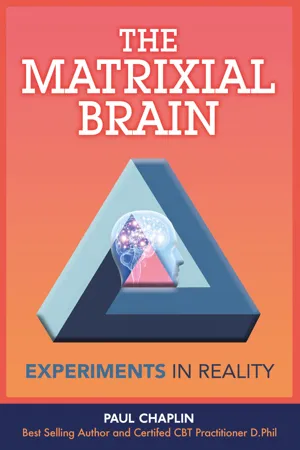
Matrixial Logic: Forms of Inequality provided a revolutionary new analysis of how we actually think. How the logic of reality and the logic of the mind actually work.
Secret Self: Finding the Power of You was the companion volume. In Secret Self a radical new Systems Architecture of the human Self was presented. Making sense at last of how we think and feel. How we can think governs what we can think.
Both books are filled with brain experiment "Experiences". Readers are able to try the Experiences themselves and so gain a much greater insight into the ideas discussed in the books.
Key Experiences from Matrixial Logic and Secret Self were turned into three sets of Experiments. An independent research company formed three cohorts of 30 test subjects each, providing 90 test subjects in total.
The Matrixial Brain sets out all the Experiments and results in full. Results which invoke a radical reappraisal of established theories in neuroscience, philosophy and psychology.
We believe that we can think anything we want to. The Experiments also demonstrate the hidden architecture of the mind, and show, that in reality, we can't.
Readers can try all the Experiments for themselves, and can participate anonymously in the growing database of test subjects.
The Experiments are important for what they reveal to us about the human brain, its workings, and connections with reality. They also show us the pathways to successful therapeutic interventions. By exploring the limits of your mind, you can change your life.
Information
Table of contents
- Cover
- Title Page
- Copyright Page
- Contents
- Preface
- Part 1 - Mind Matters
- Part 2 - Experiments in Reality
- Part 3 - Mind Models
- 1. Statistical Analysis
- 2. Experiment Sets and Results
- 3. Results Tables
- Footnotes
Trusted by 375,005 students
Access to over 1.5 million titles for a fair monthly price.
Study more efficiently using our study tools.
Frequently asked questions
Yes, you can cancel anytime from the Subscription tab in your account settings on the Perlego website. Your subscription will stay active until the end of your current billing period. Learn how to cancel your subscription
No, books cannot be downloaded as external files, such as PDFs, for use outside of Perlego. However, you can download books within the Perlego app for offline reading on mobile or tablet. Learn how to download books offline
Perlego offers two plans: Essential and Complete
- Essential is ideal for learners and professionals who enjoy exploring a wide range of subjects. Access the Essential Library with 800,000+ trusted titles and best-sellers across business, personal growth, and the humanities. Includes unlimited reading time and Standard Read Aloud voice.
- Complete: Perfect for advanced learners and researchers needing full, unrestricted access. Unlock 1.5M+ books across hundreds of subjects, including academic and specialized titles. The Complete Plan also includes advanced features like Premium Read Aloud and Research Assistant.
We are an online textbook subscription service, where you can get access to an entire online library for less than the price of a single book per month. With over 1.5 million books across 990+ topics, we’ve got you covered! Learn about our mission
Look out for the read-aloud symbol on your next book to see if you can listen to it. The read-aloud tool reads text aloud for you, highlighting the text as it is being read. You can pause it, speed it up and slow it down. Learn more about Read Aloud
Yes! You can use the Perlego app on both iOS and Android devices to read anytime, anywhere — even offline. Perfect for commutes or when you’re on the go.
Please note we cannot support devices running on iOS 13 and Android 7 or earlier. Learn more about using the app
Please note we cannot support devices running on iOS 13 and Android 7 or earlier. Learn more about using the app
Yes, you can access The Matrixial Brain by Paul Chaplin in PDF and/or ePUB format, as well as other popular books in Psychology & Experimental Psychology. We have over 1.5 million books available in our catalogue for you to explore.