
eBook - ePub
Religion, Race, Rights
Landmarks in the History of Modern Anglo-American Law
- 332 pages
- English
- ePUB (mobile friendly)
- Available on iOS & Android
eBook - ePub
About this book
The book highlights the interconnections between three framing concepts in the development of modern western law: religion, race, and rights. The author challenges the assumption that law is an objective, rational and secular enterprise by showing that the rule of law is historically grounded and linked to the particularities of Christian morality, the forces of capitalism dependent upon exploitation of minorities, and specific conceptions of individualism that surfaced with the Reformation in the sixteenth century and rapidly developed in the Enlightenment in the seventeenth and eighteenth centuries. Drawing upon landmark legal decisions and historical events, the book emphasises that justice is not blind because our concept of justice changes over time and is linked to economic power, social values, and moral sensibilities that are neither universal nor apolitical. Highlighting the historical interconnections between religion, race and rights aids our understanding of contemporary socio-legal issues. In the twenty-first century, the economic might of the USA and the west often leads to a myopic vision of law and a belief in its universal application. This ignores the cultural specificity of western legal concepts, and prevents us from appreciating that, analogous to previous colonial periods, in a global political economy Anglo-American law is not always transportable, transferable, or translatable across political landscapes and religious communities.
Information
I
Moving toward Separation of
Church and State
1
Martin Luther and the Challenge
to the Catholic Church (1517)
FOR MANY PEOPLE, particularly those living in the United States, the name Martin Luther does not conjure up the sixteenth-century German monk and the Reformation, but rather Martin Luther King Jr and the civil rights era of the 1960s. Over 400 years separates the two men, and on the surface there appears to be, apart from sharing the same name, very little in common between the Catholic monk and the twentieth-century African-American activist and Baptist minister.
Despite the many centuries that separate the two men, and their vastly different worldviews, especially with respect to the role of religion, it could be argued that there are similarities and continuities between them. Both men drew upon their deep religious faith as an aid to incite and navigate political revolution. Both men were dedicated to the ideal of equality and self-determination. Both men objected to ‘top-down’ religious hierarchies that dictated to the congregation. And neither man—each from relatively humble and modest backgrounds—could have foreseen their personal role in opening up the political space for profound social and legal change.
In a sense, Martin Luther the monk ushered in the modernist age by highlighting the abuses of a clerical hierarchy, citing what he viewed as extreme corruption within the Catholic Church. Such abuses and corruption, he argued, denied ordinary people access to salvation and divine justice. Some 400 years later, Martin Luther King Jr continued this trajectory by highlighting the institutional discrimination in the US legal system, demanding that all individuals, of whatever religion or race, should have access to secular justice. Indeed, in his ‘Letter from a Birmingham Jail’, Martin Luther King makes express reference to the monk and his so-called ‘extremist’ non-violent position which King saw himself as following. Perhaps what both men shared more than anything else was the belief that law—be it divine or secular in origin—was vital in guaranteeing individuals some measure of equality and independence from abuses of power by religious and political leaders.
RELIGION: PROTEST AND REFORM
In this chapter I examine the role played by Martin Luther in bringing about the Reformation in the first half of the sixteenth century. First and foremost, it is important to keep in mind that in 1500 in western Europe, the Protestant Church and its many descendent denominations and branches such as Lutheranism, Calvinism, Anabaptism, Anglicanism, Presbyterianism, Baptism, Methodism, Pentecostalism, Adventism, and so on simply did not exist. In the early sixteenth century the only sanctioned Christian religion in existence was Catholicism. It had undergone internal challenges and earlier, in the eleventh century, had split into two branches. This split or schism resulted in the western Catholic Church, centered in Rome, and the eastern Orthodox Church, with its center in Constantinople (current day Istanbul). Technically, this divide still exists today between these two branches of the original Catholic Church.
Martin Luther is primarily remembered for challenging the Catholic Church and breaking its dominant and enormously powerful political, economic and social hold over western Europe. He achieved this massive destabilization by establishing a radical theological basis for a new Christian Protestant faith, which in time developed into an alternative set of religious, legal and political institutions and a profound restructuring of the way people thought and behaved in society (Witte 2006: 38–41, 49–62). For the first time in hundreds of years, Luther pressed people—both those who were attracted to his ideas and those who were not—to be self-conscious about their faith and to reflect upon religion as something conceptually distinct from their everyday activities, behaviors and thoughts. For the first time in hundreds of years, the ‘religious culture’ of the medieval worldview was challenged. It could no longer be taken for granted that Catholic values permeated all thought or that the Catholic Church dictated all human endeavor (Berman 2003; MacCulloch 2003).
Despite Luther’s fierce attack on the Catholic Church, he was not an activist or agitator in the sense that he deliberately set out to disrupt society. On the contrary, Luther was a deeply spiritual man who was horrified by the abuses of power of the Vatican in Rome and the corrupting influences of the Catholic Church across the vast Holy Roman Empire. Like his contemporary Erasmus, arguably the most eminent humanist scholar and Catholic theologian of the period, Luther called for a return to the early church and a simplified gospel devoid of ritual and excess. Luther, at least in the early years of his writing, did not advocate a new conception of faith but rather pushed for reform of the church from within (hence Reformation). However, in his protestations against the church (hence Protestantism) Luther inadvertently acted as a catalyst for massive religious, social, economic, political and cultural upheavals. These upheavals forever changed the historical trajectory of western Europe and the New World.
In a sense, Luther’s theological position created a conceptual bridge between a declining European medieval world controlled by the overarching authority of the Catholic Church, and an emerging modern era characterized by humanist thinking and new forms of nationalism, capitalism, and ideas about the appropriate relationship between church and government. In the immediate decades prior to Luther’s attack, political and economic discontent had been brewing among northern Europeans, fueled by popular anxiety about the turn of the century and the coming apocalypse (Figure 1). In this period of general discontent, Luther’s public sermons provided the theological impetus for change. Luther’s personal charisma, the effectiveness of the printing press in spreading his teachings across Europe, and the failure by Pope Leo X in Rome (and Charles V, Emperor of the Holy Roman Empire) to take immediate action and silence him for heresy, provided a unique moment for widespread revolution. Luther approved of some aspects of this revolution and denounced others such as the calls for change expressed in the Peasants’ War of 1524–25 and the Anabaptist revolts in Germany, Switzerland and Austria.
Luther’s thoughts and writings, and their widespread impact across western Europe, were indicative of a general shift in thinking among ordinary people that characterized the early modern era. An important element in this shift was a new emphasis given to secular law and forms of governance over the previously accepted authority of an overarching ecclesiastical power. This rising legal consciousness and turn to secular law did not mean that men such as Luther no longer believed in the omnipresence of a god. Rather, Luther articulated the division between earthly and spiritual kingdoms and called for each to have its own independent laws and authority. For the first time in European society there was open discussion and debate about the relationship between individuals and God, which in time led to what we today recognize as the separation of church and state.1
The degree to which changes in people’s personal religious beliefs in the Reformation period directly caused changes in law, legal philosophy and legal practice remains open to academic debate (see Roeber 2006). What is indisputable is that Luther, albeit largely unwittingly, created the opportunity and momentum for a radical revolution in western legal philosophy and practice by highlighting the religious abuses of the Church and the canon law that supported it (Berman 2003, 1993; Gorski 2003; Witte 2002). In demonstrating a connection between theological and legal reform, this chapter contextualizes Luther’s challenge to religious practices against a wider backdrop of political, social and economic upheavals that were taking place at the beginning of the early modern period. This wider context helps to underscore why Luther was viewed by the Church as a heretic and excommunicated, living a good part of his life in exile and in constant threat of danger, and more importantly, why Luther’s challenge to the Catholic faith had such an enormous impact on German and west European legal, political and social institutions. This broader historical context is essential to understanding why this book on the development of modern Anglo-American law begins with Martin Luther, and why a reader in the twenty-first century should care about a monk who lived nearly 500 years ago.
There is another important reason why this book begins with Martin Luther as the first legal landmark in the development of modern western law. By taking Luther and the Reformation period as the starting point, the reader may see that the origins of what we think of as Anglo-American law are grounded in numerous European and non-European legal cultures and traditions. In the early 1500s, when Luther began to challenge the practices of the Church, the legal system in place in much of Europe was extraordinarily complicated and drew its authority and meaning from ancient cultures and various religious traditions not exclusively Christian in origin. As the legal historian Raol Van Caenegem has noted, ‘medieval and modern Europe has not only borrowed many of its constituent elements from elsewhere, but has borrowed (from various cultural traditions) elements that were not only different, but contradictory and at first sight mutually exclusive’ (Van Caenegem 1991: 117).2 Appreciating the complex foundations of European law is vital in order to break down a prevailing and commonplace view—that has existed since the early modern period began in the 1500s—that western law is intrinsically unique, superior, and has very different historical foundations from the laws that existed in Islamic, Asian and other non-European societies.
Who was Martin Luther?
Luther was born in 1483 in Eisleben, Germany, to Hans and Margarethe Luther. In 1501, at the age of 17, Martin attended the University of Erfurt, where he excelled in philosophy and law. In 1505 he gave up his legal career, much to the disappointment of his father, and entered the monastery of the Augustinian Eremites. Ordained in 1507, he received his doctorate at the new university of Wittenberg and was subsequently appointed professor of theology (Figure 2). Elector Frederick of Saxony, the founder and patron of the new university, was delighted by Luther’s steadily growing reputation as a significant scholar and theologian (Maland 1982: 84).
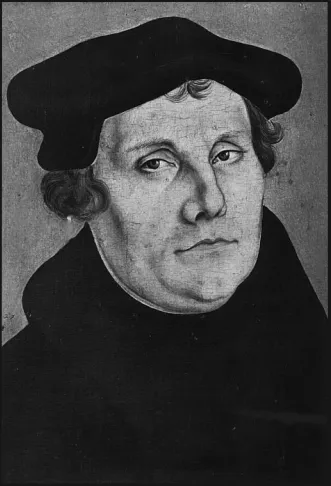
Figure 2. Luther at Age 46, 1529, Lucas Cranach the Elder. Hessisches Landesmuseum Darmstadt.
Cranach (1472–1553) became a court painter to Frederick the Wise of Saxony in 1504. Over the years he produced portraits of many of the Saxon Electors, members of the court, and leaders of the Reformation. Cranach was a close friend of Martin Luther; he engraved a picture of him in 1520 and later painted him in 1529. Cranach was present at Luther’s marriage to Katharina von Bora and was godfather to his first child.
Martin Luther was an intensely spiritual man, but was weighted down with feelings of anguish and despair. According to David Maland, an historian of the sixteenth and seventeenth centuries:
Luther’s dilemma can be simply stated. He believed that God required him to keep His law in all points; he also believed that this was beyond his ability and that therefore he was damned. Nothing in the ordered life could give him comfort. Neither the discipline of the monastery nor the rigorous mortification of the flesh could assuage the over-powering sense of guilt which beset him. ‘I was a good monk’ he wrote in later life ‘and I kept the rule of my Order so strictly that I may say that if ever a monk got to Heaven by his monkery, it was I … if I had kept on any longer I should have killed myself with vigils, prayers, reading, and other works’. (Maland 1982: 84–85)
For years Luther suffered in the belief that he would never receive God’s grace and salvation. However, around 1514, upon re-reading the Greek text of the Epistles, he started to reinterpret the term ‘righteousness’ and the text ‘the just shall live by faith alone’. Luther began to see in this reinterpretation promise of hope and liberation. He wrote, ‘I grasped that the justice of God justifies us through faith. Whereupon I felt myself to be reborn and to have gone through open doors into paradise’ (Maland 1982: 86). This new interpretation of scripture lifted a heavy weight from Luther’s heart and allowed him to rejoice in God’s righteousness rather than be oppressed and frightened by it. For Luther, faith alone justified humanity. Thus no amount of penitence could absolve one of one’s sins, since what was required from an individual was true and pure belief.
Luther’s 95 Theses
According to historical tradition, on 31 October 1517, Luther posted on the door of the castle church in Wittenberg a document known as the 95 Theses. This posting was deliberately done on the eve of All Saints Day when many pilgrims were in town for a celebration, and Luther was assured that his document would receive maximum exposure and publicity. While it may seem odd to post a document on the door of a local castle or church, this was quite common in the sixteenth century if a person wanted to raise a subject for general consideration in the town or village.
Luther’s document listed 95 concerns that he had with what he saw as the corruption and dishonesty of the Catholic Church. As noted above, Luther was not the first to highlight these problems. In fact other theologians, scholars, artists and social commentators had leveled similar criticisms at the Church from the latter part of the fifteenth century onwards. However, unlike these other critics, Luther managed to ignite a social movement of widespread and enormous impact. His major complaint against the Church was its practice of selling letters of indulgence or paper decrees that could be bought from a papal commissioner. Theoretically, the buying of indulgences ensured absolution by releasing a sinner from having to perform some form of earthly penitence. The Church endorsed the idea that indulgences could in effect buy God’s pardon, absolve one from sin, and secure the purchaser’s salvation. In short, papal letters were seen as an aid to securing one’s place in heaven. ‘They were hawked about as letters of credit on God Himself, and their spheres of influence was even extended to souls in purgatory so that their time of ordeal might be reduced’ (Maland 1982: 79). According to a saying of the time, ‘As soon as the coin in the coffer rings, the soul from purgatory springs’ (Bainton 1995: 6; Maland 1982: 79).
Luther was disgusted with this practice, arguing that only God could pardon one’s earthly sins. Thus there was no need to spend money on a piece of paper since the sale of indulgences was, in essence, a hoax foisted on naive parishioners by shrewd and ruthless clergymen. In Luther’s opinion, all individuals were free to make their own determination with God. Hence there was no need for salvation to be in any way mediated by and through members of the church hierarchy. In Luther’s words:
there is no true, basic difference between laymen and priests, princes, and bishops, between religious and secular, except for the sake of office and work, but not for the sake of status. … Therefore … those who are now called ‘spiritual’, that is priests, bishops, or popes, are neither different from other Christians nor superior to them. (Luther cited in Porter 1974: 41)
In Luther’s call for a return to the religion’s early teachings and a simpler relationship with God based on love and faith, his ideas explicitly undermined the rituals of the Church and its symbolic power. Given the complex interconnections of religion, politics and economics in the sixteenth century, it was impossible to confine Luther’s criticisms of the Church to a debate about theological interpretation of scripture. The sale of indulgences was a highly lucrative commercial business. The profits from indulgences paid churchmen’s salaries and debts, and were politically important in supporting the standing of the clergy within the church hierarchy. Luther’s criticism of the sale of indulgences not only brought into question prevailing church practices with respect to an individual’s salvation, it also attacked a revenue stream that sustained the opulent lifestyle of the pope and the upkeep of the Vatican in Rome, as well as the building and preservation of monasteries across the Holy Roman Empire (Maland 1982: 87).3
Luther’s 95 Theses was quickly picked up by a local Wittenberg printer and disseminated across Europe. By 1519 students from England, France and Italy were flocking to hear his lectures and sermons. The pope, who had been sent a copy of the 95 Theses by the cardinal responsible for the town of Wittenberg, Albert of Hohenzollern, grew increasingly alarmed by Luther’s success. Po...
Table of contents
- Cover Page
- Title Page
- Copyright
- Dedication
- Contents
- List of Figures
- Acknowledgements
- Preface
- Introduction: Connecting Religion, Race and Rights
- I: Moving toward Separation of Church and State
- II: Capitalism, Colonialism and Nationalism
- III: Religion, Race and Rights in a Global Era
- Conclusion: The Resurgence of Faith
- Bibliography
- Index
Trusted by 375,005 students
Access to over 1.5 million titles for a fair monthly price.
Study more efficiently using our study tools.
Frequently asked questions
Yes, you can cancel anytime from the Subscription tab in your account settings on the Perlego website. Your subscription will stay active until the end of your current billing period. Learn how to cancel your subscription
No, books cannot be downloaded as external files, such as PDFs, for use outside of Perlego. However, you can download books within the Perlego app for offline reading on mobile or tablet. Learn how to download books offline
Perlego offers two plans: Essential and Complete
- Essential is ideal for learners and professionals who enjoy exploring a wide range of subjects. Access the Essential Library with 800,000+ trusted titles and best-sellers across business, personal growth, and the humanities. Includes unlimited reading time and Standard Read Aloud voice.
- Complete: Perfect for advanced learners and researchers needing full, unrestricted access. Unlock 1.5M+ books across hundreds of subjects, including academic and specialized titles. The Complete Plan also includes advanced features like Premium Read Aloud and Research Assistant.
We are an online textbook subscription service, where you can get access to an entire online library for less than the price of a single book per month. With over 1.5 million books across 990+ topics, we’ve got you covered! Learn about our mission
Look out for the read-aloud symbol on your next book to see if you can listen to it. The read-aloud tool reads text aloud for you, highlighting the text as it is being read. You can pause it, speed it up and slow it down. Learn more about Read Aloud
Yes! You can use the Perlego app on both iOS and Android devices to read anytime, anywhere — even offline. Perfect for commutes or when you’re on the go.
Please note we cannot support devices running on iOS 13 and Android 7 or earlier. Learn more about using the app
Please note we cannot support devices running on iOS 13 and Android 7 or earlier. Learn more about using the app
Yes, you can access Religion, Race, Rights by Eve Darian-Smith in PDF and/or ePUB format, as well as other popular books in Droit & Histoire juridique. We have over 1.5 million books available in our catalogue for you to explore.