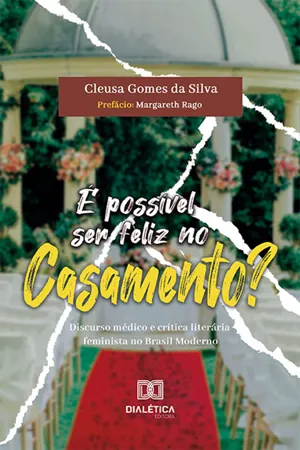
eBook - ePub
É possível ser feliz no casamento?
discurso médico e crítica literária feminista no Brasil Moderno
- 160 pages
- Portuguese
- ePUB (mobile friendly)
- Available on iOS & Android
eBook - ePub
É possível ser feliz no casamento?
discurso médico e crítica literária feminista no Brasil Moderno
About this book
O livro "É possível ser feliz no casamento? Discurso médico e crítica literária feminista no Brasil Moderno" analisou o discurso médico e a produção feminina literária sobre o vínculo conjugal, entre os anos 1900-1940 na história brasileira. Ao direcionar a análise às ações de muitas mulheres, dando destaque às possibilidades diferenciadas e singulares da experiência feminina, foi possível visualizar o modo diferenciador de perceber o casamento nos escritos literários femininos, construído e produzido por um registro que não o masculino e, dessa maneira, a pesquisa ressaltou a interferência e a participação das mulheres na construção cultural em contraponto ao discurso masculino médico conservador do período. Ao trabalhar com escritoras que escreveram textos literários, cujos personagens tematizam o casamento, a historiadora resgatou o modo de escrever feminino e a contribuição de algumas literatas no processo de ampliação da temática do vínculo amoroso na esfera pública da época. Ademais, recuperou e visibilizou as maneiras de fazer/escrever femininas numa construção cultural em que homens e mulheres interagem sendo igualmente produtores de sentidos nas relações sociais, refutando atribuir o caráter de unilateralidade à produção de cultura.
Trusted by 375,005 students
Access to over 1.5 million titles for a fair monthly price.
Study more efficiently using our study tools.
Information
Subtopic
World HistoryIndex
HistoryTable of contents
- Capa
- Folha de Rosto
- Créditos
- INTRODUÇÃO
- CAPÍTULO I A MODERNIZAÇÃO DA MULHER E A REATUALIZAÇÃO DAS RELAÇÕES DE GÊNERO NO BRASIL (1900-1940)
- CAPÍTULO II A CRÍTICA FEMININA AO CASAMENTO
- CAPÍTULO III A TEMATIZAÇÃO DO CASAMENTO NO DISCURSO MASCULINO
- CONSIDERAÇÕES FINAIS
- REFERÊNCIAS
- ANEXOS
Frequently asked questions
Yes, you can cancel anytime from the Subscription tab in your account settings on the Perlego website. Your subscription will stay active until the end of your current billing period. Learn how to cancel your subscription
No, books cannot be downloaded as external files, such as PDFs, for use outside of Perlego. However, you can download books within the Perlego app for offline reading on mobile or tablet. Learn how to download books offline
Perlego offers two plans: Essential and Complete
- Essential is ideal for learners and professionals who enjoy exploring a wide range of subjects. Access the Essential Library with 800,000+ trusted titles and best-sellers across business, personal growth, and the humanities. Includes unlimited reading time and Standard Read Aloud voice.
- Complete: Perfect for advanced learners and researchers needing full, unrestricted access. Unlock 1.5M+ books across hundreds of subjects, including academic and specialized titles. The Complete Plan also includes advanced features like Premium Read Aloud and Research Assistant.
We are an online textbook subscription service, where you can get access to an entire online library for less than the price of a single book per month. With over 1.5 million books across 990+ topics, we’ve got you covered! Learn about our mission
Look out for the read-aloud symbol on your next book to see if you can listen to it. The read-aloud tool reads text aloud for you, highlighting the text as it is being read. You can pause it, speed it up and slow it down. Learn more about Read Aloud
Yes! You can use the Perlego app on both iOS and Android devices to read anytime, anywhere — even offline. Perfect for commutes or when you’re on the go.
Please note we cannot support devices running on iOS 13 and Android 7 or earlier. Learn more about using the app
Please note we cannot support devices running on iOS 13 and Android 7 or earlier. Learn more about using the app
Yes, you can access É possível ser feliz no casamento? by Cleusa Gomes da Silva in PDF and/or ePUB format, as well as other popular books in History & World History. We have over 1.5 million books available in our catalogue for you to explore.