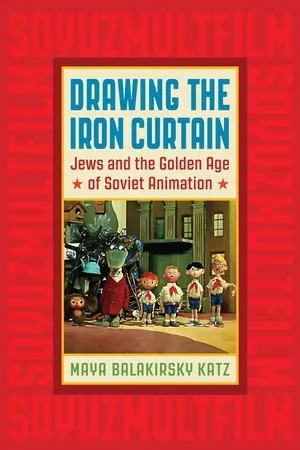
In the American imagination, the Soviet Union was a drab cultural wasteland, a place where playful creative work and individualism was heavily regulated and censored. Yet despite state control, some cultural industries flourished in the Soviet era, including animation. Drawing the Iron Curtain tells the story of the golden age of Soviet animation and the Jewish artists who enabled it to thrive. Art historian Maya Balakirsky Katz reveals how the state-run animation studio Soyuzmultfilm brought together Jewish creative personnel from every corner of the Soviet Union and served as an unlikely haven for dissidents who were banned from working in other industries. Surveying a wide range of Soviet animation produced between 1919 and 1989, from cutting-edge art films like Tale of Tales to cartoons featuring “Soviet Mickey Mouse” Cheburashka, she finds that these works played a key role in articulating a cosmopolitan sensibility and a multicultural vision for the Soviet Union. Furthermore, she considers how Jewish filmmakers used animation to depict distinctive elements of their heritage and ethnic identity, whether producing films about the Holocaust or using fellow Jews as models for character drawings. Providing a copiously illustrated introduction to many of Soyuzmultfilm’s key artistic achievements, while revealing the tumultuous social and political conditions in which these films were produced, Drawing the Iron Curtain has something to offer animation fans and students of Cold War history alike.
- 304 pages
- English
- ePUB (mobile friendly)
- Available on iOS & Android
eBook - ePub
Drawing the Iron Curtain
About this book
1
Behind the Scenes
Jews and the Studio System, 1919–1989
Employee nostalgia for Soyuzmultfilm tends to be so effusive that it can be difficult to gauge its historical veracity. Where memoirs fall short in quantitative research, much qualitative material can be gleaned, and what comes across is that the studio nurtured a rich social life that sometimes even took the place of the traditional family structure, especially for those employees orphaned during the Second World War. When interviewed after his retirement, Jewish designer Leonid Shvartsman mentioned the studio’s social life as its most definitive characteristic: “Above all, the studio affected the people who created these films. It was truly a collective—a large family of different generations, with their relationships, traditions, and rules. We, the young, looked up to the older masters, the patriarchs of animation, and gladly plunged ourselves into the atmosphere of studio legends, holidays, grief, drawings, and sketches.”1 In a recollection of his career at Soyuzmultfilm, Shvartsman, who had lost both home and family in the Second World War, contrasted the indignities of postwar living conditions with the informal respectability of studio life: “Everyone who is left in the profession, the older generation, remembers it with similar longing and love. It was an unbelievable home. Back then in the 1950s we all lived in kommunalkas [cooperative apartments] and people said we worked too hard, but we simply lived there. No one wanted to return to those grim communal apartments and so we worked there, we played chess and, forgive me, we drank and fraternized” (fig. 1.1).2 One of Shvartsman’s colleagues, Jewish artistic director Lana Azarkh, left a similar assessment of the familial atmosphere of the studio: “The studio was a big part of our lives. It was a second home. We were bored on vacation and were eager for 23-a Kaliaevskaia [former studio address]. Production manager Nikolai Bashkirov made of all of us, of different ages, different races, different characters, one big family. If anyone found out that something happened to another one of us we all rushed to the rescue. Each one’s domestic affairs were well known, [some of them] entire novels. Husbands and wives, past and present, have peacefully coexisted in the studio. Someone’s children were always running around the studio” (fig. 1.2).3
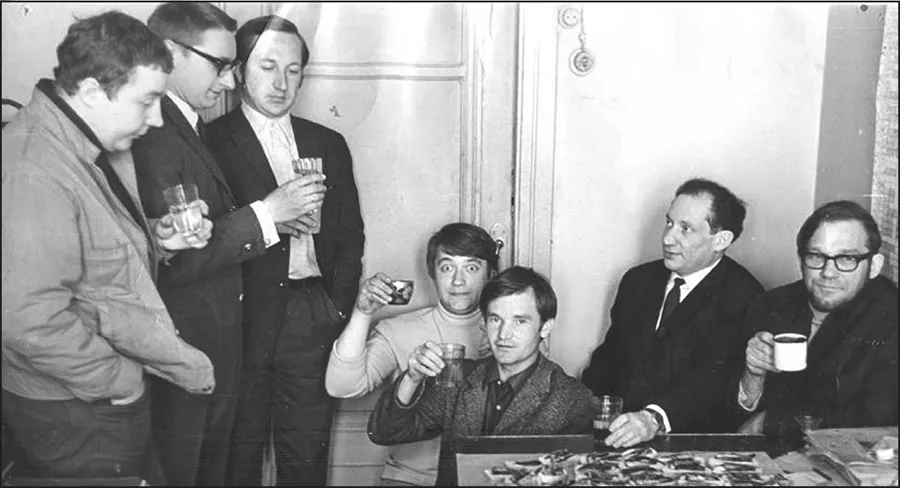
FIG. 1.1 Drinking at the studio during the filming of Attention! Wolves! From the left: Andrew Demykin, Valery Ugarov, Vladimir Morozov, Eduard Nazarov, Gennadii Sokolsky, Efim Gamburg, and Ülo-Ilmar Sooster. Courtesy of Olga Bogolyubov.
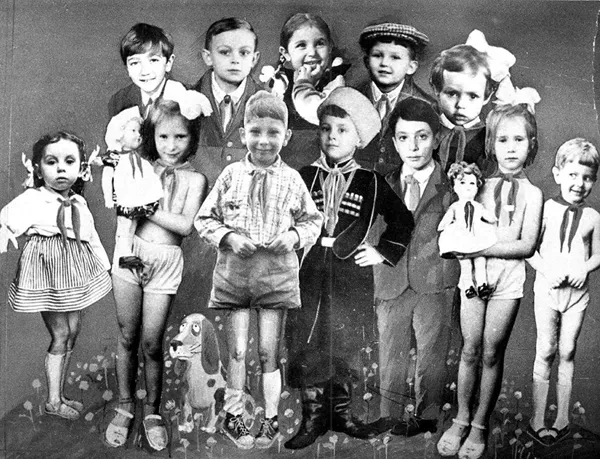
FIG. 1.2 Montage made of the children of studio employees, late 1960s. Bottom row from left: Nadia Sooster (Snesarev), Olga Bogolyubov, Shelmanov Jr., Vasily Kafanov, Turkus Jr., Lena Wolf, and Marina Ignatenko. Top row from left: Andrei Smirnov, Aleksander Chekhov, Irina Litovskaya, Aleksander Panov, and unknown. Courtesy of Olga Bogolyubov.
Although the extra-professional dealings between administrators and the creative employees were often marked by a formal character, the highly social atmosphere at the studio was nonetheless part and parcel of its attitude toward filmmaking as the product of social labor (fig. 1.3). On a regular basis, employees organized costume balls for the New Year and their children staged elaborate annual plays. The entire studio came together in the middle of the workday for birthdays, award ceremonies, the screening of completed films, and cast parties (fig. 1.4). According to former employees, there was always an excuse to push the desks together for an impromptu dinner on a late night at the office and “pass around the hat” to fund a festive meal celebrating someone’s personal achievements or family milestones.4 Employee socialization extended off campus, such as walks to the nearby pet shop or more ambitious trips to the Moscow Zoo where animators could observe naturalistic animal behaviors for their work. Younger animators designed provocative snow sculptures in the studio courtyard with fraternity flair, and film crews took overnight research trips for inspiration for their exotic animated settings (figs. 1.5–1.6). As was common practice in professional industries in the Soviet Union, the state assigned the studio an off-site plot of land on the outskirts of Moscow that employees used as a collective garden called Cartoon. The studio’s administrators assigned plots to employees to plant vegetables and medicinal herbs and, because employees had to take a train to get to their plots, the garden became an off-site center for informal socialization that employees recalled as formative to their creative lives.5 Beginning in the 1950s, the studio organized a soccer team for its employees, complete with studio uniforms, and organized outings to games. Rather than erecting policies around romantic office relationships or bemoaning the unfortunate reality of close quarters, the studio encouraged office fraternization as natural and conducive to a culture of teamwork. Employees dated, married, and divorced each other. Children of employees who practically grew up in the studio, such as director Roman Kachanov’s son and Vadim Kurchevsky’s daughter, pursued filmmaking careers of their own. To some extent, office culture always contains an element of social life, but, for Soviet Jewish artists, there seemed to be something more to the Soyuzmultfilm collaborative culture than the typical civilian job. Azarkh described her experience in the studio as one of belonging to a “secret society,” a feeling that Jewish scriptwriter Alexandra Sviridova succinctly confirms: “It was a very small, closed circle. It was like a religious sect.”6
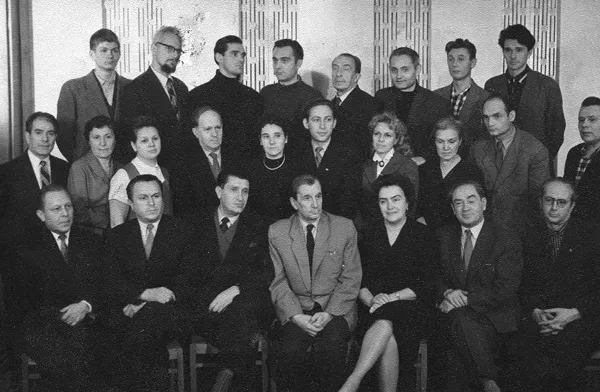
FIG. 1.3 Studio portrait of film crew for The Golden Key (1959). Courtesy of Olga Bogolyubov.
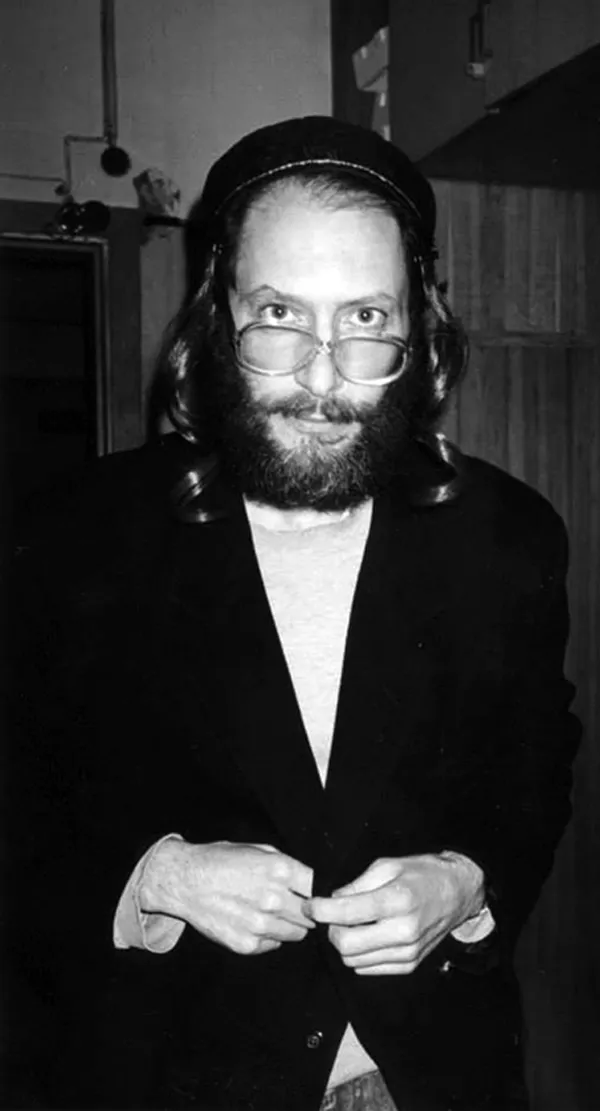
FIG. 1.4 Alexei Zaitsev dressed up as Hasidic Jew, 1980s. Courtesy of Olga Bogolyubov.
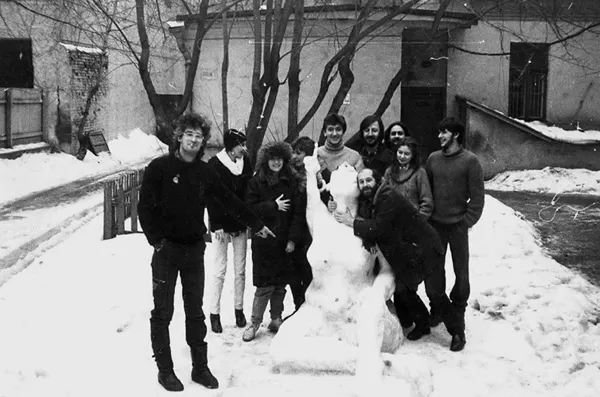
FIG. 1.5 Snowman at the studio, 1980s. Courtesy of Olga Bogolyubov.
Despite my focus on a single institution and an atypical labor force that employees likened to a “secret society” and a “religious sect,” there is, I hope, something larger at stake here. At its core, this is a story about culture-making in the Soviet capital. In looking at the formation and work of this “sect” of culture-makers, I first had to reconstruct the institutional structures that inspired employees to express an impassioned sense of belonging and that enabled Jewish content to find a national stage. In the course of my study on Jewish employees working in a nascent media industry as it came of age, I have found that tracing the studio’s “horizontal structures”—by which I mean the often unscripted interplay among studio employees—was far more useful to my understanding of filmmaking than focusing on the implementation (or subversion) of dictates originating on the administrative levels.7 I am specifically interested in the horizontal structures or micro-processes that Jewish employees helped to build, maintain, and sometimes dismantle at the individual, team, and administrative levels in order to create a conducive atmosphere for their creative work and a stable home for their professional lives. Before delving into case studies of individual filmmakers and their films, this chapter reconstructs the development of the industry as it relates to Jewish employment at Soyuzmultfilm.
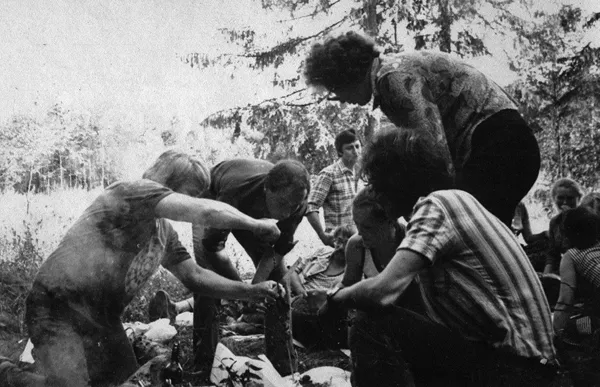
FIG. 1.6 Soyuzmultfilm employees in forest near railroad station, 1980s. Director Edouard Nazarov at left. Courtesy of Olga Bogolyubov.
Upstarts: Animation in Revolution, 1917–1924
The birth of animation in Russia began in fits and starts. Several individuals experimented with stop-motion in the first decades of the twentieth century, such as Aleksander Shiryaev (1867–1941) and Polish-born Vladislav Starevich (1882–1965), but these were individual efforts with independent programs that folded in the upheaval of the Russian Civil War. After the establishment of Bolshevik power, the Russian Telegraph Agency (Rosta), a state transportation and communication network, repurposed Starevich’s technology into what it called “dynamic graphics,” a cinematographic version of Rosta’s earlier political poster.8 Using the same proselytizing modalities of its successful poster campaigns—sequential multiframe format, bold lettering, and continuous narrative movement—Rosta relied on the graphic elements of animated film to carry a new vision of the recently formed USSR to the largely non-Russian populations in need of absorption. Using the preexisting infrastructure of the country’s railway system, Rosta outfitted film trains with the necessary machinery for production and exhibition and sent them off with a message to spread and a new medium to popularize.9 With the distance of a hundred years, the influence of animated films on Sovietness is indisputable if also misunderstood.
Given the revolutionary ethos of Rosta dynamic graphics and its intended non-Russian and largely illiterate audiences in the vast countryside, it is easy to see why animation scholars John Halas and Roger Manvell concluded that animation in Eastern Europe, “where there is a peasant tradition of craftsmanship in the carving and designing of puppets and dolls,” originated in humble roots.10 Although Halas and Manvell no doubt wished to convey to Anglo readers the aura of authenticity that they saw in the bold draftsmanship and dark coloring of Eastern European puppet animation, such a characterization makes for a damning assessment in the Russian cultural context where artisanship held a very lowbrow status.11 The misconception that animators hailed from illiterate labor pools partially arises from American animation, where many animators started out in the comics business, and partially from the rhetoric espoused by Soviet animators who defended the medium under the banner of socialist labor. Animator Aleksander Bushkin (1896–1929), for example, consciously evoked the artisanal nature of the medium, which he called “frame-shooting” (kadro-s” emka) to underscore its mechanical nature, by describing how animators “worked in haste” directly on the floor and “with one leg on the ceiling” so as to capture their topical subjects while they were still relevant.12 Bushkin’s description of animation’s salt-of-the-earth work conditions should be understood as the professional narrative of an emerging Jewish artist trying to situate the new medium within the mores of the new regime.13 Young Jewish upstarts criticized the old Russian guard represented by Starevich, whom Bushkin denigrated as a “children’s entertainer” whose puppets “walked on non-ideological ground.”14 At least in part, Bushkin’s criticism of the previous generation of animators who fled the country during the civil war period served to justify a more experimental approach to the medium.
Halas and Manvell conflated the proletariat banner with the notion that film puppetry spoke to an artisan mentality, whereas the first Soviet animators would have seen the avant-garde teleology of “industry” as bearing little relationship to peasant “artistry.” Characterizing the first animators as village artisans working in a cottage industry undermines the artistic roots of the “cult” that was coming to define the core of Soviet animation in Moscow and Leningrad in the 1920s. Those who embraced animation may have been ideological revolutionaries, but they were hardly uneducated workers embracing their ethnic heritages. When Jewish artist Yuri Merkulov (known as Deni, 1901–1979) described the first generation of Moscow animators as “unbelievable people, real communists,” his rhetorical flourishes may have invited interpretive misunderstandings.15 However, in labeling animators as “real communists,” Merkulov was paying his colleagues’ left-leaning political sympathies a compliment, and his meaning becomes more transparent in some of his more exacting descriptions of animators. Merkulov describes his colleague Nikolai Khodataev, one of the first practitioners of animation after the Russian Civil War, as a bohemian type “with a pale face like the Old Master ...
Table of contents
- Cover
- Title Page
- Copyright
- Dedication
- Contents
- Acknowledgments
- Note on Transliteration and Translation
- Introduction: Puppeteering a Self in the Soviet Union
- 1. Behind the Scenes: Jews and the Studio System, 1919–1989
- 2. Black and White: Race in Soviet Animation
- 3. The Brumberg Sisters: The Fairy Grandmothers of Soviet Animation
- 4. Big-City Jews: Setting and Censoring the Modern Fairy Tale
- 5. Tropical Russian Bears: Cheburashka’s Jewish Roots
- 6. The Pioneer’s Violin: Animating the Soviet Holocaust
- 7. Cartoon Cosmopolitans: Drawing Jews into Soviet Culture
- 8. Tale of Tales: The Rise of the Jewish Auteur Director
- Conclusion: Tell-Tale Signs and Soviet Jewish Animation
- Notes
- Filmography
- Index
- About the Author
Trusted by 375,005 students
Access to over 1.5 million titles for a fair monthly price.
Study more efficiently using our study tools.
Information
Publisher
Rutgers University PressYear
2016Print ISBN
9780813577012
Subtopic
Art GeneraleBook ISBN
9780813577029
Frequently asked questions
Yes, you can cancel anytime from the Subscription tab in your account settings on the Perlego website. Your subscription will stay active until the end of your current billing period. Learn how to cancel your subscription
No, books cannot be downloaded as external files, such as PDFs, for use outside of Perlego. However, you can download books within the Perlego app for offline reading on mobile or tablet. Learn how to download books offline
Perlego offers two plans: Essential and Complete
- Essential is ideal for learners and professionals who enjoy exploring a wide range of subjects. Access the Essential Library with 800,000+ trusted titles and best-sellers across business, personal growth, and the humanities. Includes unlimited reading time and Standard Read Aloud voice.
- Complete: Perfect for advanced learners and researchers needing full, unrestricted access. Unlock 1.5M+ books across hundreds of subjects, including academic and specialized titles. The Complete Plan also includes advanced features like Premium Read Aloud and Research Assistant.
We are an online textbook subscription service, where you can get access to an entire online library for less than the price of a single book per month. With over 1.5 million books across 990+ topics, we’ve got you covered! Learn about our mission
Look out for the read-aloud symbol on your next book to see if you can listen to it. The read-aloud tool reads text aloud for you, highlighting the text as it is being read. You can pause it, speed it up and slow it down. Learn more about Read Aloud
Yes! You can use the Perlego app on both iOS and Android devices to read anytime, anywhere — even offline. Perfect for commutes or when you’re on the go.
Please note we cannot support devices running on iOS 13 and Android 7 or earlier. Learn more about using the app
Please note we cannot support devices running on iOS 13 and Android 7 or earlier. Learn more about using the app
Yes, you can access Drawing the Iron Curtain by Maya Balakirsky Katz in PDF and/or ePUB format, as well as other popular books in Media & Performing Arts & Art General. We have over 1.5 million books available in our catalogue for you to explore.