After World War II, Hollywood’s “social problem films”—tackling topical issues that included racism, crime, mental illness, and drug abuse—were hits with critics and general moviegoers alike. In an era of film famed for its reliance on pop psychology, these movies were a form of popular sociology, bringing the academic discipline’s concerns to a much broader audience. Sociology on Film examines how the postwar “problem film” translated contemporary policy debates and intellectual discussions into cinematic form in order to become one of the preeminent genres of prestige drama. Chris Cagle chronicles how these movies were often politically fractious, the work of progressive directors and screenwriters who drew scrutiny from the House Un-American Activities Committee. Yet he also proposes that the genre helped to construct an abstract discourse of “society” that served to unify a middlebrow American audience. As he considers the many forms of print media that served to inspire social problem films, including journalism, realist novels, and sociological texts, Cagle also explores their distinctive cinematic aesthetics. Through a close analysis of films like Gentleman’s Agreement, The Lost Weekend, and Intruder in the Dust, he presents a compelling case that the visual style of these films was intimately connected to their more expressly political and sociological aspirations. Sociology on Film demonstrates how the social problem picture both shaped and reflected the middle-class viewer’s national self-image, making a lasting impact on Hollywood’s aesthetic direction.
- 194 pages
- English
- ePUB (mobile friendly)
- Available on iOS & Android
eBook - ePub
Sociology on Film
About this book
Information
Subtopic
North American History1
Two Modes of Prestige Film
In gauging the changes that Hollywood underwent during the 1940s, two scenes from “quality” films released two decades apart are exemplary. In the first, Dodsworth (William Wyler, 1936), a series of six shots immediately signal classical film narration and elevated production values. Sam Dodsworth’s (Walter Huston) entrance into an ocean liner dining room consists of an elaborate tracking shot interwoven with the crossing paths of extras behind his forward motion, then a low-angle deep-space composition that morphs into a subtle crane shot of Dodsworth, before Major Lockert (David Niven) joins him. The effect is to assert a narrational presence in excess of the characters, a point of view outside the action that, even if it does not tell the story in a way a third-person omniscient narrator does in literature, connotes a literary voice. Afterward, a low-angle deep-space shot of his wife Fran’s (Ruth Chatterton) entrance highlights much of what made the 1930s prestige picture distinctive: the modernist set design to give a sense of solidity and more grandeur than the sound stage sets actually possessed; the populated and fully furnished mise-en-scène; the somewhat experimental yet refined costume design; and the elaborate lighting arrangement keeping the star in full, flattering illumination despite camera and actor movement. Finally, the last shot doubles the love triangle theme visually by framing Fran between the two men; this framing will be repeated throughout the film. In sum, both cinematically and thematically, William Wyler and Samuel Goldwyn have given what to them—and to audiences in general—was appropriate treatment of work from a novelist like Sinclair Lewis, with high-culture credentials. “In the years that followed the Second World War,” David Thomson offers, “Wyler was Hollywood’s idea of a great director—respectable, diligent, tasteful, a servant of stars and box office potential, and a reliable master of big projects.”1 As Dodsworth reveals, the same applied before the war. William Wyler was one of the classical Hollywood directors most associated with the prestige film. His projects generally had literary sources, “serious” themes, and lavish production values.
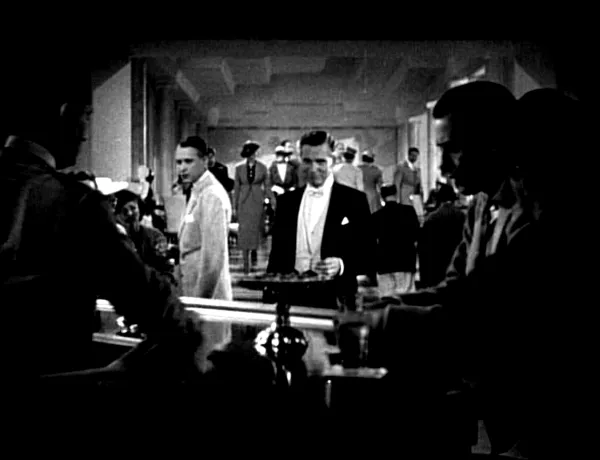
Figure 2. Dodsworth: literary adaptation and prestige production values.
In contrast, Marty (Delbert Mann, 1955) resists much of classical Hollywood’s “quality” style. In one famous scene, Marty (Ernest Borgnine) and his mother have a dinner conversation about Marty’s marriageability. The dining room set is striking in the severity of its low-key lighting and reminiscent of the use B filmmakers historically have made of minimal lighting to disguise inexpensive sets.2 Throughout the scene, fast film stock and heavy single-source overhead lighting leave very little of the room visible, just the table, the characters, and some of a sideboard. Twelve mostly static shots last two-and-a-half minutes; the scene consists of a few long takes containing much of the dialogue (shots 1, 7, and 12 last at least thirty seconds each) and a few shorter shot-countershot alternations done with a multiple-camera setup. The action, that is to say, is blocked and shot much like a television show, not a surprise given that the source was a not a canonical play or a grand historical subject but the anthology television drama program Goodyear Television Playhouse. The telecast’s director, Delbert Mann, directed the independently produced film, and its writer, Paddy Chayefsky, was known primarily for his writing for anthology programs and for Marty specifically. The result was the maintenance of a television aesthetic. As Eric Barnouw argues about the anthology drama,
To this close-up drama, live television brought an element that had almost vanished from film. . . . Film had long been dominated by its own kinds of time, made by splices in the editing room. . . . The manipulation of “film time” offered creative pleasures so beguiling to film makers that they had virtually abolished “real time” from the screen. Its appearance in long stretches of television drama gave a sense of the rediscovery of reality—especially for people whose only drama had been film.3
The film version trafficked in this “real time,” too: the previous scene, in which Marty calls a woman to ask for a date, is shot in a continuous three-and-a-half-minute take with the camera simply panning to follow Marty’s movement or tracking in for emotional punctuation. At an earlier point in Hollywood’s history, this live-theater aesthetic would have been read as “cheap” and undesirable. Marty had a negative cost of only $400,000, and it is impossible to imagine a feature film so low in budget qualifying as a prestige film in the 1930s. In 1956, however, the film garnered four Academy Awards out of eight nominations and established a precedent for smaller-scale dramas for directors with theatrical and anthology television credentials. Rather than looking for cultural legitimacy in a Broadway play adapting a Nobel Prize–winning author, as Dodsworth did, Marty inverted the cultural touchstone by looking to a television show itself looking to off-Broadway theater for cultural legitimacy.
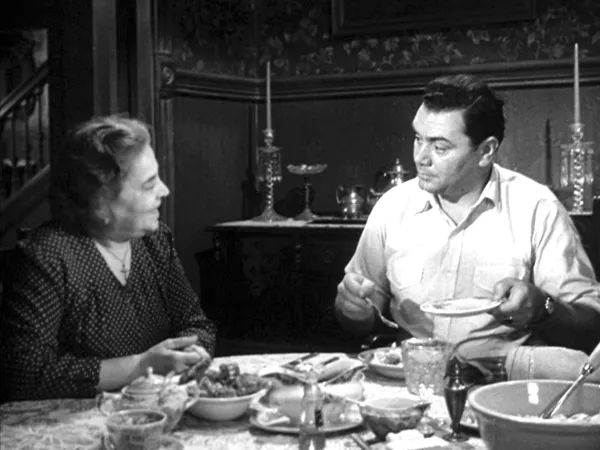
Figure 3. Marty: television style and blocking.
The aesthetic difference between these two films registers, in large part, in their diverging conceptions of what “serious” entertainment means and should be. In this area, Hollywood underwent a far-reaching transformation in the postwar years. Newer genres such as the topical political drama, the pseudodocumentary, and eventually the “mature” Broadway adaptations aimed toward thematic, stylistic, and topical importance; location shooting, contemporary settings, and social critique gained a prominent place in American commercial cinema. Beyond this trend in quantity, the postwar years saw a qualitative shift in what counted as serious cinema, since the nature and role of the prestige film changed in Hollywood. When film historians speak of the prestige film in the studio years, they designate a production category surpassing the typical A-film in its budget, treatment, and subject matter. During the postwar years, however, another type of serious film came to prominence, one that can also claim the term “prestige” picture since it speaks to or elicits acclaim from observers inside and outside the film industry. Where the film industry defined the prestige picture of the 1930s, film consumers defined the new type of prestige film. Dodsworth and Marty, we can say, represent two modes of prestige film. The industrial mode looked outward, conspicuously, to higher cultural forms to lend Hollywood narratives the aura of respectability. The socially defined mode looked inward, internalizing an aesthetic and mode of perception that were meant to be culturally more elevated. This analytic distinction is also a historical one: over time, the Hollywood prestige film transformed from an overwhelming reliance on the Dodsworth mode of prestige cinema to the increasingly internalized middlebrow sensibility of the Marty mode. By the time of the emergence of the “New Hollywood” in the 1970s and 1980s, the literary adaptations and historical films favored as prestigious in the classical years had all but disappeared.
Key to this shift was the cycle of social problem films released from 1945 to 1949. Their box-office and critical success led competing studios to produce more message films and, in the process, established a new model for the socially defined prestige film. This transformation was dual. An industrial transformation of the prestige film emerged from the changing conditions of the film industry in the 1940s and particularly after World War II. Meanwhile, a larger cultural legitimization of the cinema created a receptive context that would champion the newer mode of prestige cinema. The social problem films were the site of a mutually influential process in place by the late 1940s: Hollywood’s prestige dramas began to incorporate more finely internalized modes of aesthetic judgment just as the popular press critics responsible for legitimization of Hollywood’s product took the prestige drama as their main focus. This interplay between internal trends in the film industry and its context as social practice helps explain Hollywood’s makeover between the conspicuous cultural touchstone of Dodsworth and the quiet respectability of Marty—indeed, between Hollywood’s classical form and what film scholars identify as postclassical style and content.
Industrial Transformation of the Prestige Film
One overarching factor internal to the film industry was responsible for the emergence of the newer type of prestige film. Starting in 1940 and particularly after 1947, the oligopolistic and vertically integrated arrangement of the industry would undergo reorganization because of antitrust prosecution and rulings. The process stretched two decades, but various stages of its implementation had a more immediate impact. Embedded in the industry’s transformation was a transformation of the prestige film. The stability of the cultural marketplace for movies in the 1920s and 1930s was matched by the stability of oligopoly and vertical integration. After World War II, however, the Paramount antitrust case upended studio economic arrangements. When combined with new marketplace conditions and more localized economic trends, divorcement set into play ideal conditions for some studios and independent producers to shift modes of prestige film production.
The classical prestige picture had its roots in a stable studio system of content and genre differentiation. As Tino Balio has argued, the prestige picture of the 1930s was not a genre but rather a production category. “A prestige picture is typically a big-budget special based on a pre-sold property,” he writes, “often as not a ‘classic,’ and tailored for top stars.” He lists four cycles that dominated the decade’s big-budget productions: nineteenth-century European literature; Shakespearean plays; best-selling novels and hit Broadway plays written by Nobel and Pulitzer Prize–winning authors; and biographical and historical subjects.4 These films were usually two hours or more in their running time and were exhibited on a road-show basis, similar to the legitimate theater, with single features, increased prices, intermissions, and reserved seating. The exhibition treatment, production values, star draw, and overall quality usually made these films the bigger box-office performers of the decade. Just as important, Balio notes, they were the public face defining the studio, both within the industry and among the larger public.
The prestige film of the 1950s shared many of the same characteristics as its 1930s counterparts. If anything, film specials with high-profile premieres and road-show exhibition were now the mainstay of a greatly reduced and entrenched film industry, not occasional productions. Bible epics replicated the spectacle of 1930s historical dramas like In Old Chicago (Henry King, 1938) on a grander scale. Literary and historical melodramas like Raintree County (Edward Dmytryk, 1957) mimicked Gone with the Wind (Victor Fleming, 1939) in its running time, theme, and intermission. Broadway hits by William Inge (Picnic [Joshua Logan, 1955]) and Tennessee Williams (A Streetcar Named Desire [Elia Kazan, 1951]) got screen adaptations.
Still, at closer examination the postwar prestige film was different. For one thing, legitimate theater had itself changed after the war and now veered away from popular taste and toward a literary realism and “mature” content that suited the highbrow and especially middlebrow tastes of those still attending dramatic theater. More important, the postwar spectacle film was not necessarily the same as a prestigious production. Stanley Kramer’s problem films like The Defiant Ones still served as exemplars of “serious cinema.” Along with Marty, other modestly budgeted black-and-white dramas like On the Waterfront (Elia Kazan, 1954), Twelve Angry Men (Sidney Lumet, 1957), and Inherit the Wind (Stanley Kramer, 1960) defined Hollywood at its most literary and intellectual. From Here to Eternity (Fred Zinnemann, 1953) surpassed in prestige the box-office juggernaut The Robe (Henry Koster, 1953). In the postwar years, the prestige film had split between the popular prestige picture, often an epic spectacle, and the critical prestige picture, including the problem film and the literary melodrama. Two modes of prestige, in essence, sat side by side.
Ultimately, the breakup of the studio’s vertical monopoly and horizontal oligopoly put into play secondary changes that fostered the studios’ reliance on the critical prestige picture. Most notably, the Paramount decision made the distribution market competitive once more: distributors (the studios) still formed an oligopoly, but now exhibitors could begin to purchase films regardless of studio affiliatio...
Table of contents
- Title Page
- Copyright Page
- Dedication
- Contents
- Acknowledgments
- Introduction
- Chapter 1. Two Modes of Prestige Film
- Chapter 2. Hollywood as Popular Sociology
- Chapter 3. Hollywood and the Public Sphere
- Chapter 4. A Genre Out of Cycles
- Chapter 5. Realist Melodrama
- Epilogue
- Notes
- Index
- About the Author
Trusted by 375,005 students
Access to over 1.5 million titles for a fair monthly price.
Study more efficiently using our study tools.
Frequently asked questions
Yes, you can cancel anytime from the Subscription tab in your account settings on the Perlego website. Your subscription will stay active until the end of your current billing period. Learn how to cancel your subscription
No, books cannot be downloaded as external files, such as PDFs, for use outside of Perlego. However, you can download books within the Perlego app for offline reading on mobile or tablet. Learn how to download books offline
We are an online textbook subscription service, where you can get access to an entire online library for less than the price of a single book per month. With over 1.5 million books across 990+ topics, we’ve got you covered! Learn about our mission
Look out for the read-aloud symbol on your next book to see if you can listen to it. The read-aloud tool reads text aloud for you, highlighting the text as it is being read. You can pause it, speed it up and slow it down. Learn more about Read Aloud
Yes! You can use the Perlego app on both iOS and Android devices to read anytime, anywhere — even offline. Perfect for commutes or when you’re on the go.
Please note we cannot support devices running on iOS 13 and Android 7 or earlier. Learn more about using the app
Please note we cannot support devices running on iOS 13 and Android 7 or earlier. Learn more about using the app
Yes, you can access Sociology on Film by Chris Cagle in PDF and/or ePUB format, as well as other popular books in Media & Performing Arts & North American History. We have over 1.5 million books available in our catalogue for you to explore.