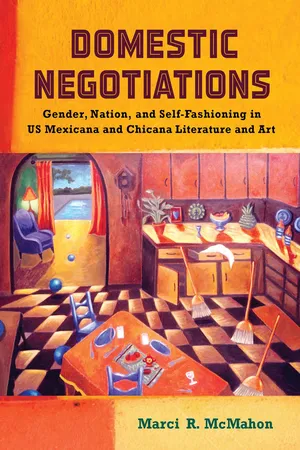
This interdisciplinary study explores how US Mexicana and Chicana authors and artists across different historical periods and regions use domestic space to actively claim their own histories. Through “negotiation”—a concept that accounts for artistic practices outside the duality of resistance/accommodation—and “self-fashioning, ” Marci R. McMahon demonstrates how the very sites of domesticity are used to engage the many political and recurring debates about race, gender, and immigration affecting Mexicanas and Chicanas from the early twentieth century to today. Domestic Negotiations covers a range of archival sources and cultural productions, including the self-fashioning of the “chili queens” of San Antonio, Texas, Jovita González’s romance novel Caballero, the home economics career and cookbooks of Fabiola Cabeza de Baca, Sandra Cisneros’s “purple house controversy” and her acclaimed text The House on Mango Street, Patssi Valdez’s self-fashioning and performance of domestic space in Asco and as a solo artist, Diane Rodríguez’s performance of domesticity in Hollywood television and direction of domestic roles in theater, and Alma López’s digital prints of domestic labor in Los Angeles. With intimate close readings, McMahon shows how Mexicanas and Chicanas shape domestic space to construct identities outside of gendered, racialized, and xenophobic rhetoric.
- 260 pages
- English
- ePUB (mobile friendly)
- Available on iOS & Android
eBook - ePub
Domestic Negotiations
About this book
Information
Part One
Domestic Power
Chapter 1
The Chili Queens of San Antonio
Challenging Domestication Through Street Vending and Fashion
In April 1938, Atlee B. Ayres, an architect known for commercial and residential projects in San Antonio and throughout Texas, held Fiesta Mexicano, a night of music and performance sponsored by the Fiesta San Jacinto Association at the Municipal Auditorium in San Antonio.1 As an active director of the Fiesta Association, Ayres staged La Noche de Fiesta events annually from 1936 to 1943. Ayres’s synopsis for the 1938 event details the elaborate spectacle:
Participants will all dress in native Mexican costumes which will consist of mounted rurales [rural police], bull-fighters, various types of Mexican vendors, such as those seen in the rural section of Mexico carrying crates of chickens, eggs, pottery, etc, on their backs, also other typical effects. There will be four floats with groups of costumed girls and boys on them. . . . A large papier-mâché bull might be provided and have large red luminous eyes. Burros and herds of goats would also be used in the parade. Different bands will take part in the parade, all of which would be in Mexican costume. . . . The space in front of the auditorium would be roped off by boy scouts forming a semi-circle, and in the enclosed space would be placed possibly half a dozen booths and chili stands.2
Other elements included “a typical Mexican string orchestra,” “fancy roping, acrobats, cock fighting, bull fight dance, Marimba players . . . folk-dancing, accordion duets, trained dogs,” and “tightrope or slack wire balancing acts.”3 With these events, Ayres constructed Mexicanness, or a dominant mythology of Mexican culture and identity (Bost 2003, 494; Habell-Pallán 2005, 15–16). The event description, like those for Ayres’s many other fiestas throughout the years, stipulated that cast members and entertainers must not only wear Mexican costume but that they must also be “native Mexican” or “Latin-American,” terms frequently used by Ayres and other Anglo Americans to regulate an authentic and proper Mexicano identity, one located south of the US-Mexico border and outside of the literal and figurative borders of the United States.4 In another fiesta event description, Ayres declares his events’ abilities to show off “good” and “colorful” Mexicanos to the public, echoing nativist rhetoric that rendered Mexicanos within binaries of good/bad and civilized/uncivilized during this period: “San Antonio has among its Mexican people some of the most talented dancers and musicians to be found anywhere” and they “have never appeared in better form than in this colorful spectacle.”5
Included among the list of “colorful” performers at Ayres’s annual fiestas are the “chili queens”—a late-nineteenth-century moniker given to working-class women of mostly Mexican descent who cooked pots of chili con carne, as well as other Mexican foods, at home and then brought them to the various plazas in San Antonio to sell at makeshift stands.6 Women (and some men) operated chili stands in San Antonio from approximately 1879, two years after the arrival of the first passenger train to the city, until 1943, when city officials shut them down due to health regulations.7 The chili queens were savvy business entrepreneurs who vended in various public plazas in close proximity to what is now downtown San Antonio, including in Military Plaza from 1879 to 1892, Alamo and Milam Plazas from 1892 to 1909, and Haymarket Plaza from 1909 to 1943. They were widely and nationally known throughout these various decades, serving as popular tourist attractions in the city.8 Despite their popularity, the Mexicana chili vendors were frequently displaced from the public plazas due to city revitalization projects and nativist sentiments (Pilcher 2008). In 1936, the city enacted the strictest ordinance against the chili queens when officials ordered hundreds of Mexicana female chili vendors to leave Haymarket Plaza due to sanitation fears, citing tuberculosis death rates as the underlying cause. Three years later, in 1939, Mayor Maury Maverick continued the ban, explaining in exaggerated rhetoric: “We will not have a thousand chili queens rushing in and violating the sanitation laws.”9 Echoing dominant and prevalent discourses about Mexicanos during this period as threatening the cohesion of the nation, Maverick’s words depict people of Mexican descent as invading the city in large numbers. City officials’ calls to remove the chili queens from Haymarket Plaza due to sanitation concerns also mirror dominant discourses that linked Mexicanos and immigrants during this period, particularly their domestic spaces and cooking practices, with germs and disease (Hernández-Ehrisman 2008, 59; Ott 1996, 67; Slocum 2011, 6). The Boy Scouts who “rope off” the area occupied by the chili vendors in Ayres’s Fiesta Mexicano description therefore figuratively reference American identity, patriotism, and the borders of the US nation seeking to define and exclude Mexican identity and culture during this period.
In this chapter, I explore the many Mexican American and Mexican immigrant female chili vendors in the 1930s and 1940s who continued to vend in San Antonio’s public plazas despite city health ordinances, xenophobic rhetoric, and nativist sentiments about the domestic spheres and lives of Mexicanos in the city and nation. These independent female chili vendors consistently negotiated the prevalence of xenophobic rhetoric that sought to both remove them from the plazas and appropriate them in the fiestas, acts which sought to overshadow their agency as businesswomen outside of the home. Much of San Antonio’s tourist rhetoric romanticized the chili queens, eclipsing their arduous work as female street vendors, as well as eliding their double burden of working in both the domestic space of the household and national space of the plazas. I argue that with dress and the act of street vending, the independent chili queen vendors countered the textual and visual rhetoric of “domestication” and “consumption” that sought to frame their vending and physical presence in the plazas as passive. With the terms domestication and consumption, I refer to the dual images of Mexican American female identity as either domesticated (as virgins, mothers, and nurturers) or sexualized (as beautiful señoritas) in dominant cultural and societal representations (Alarcón 1989; Anzaldúa 1987; Fregoso 1993; Hernández 2009; Sandoval-Sánchez 1999, 28–29).
Rather than read the independent female chili vendors as passive victims of San Antonio tourism and fiesta, this chapter recognizes their strategies of negotiation, particularly how they benefited from narratives of “domestication” and “consumption” as part of the city’s constructions of Mexicanness to make a living, but also how many challenged these narratives by continuing to assert their rights to vend in the plazas on their own terms. Rather than wear the expected and stereotyped “colorful Mexican” costume, as exemplified by the Ayres’s fiestas and other city events, the independent chili vendors in the plazas opted for everyday fashions that reflected their identities as young woman in San Antonio. Similar to pachucas, who in the 1940s donned highly stylized clothes to signal their claim to public space in Los Angeles, the chili queens donned the latest fashions, signifying with dress that they were part of the city and nation (Ramírez 2009). Additionally, the chili queens were active agents and savvy business woman who used calculated cultural performance to make profits. While the female chili vendors ranged in age, the younger women for instance handled the visible operations at the front of the stand, passing out chili to customers, while older women either cooked chili at home or behind the scenes at the stand; such acts suggest the vendors’ intended use of gendered constructions that value youth and beauty to sustain their businesses.
Spanish Fantasy Heritage: Domestication and Consumption
The many Mexican American female chili vendors in the 1930s confronted various domesticated and sexualized images of Mexican American women as part of the “Spanish Fantasy Heritage” in San Antonio’s fiestas and plazas. First explored by Carey McWilliams, the concept of the Spanish Fantasy Past refers to the several nostalgic representations of Mexican-descent peoples in the US Southwest, which promoted a “romanticized vision of a leisurely Spanish colonial society devoted to little more than fiestas and fandangos” (Hernández-Ehrisman 2008, 10). As many have documented, this emphasis on a Spanish past, tradition, and culture has obscured the hybrid, mestizaje, and lived experiences of people of Mexican descent in the region and nation; by focusing on a Spanish past, the Spanish Fantasy Heritage elided a Mexican present (Habell-Pallán 2005). The Spanish Fantasy Past has largely represented Mexican women as locked in the past, as objects of desire, and, in many respects, as “beautiful señoritas,” a concept termed by Alberto Sandoval-Sánchez to describe the “idealization and mythification of US Latina women as objects of beauty, exoticism, passion, and desire of/for otherness” (1999, 150).
Two photos from the Ayres’s La Noche de Fiestas and other fiesta-related events in the city from 1936 to 1942 indicate the colorful chili queen and Mexican costumes to which the Ayres and Maverick events refer (figs. 2 and 3). There are no photos available of chili queens at the Ayres fiestas, as well as at other events that sought to regulate the look of the chili queens, including Maverick’s “model chili stands” in 1939, which stipulated that the chili vendors must “wear Spanish costume” and “those engaged in the trade be either Latin-Americans or wear typical dress of Mexico.”10 Yet the two photos from the fiesta events capture the expected dress of the chili queens and the dual imagery of Mexican women, the “beautiful señorita” and “domesticated” woman, both in service to Anglo viewers, prevalent in San Antonio fiesta textual and visual rhetoric. A 1940s photo shows women in the china poblana fashion, with Mexican-style peasant blouses and adornment posing with baskets of cascarones and paper flowers (fig. 2); it depicts an image of Mexican female identity catering to the gaze of the viewer, linking Mexicanas with food and service.11 A 1936 photo from Ayres’s Night in Old Mexico reveals women in Spanish flamenco costumes and wearing black Spanish lace mantillas, suggesting a more exoticized, “Spanish” image (fig. 3). These constructions of San Antonio Mexicanas as both domesticated (serving and cooking) and sexualized (beautiful señoritas) pervade the many tourist and fiesta depictions of the chili queen vendors throughout their time in various San Antonio plazas. Yet even while constrained by dominant images of Mexicannness, the young women who wear the china poblana costumes create their own look, wearing bows instead of traditional colorful braided ribbons in their hair (fig. 2). In both photos, the young women (and young men in the second photo) appear to enjoy posing for the camera, with assertive stances suggesting they are proud to don costumes that signify Mexican culture and identity, as well as to strike poses demonstrating they are trained professional dancers. Therefore, similar to the chili queens, the performers in San Antonio’s fiestas also negotiated constructions of Mexicanness in San Antonio’s tourist imagery by using fashion to assert their presence in the city.
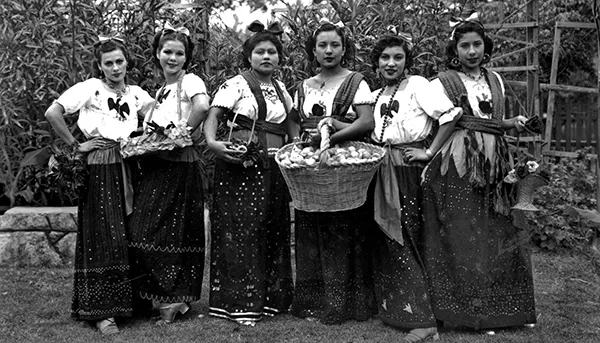
Figure 2. Women in Mexican costumes pose with baskets of cascarones and paper flowers, San Antonio, Texas, 1940s. Photo: General Photograph Collection, University of Texas at San Antonio Libraries Special Collections, N0.083–0630.
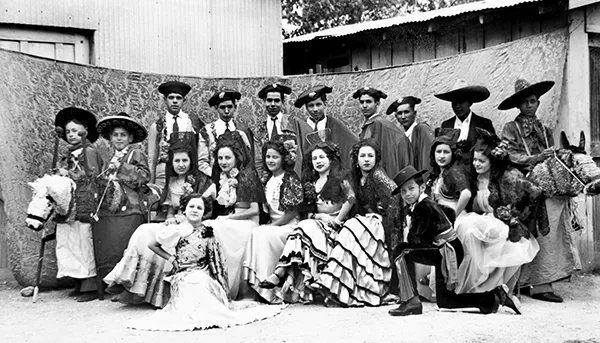
Figure 3. Performers in Mexican costumes, Atlee B. Ayres’s “Night in Old Mexico,” San Antonio, Texas, 1936. Photo: General Photograph Collection, University of Texas at San Antonio Libraries Special Collections, N0.083–0619.
To many communities in San Antonio and the nation, the chili queens represented a constructed, domesticated Mexican American female identity in San Antonio, one that linked Mexicanas simultaneously with exoticization, food, and service. From the beginning, tourist brochures and newspaper articles from the 1890s lauded the chili queens as “dark-eyed Mexican”12 girls and “dusky beautiful señoritas,” suggesting how advertisements were not only selling the chili, but an exoticized Mexican American female body. Additionally, many newspaper accounts of the chili queens in Military Plaza indicate how Anglo American tourists linked the chili queens with sex and service. There is no documented evidence that the chili queens were prostitutes, yet the connection of the chili queens to sexual pleasure, as Pilcher suggests, “exemplifie[s] the Mexican American woman’s role providing the conjugal duties of food and sex to Anglo men” (2008, 194–195). The association of the chili queens to sex also arises due to the city’s increasing links with vaudeville and prostitution in the nineteenth century and the close proximity of the chili stands to San Antonio’s “Reservation,” an area of tolerance for prostitution (Blackwelder 1984, 17; Pilcher 2008, 184).13 Other accounts of chili queens in the plazas describe them as feeding and serving the alimentary needs of soldiers, tourists, and various publics, including both Anglos and Mexicanos, throughout various decades.14 The chili queen vendors no doubt served a fundamental and alimentary need in the plazas. Yet domesticated images of Mexican women in San Antonio tourism, and the visibility and images of Mexicanas serving chili in the public plazas, conform to and reinforce societal and cultural constructions of Mexicanas as mothers, nurturers, and connected to the domestic sphere. This domesticated imagery has worked to overshadow the context of labor, street vending, and agency enacted by the chili queen vendors in the plazas.
With the consumption of food, along with domesticated and feminized images of Mexican Americans in San Antonio’s fiestas from the 1920s to the 1940s, Anglo Americans were able to both appropriate comfortable aspects of Mexican American culture and exclude Mexican Americans themselves from American culture and national identity. The city’s health ordinances against the chili queen vendors in the plazas in the 1930s took place during the Great Depression, which impacted an already economically and racially marginalized Mexicano population in the city. The period of the 1930s and 1940s was also marked by repatriation drives, “voluntary” programs that uprooted hundreds of thousands of Mexicans in the United States, under the belief that they were a danger to the social, political, and economic stability of the country.15 Despite a small upper class of Mexican exiles that had fled the Mexican Revolution decades earlier, the majority of Mexicanos in San Antonio during this period were part of a segregated laboring class. The lack of opportunities for educational achievement, due to this racialized, economic segregation and labor employment, led to Mexican American women’s lower-class status. The vast majority of Mexican American women worked in the labor force during the Depression, engaged in “women’s work” as seamstresses, in the garment industry, although many also sought work in the food processing, pecan shelling, and tobacco industries, forms of labor that relegated many working-class Mexican immigrant and Mexican American women to low wages and exploitive working conditions (Blackwelder 1984, 77; Ruiz 1998). The 1930s was also the height of the Americanization movement, a series of efforts that worked to domesticate and construct a passive Mexican American female labor force suitable for the factory and garment industries (Sánchez 1993, 104).
Methodology and Negotiation
It is difficult to analyze the chili queens’ various acts of negotiation, because there are little to no self-authored accounts or oral histories documenting their point of view; newspaper accounts of the many meetings about the city’s health ordinances against the queens do not record the vendors’ viewpoints. The many historical and contemporary descriptions of the chili queens—found in newspaper articles, reenactment festivals, online blogs about chili, and tourist websites—are infused with appropriation, nostalgia, and tourist rhetoric. As a whole, they reenact the domestication and sexualization of the chili queens prevalent in Spanish Fantasy Heritage rhetoric. Although accounts from the perspective of the chili queens are minimal, they include a few sentences from chili queen vendor Consuela Vasquez in a 1941 San Antonio Light article; a brief 2005 interview with Isabel Sánchez, granddaughter of a chili queen, with assistance from Isabel’s daughter Graciela Sánchez; as well as quotes from former chili queens in newspaper articles from the 1980s (Nelson and Silva 2005). The 2005 oral history with Isabel and Graciela Sánchez can be attributed to the airing of a segment on the National Public Radio Hidden Kitchens special in 2004 by the Hidden Kitchen Sisters Davia Nelson and Nikki Silva, which spotlighted the chili queens as inventors of chili con carne and detailed their role in various communities in the San Antonio plazas. The radio program included interviews with historians and scholars, namely Jeffrey Pilcher, who has published the only two scholarly articles devoted to the chili queens. The Hidden Kitchens radio segment was followed by a section on the chili queen vendors in Nelson and Silva’s book of the same name (2005).16
The Hidden Kitchens NPR special led to the overwhelming interest in the chili queens presently found in online blogs, websites, and newspaper articles; the chili queens are now included as one of the originators of chili con carne in the Wikipedia entry on “chili.”17 The abundance of popular online material about the chili queens follows a romanticization and national interest in memorializing the queens that has long been alive in San Antonio proper. The Return of the Chili Queens Festival, begun by the El Mercado Association in 1985 and which continues today—intended as a “recreation of the chili queens’ era” (Jennings 1996, 46)—is a testament to the popularity and role of the chili queens in San Antonio and their enduring legacy in tourism. Taking place during Memorial Day weekend in Market Square, the El Mercado Chili Queens festival is part nostalgic celebration and part community festival, intertwining various publics who have a stake in memorializing the queens.18 Many websites cite the Return of the Chili Queens festival as an important city event and tourist attraction, suggesting how the queens are still used to generate economic profit for the city of San Antonio.19 A Chili Queen Cook-Off at the Bonham Exchange, a well-known and popular gay bar in San Antonio, located behind the Alamo and begun in 2006, is also held the first Sunday in April, the beginning of all Fiesta events in San Antonio; the event is centered in parody and queering the chili queen image and other images of Fiesta.20 The performance of sexuality and self-fashioning at the Bonham Chili Queens Cook-Off suggests how gay communities, within San Antonio’s larger Fiesta, have both asserted claims to public space by challenging heteronormative imagery as part of San Antonio’s fiestas, and exposed the romanticized rhetoric that has dominated accounts of the chili queens.
Chili Queens in the Plazas: Removal, Sanitation, and Appropriation
Before the Ayres fiestas, Mayor Maverick’s “model chili stands,” and other appropriations of the chili queens in the 1930s and 1940s, many groups in San Antonio advocated revitalization projects, which resulted in the rem...
Table of contents
- Title Page
- Copyright Page
- Contents
- Illustrations
- Acknowledgments
- A Note on Terminology
- Introduction
- Part One: Domestic Power
- Part Two: Domesticana
- Notes
- References
- About the Author
Trusted by 375,005 students
Access to over 1.5 million titles for a fair monthly price.
Study more efficiently using our study tools.
Frequently asked questions
Yes, you can cancel anytime from the Subscription tab in your account settings on the Perlego website. Your subscription will stay active until the end of your current billing period. Learn how to cancel your subscription
No, books cannot be downloaded as external files, such as PDFs, for use outside of Perlego. However, you can download books within the Perlego app for offline reading on mobile or tablet. Learn how to download books offline
Perlego offers two plans: Essential and Complete
- Essential is ideal for learners and professionals who enjoy exploring a wide range of subjects. Access the Essential Library with 800,000+ trusted titles and best-sellers across business, personal growth, and the humanities. Includes unlimited reading time and Standard Read Aloud voice.
- Complete: Perfect for advanced learners and researchers needing full, unrestricted access. Unlock 1.5M+ books across hundreds of subjects, including academic and specialized titles. The Complete Plan also includes advanced features like Premium Read Aloud and Research Assistant.
We are an online textbook subscription service, where you can get access to an entire online library for less than the price of a single book per month. With over 1.5 million books across 990+ topics, we’ve got you covered! Learn about our mission
Look out for the read-aloud symbol on your next book to see if you can listen to it. The read-aloud tool reads text aloud for you, highlighting the text as it is being read. You can pause it, speed it up and slow it down. Learn more about Read Aloud
Yes! You can use the Perlego app on both iOS and Android devices to read anytime, anywhere — even offline. Perfect for commutes or when you’re on the go.
Please note we cannot support devices running on iOS 13 and Android 7 or earlier. Learn more about using the app
Please note we cannot support devices running on iOS 13 and Android 7 or earlier. Learn more about using the app
Yes, you can access Domestic Negotiations by Marci R. McMahon in PDF and/or ePUB format, as well as other popular books in Social Sciences & North American Literary Criticism. We have over 1.5 million books available in our catalogue for you to explore.