- 232 pages
- English
- ePUB (mobile friendly)
- Available on iOS & Android
eBook - ePub
About this book
Businesses recognize the need to become more customer focused, but struggle to see how. At the same time, our logic and business models for selling digital content and services are broken. Digital relationships enable services at low cost, but we still focus on discrete transactions at prices that consumers see as exploitive. This book explains how a revolutionary approach to pricing can solve these problems. It proposes a new architecture for cooperative service relationships that is personalized and continuously adaptive. FairPay operationalizes a new logic for conducting ongoing business relationships that adaptively seek win-win value propositions in which price reflects value. At a practical level, the author explains how this can be applied to transform a range of industries -- with motivations, and guidelines for implementation in stages -- to enhance loyalty, market share, and profits. At a conceptual level, he explores how novel processes for participative co-pricing can dynamically seek agreement on win-win value propositions -- to approach optimal price discrimination over a series of transactions. FairPay applies modern behavioral economics in choice architectures that enable deep relationship marketing. An online supplement is provided.
Trusted by 375,005 students
Access to over 1 million titles for a fair monthly price.
Study more efficiently using our study tools.
Information
PART I
The Big Picture—A New Logic
CHAPTER 1
Introduction—Digital Disruption and Yesterday’s Logic
The greatest danger in times of turbulence is not the turbulence, it is to act with yesterday’s logic.
—Peter Drucker
FairPay is a new logic for conducting ongoing business relationships that adaptively seek win–win value propositions in which price reflects value.
FairPay is a logic for seeking to learn and apply what my pricing demon knows (see Prolog). It is an architecture for business processes that are adaptively configured to seek win–win with customers cooperatively, in a new kind of equity-based dynamic pricing.
The idea for FairPay arose in response to the new challenges (and opportunities) of selling digital services in networked markets, and may be most applicable there—at least initially. But there is reason to think that it will work well for some physical product/service businesses, and in time might be useful far more broadly. Much of this book focuses on digital services, but the wider potential is outlined as well.
We all recognize that we are at the infancy of a digital era, with the mantra that “the Internet changes everything.” Our society, business, markets, media, services, and even our most basic human communications and relationships are mediated by digital communications networks and computer processing. We have recognized the need for new logic in many aspects of business in this strange new world, but the most central aspect of our markets, the setting of price, has barely changed at all. Our core approach to how customers and service providers relate to one another needs a radically new logic that addresses the new realities of digital services in networked markets.
We are facing huge turbulence in these markets, most visible in content industries that have been disrupted by digital, so that the very nature of how we think of value has come loose. Major industries such as music and newspapers are being devastated, with others such as TV/ video/movies beginning to see disruption. Long-established businesses are in turmoil, and even nimble upstarts have challenges in making their value propositions attractive beyond narrow markets. It is hard to get consumers to be willing to pay, and the traditional alternative of advertising support is increasingly threatened. Companies face threats of piracy and bypass (via Google and Facebook). Advertising is under siege by technical challenges (including the shift to mobile) and growing consumer rebellion in the form of ad-blocking.
Our consumer value propositions are just not working well. Too many consumers are just not willing to pay the prices that companies think they should. Many companies fed into that by offering digital content services free, and now find it problematic to charge.
There are a number of fundamental reasons why traditional methods do not work for pricing digital experiences in networked markets:
- Replication is nearly free—The invisible hand flails aimlessly, having no scarcity of supply to ration against demand—pricing becomes an arbitrary shot at what “the market” will bear. Meanwhile many consumers think that “information wants to be free” and question why they should pay at all.
- Value is experiential, personal, and context-dependent—Conventional pre-setting of prices by producers fails to relate to wide variations in value received. There is not one market, but a multitude of markets of one, each of which fluctuates over time.
- Relationships are the new marketing—Conventional efforts at “relationship marketing” have been bolted on to traditional transaction-oriented business practices and only scratch the surface of true relationships that seek to maximize customer lifetime value (CLV). Companies are beginning to recognize the importance of “customer journeys” and “loyalty loops” but are just beginning to understand how to integrate them into business practices.
Recognizing the importance of these factors, freemium subscription models have emerged as the current best practice in many industries. Freemium (free + premium) is a step toward relationship-building in which a limited level of free service is used as a loss-leader to attract as many potential users as possible, with the hope of then converting them to a premium level that they can be convinced to pay for once they have experienced at least some of the value. But freemium is just one limited step in the right direction. It fails to exploit networked relationships to seek pricing that customers can see as fair.
Digital businesses face two fundamental problems:
- The driving problem is how to make the business sustainably profitable in this digital era.
- That problem centers on difficult questions of price—free or paid? and how set?
A New Logic
FairPay is a simple but fundamental rethinking of how businesses and consumers conduct exchanges with one another in a digital marketplace.
- It proposes a new architecture for approximating an optimal price—one that is personal and dynamically context-dependent—by building a deep relationship that is based on dialogs about value.
- It embodies modern concepts of business as the co-creation of value by businesses and customers working cooperatively.
- It provides a new and empowering process for co-pricing, a form of participative pricing.
FairPay makes dialogs about value a central feature of a new kind of emergent learning relationship that becomes an integral focus of each customer journey—to shape what people are offered, what they buy, and at what price. It moves from the mass-market tyranny of set-pricing, to personalized, dynamic pricing—in a way that uniquely develops trust, fairness, loyalty, and profit—to maximize CLV for as many customers as can be served profitably—and can factor in social values as well.
- FairPay re-envisions elements of freemium; paywalls; subscriptions; membership or loyalty programs; dynamic pricing; value-/performance-/outcomes-based pricing; and pay what you want (PWYW), to provide a strong and sustainable customer relationship and revenue stream.
- FairPay solves the nasty problems of pricing digital products and other experience goods—by seeking to approach optimal price discrimination, based on in-depth learning about each customer—and does this in a relationship-centered, participatory way that assures customer buy-in.
- It is this relationship focus at the core of FairPay that creates a new dimension to B2C customer relationships—one that previously has only been approximated in high-end industrial B2B value-/performance-/outcomes-based pricing.
- FairPay builds on the lessons of PWYW participative pricing, in consumer markets—but adds this new dimension of feedback and control over ongoing relationships to make that more sustainably profitable.
The core process enabling FairPay works over relationships, by applying a deceptively simple balance of powers:
- Selectively empower the buyer to unilaterally set whatever value-based price the buyer considers fair—after the sale, when the real value is experienced and known.
- Track that buyer value-based price and determine whether the seller agrees that is fair, and use that information to empower the seller to decide whether to make further offers on those terms to that buyer in the future. (Unfair buyers are eventually downgraded to lesser offers or fixed-price.)
- Continue this balancing in future transactions, to build a relationship based on fair value exchange that adapts and evolves over time, frames the value that was delivered, and a suggested price for that—and nudges the buyer to be generous by offering more value in the future for more generosity now.
This repeating cycle gives buyers a strong incentive to price fairly, to build a beneficial relationship—and enables sellers to limit their future exposure to those who do not—using decision rules that can readily be tuned to specific situations, segments, and objectives (see Figure 1.1).
At first glance, this core process may appear to have limited effectiveness and applicability, but on closer scrutiny it can be viewed as representing a profound shift—shifting the entire focus on customer relationships from price to value. As such it has the potential to transform how companies manage customer relationships, integrating a new dimension—of time and relationship—that has previously only been tacked on to transaction-oriented exchanges. This book explains how and why this is workable.
Many have seen potential in participatory pricing, but seller control and predictability has been a big concern—how can the powers of buyer and seller be fairly balanced to lead to sustainably win–win pricing? FairPay makes participatory co-pricing practical, controllable, and profitable for mainstream consumer business use. It does this by turning it into a repeated game—using structured dialogs (choice architectures) plus Internet-enabled tracking, to limit price-setting privileges to only those who price fairly over an ongoing relationship, and to guide customers to price fairly. These dialogs generate a whole new level of customer feedback on their experiences—and their real willingness to pay for them—as that evolves over the relationship.
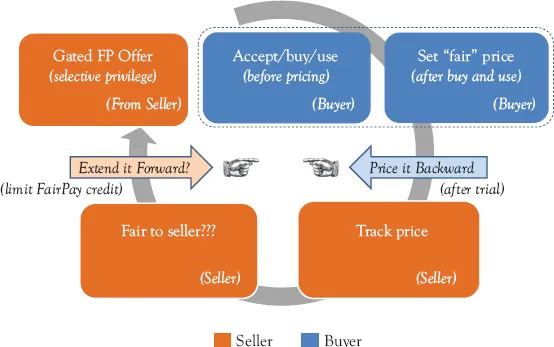
Figure 1.1 FairPay participative process
Source: www.fairpayzone.com/2011/03/fairpay-pricing-some-process-diagrams.html
I first outlined FairPay in 2010 on my blog at FairPayZone.com. This book draws heavily on the materials in that blog (see FPZLink). A brief introduction coauthored with Marco Bertini was published in the Harvard Business Review blog series in 2013 (Bertini and Reisman 2013) and a further paper is pending publication (Reisman and Bertini 2014). Other collaborations with Adrian Payne and Pennie Frow led to a presentation at the Naples Forum on Service in 2015 (Frow, Reisman, and Payne 2015), and further collaborative work is in progress.
How It Works—Customer Participation in Pricing as a Privilege
We have been conditioned to think only of seller-set prices (the price tag) or traditional negotiation (haggling over price) that work in a context of isolated transactions. FairPay is a logic that operates more holistically—it introduces a new kind of balance of powers that works over a series of trans-actions to build a relationship. A customer is selectively granted new power to set prices, but the seller decides whether to continue granting that power to that customer. The relationship continues as long as both are satisfied. This feedback control loop creates a new logic for adaptively seeking win–win value that grounds and enriches the customer journey.
It is anticipated that FairPay would be offered to customers selectively, as a privilege, as an alternative to a conventional pricing such as a paywall, but that conventional set-price paywalls would remain for customers who do not adapt well to this new responsibility for fair, win–win pricing—the implicit contract of what I call an “invisible handshake” (as explained later).
FairPay is designed to become a primary pricing model, but first it can be trialed in low-risk tests, such as premium tiers and loyalty programs, customer acquisition/retention, or for other selected product tiers or market segments. It builds stronger customer relationships for greater profit from a wider market. Early uses should be targeted to customer segments expected to take well to it—starting with the most promising relationships—and then gradually expand more broadly as its benefits become clear, and customers become familiar with this new logic.
The core mechanism suggested for FairPay is outlined in the following boxes and Figure 1.1.
How FairPay Works
... over a relationship,
... through a deceptively simple balancing dynamic:
- Selectively empower the buyer to unilaterally set whatever value-based price the buyer considers fair—after the sale, when the real value is experienced and known.
- Track that buyer value-based price and determine whether the seller agrees that is fair, and use that information to empower the seller to decide whether to make further offers on those terms to that buyer in the future. (Unfair buyers are eventually downgraded to lesser offers or fixed price.)
- Continue this balancing in future transactions, to build a relationship based on fair value exchange, which adapts and evolves over time. Frame the value that was delivered, and a suggested price for that—and nudge the buyer to be generous by offering more value for more generosity.
This revocable privilege gives buyers a strong incentive to price fairly—and enables sellers to limit their future exposure to those who do not.
More broadly, it shifts the entire focus of customer relationships from price to value.
Consumers—Pay only what seems fair to you:
- Pay what you think fair for products or services—after you try them.
- Make every purchase on a trial basis—so you can always be sure to get your personal fair value for your money.
- Agree to set your price fairly—in your judgment—and explain why you think it is fair.
- Maintain that privilege as long as you can convince the seller that you are being fair.
Businesses—Get the most revenue from the most customers by continuously learning what each one values:
- Engage in real dialog with each of your customers and listen to their perceptions of the value they get from your products/services.
- Make a trial offer to every potential customer who sees potential value.
- Suggest a price after use that you think is fair for that particular customer, considering usage and all other relevant factors.
- Provide incentives, such as premium tiers and perks, to entice fairness, and even generosity.
- Let your customers self-select into segments (based on usage, value perception, willingness and ability to pay, …)
- Limit your risk from those trial offers by tracking the results (fairness) for each buyer, and limiting future offers if you judge that buyer to not pay fairly.
- Retain set-price plans for those who refuse to be fair.
- Learn how much freedom (FairPay credit) to extend (or what re...
Table of contents
- Cover
- Title
- Copyright
- Foreword by Adrian Payne
- Preface
- Acknowledgments
- Prolog: A Thought Experiment—Imagine a Value-Pricing Demon …
- Part I: The Big Picture—A New Logic
- Part II: Applications in Industry
- Part III: Needs and Perspectives
- Part IV: Toward a New Economics
- The FairPay Manifesto
- References
- Index
- Adpage
Frequently asked questions
Yes, you can cancel anytime from the Subscription tab in your account settings on the Perlego website. Your subscription will stay active until the end of your current billing period. Learn how to cancel your subscription
No, books cannot be downloaded as external files, such as PDFs, for use outside of Perlego. However, you can download books within the Perlego app for offline reading on mobile or tablet. Learn how to download books offline
Perlego offers two plans: Essential and Complete
- Essential is ideal for learners and professionals who enjoy exploring a wide range of subjects. Access the Essential Library with 800,000+ trusted titles and best-sellers across business, personal growth, and the humanities. Includes unlimited reading time and Standard Read Aloud voice.
- Complete: Perfect for advanced learners and researchers needing full, unrestricted access. Unlock 1.4M+ books across hundreds of subjects, including academic and specialized titles. The Complete Plan also includes advanced features like Premium Read Aloud and Research Assistant.
We are an online textbook subscription service, where you can get access to an entire online library for less than the price of a single book per month. With over 1 million books across 990+ topics, we’ve got you covered! Learn about our mission
Look out for the read-aloud symbol on your next book to see if you can listen to it. The read-aloud tool reads text aloud for you, highlighting the text as it is being read. You can pause it, speed it up and slow it down. Learn more about Read Aloud
Yes! You can use the Perlego app on both iOS and Android devices to read anytime, anywhere — even offline. Perfect for commutes or when you’re on the go.
Please note we cannot support devices running on iOS 13 and Android 7 or earlier. Learn more about using the app
Please note we cannot support devices running on iOS 13 and Android 7 or earlier. Learn more about using the app
Yes, you can access FairPay by Richard Reisman in PDF and/or ePUB format, as well as other popular books in Business & Service Industry. We have over one million books available in our catalogue for you to explore.