- 509 pages
- English
- ePUB (mobile friendly)
- Available on iOS & Android
Pedagogical Anthropology
About this book
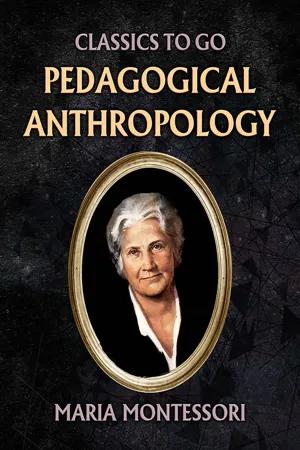
Pedagogical Anthropology is a book written by Maria Montessori, an Italian physician and educator, and was first published in 1913. In this book, Montessori explores the relationship between education and human development from an anthropological perspective. Montessori argues that education should be based on the natural development of the child and that children have an innate drive to learn. She proposes that education should focus on providing the right environment and tools for children to explore and learn on their own, rather than forcing them to learn through rote memorization or strict discipline. Montessori also discusses the importance of sensory experiences in learning and proposes a method for teaching young children that involves hands-on activities and manipulatives. This method, which became known as the Montessori method, has had a significant impact on early childhood education around the world. Overall, "Pedagogical Anthropology" provides insight into Montessori's educational philosophy and highlights the importance of child-centered learning and individualized instruction.
Frequently asked questions
- Essential is ideal for learners and professionals who enjoy exploring a wide range of subjects. Access the Essential Library with 800,000+ trusted titles and best-sellers across business, personal growth, and the humanities. Includes unlimited reading time and Standard Read Aloud voice.
- Complete: Perfect for advanced learners and researchers needing full, unrestricted access. Unlock 1.4M+ books across hundreds of subjects, including academic and specialized titles. The Complete Plan also includes advanced features like Premium Read Aloud and Research Assistant.
Please note we cannot support devices running on iOS 13 and Android 7 or earlier. Learn more about using the app.
Information
Table of contents
- Pedagogical