An economist examines three modern forces that have redefined what "money" means, who controls it, and what the future of finance might look like.
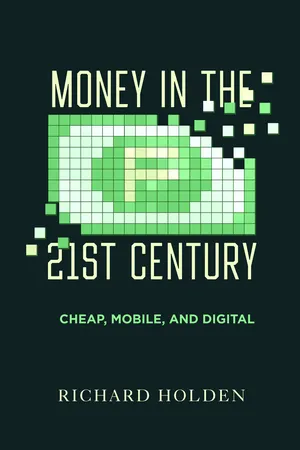
Money is increasingly cheap, digital, and mobile. In Money in the Twenty-First Century, economist Richard Holden examines the virtues and risks of low interest rates, mobile money, and cryptocurrencies, and explains how these three elemental forces will continue to play out—in our wallets, on the blockchain, and throughout major economies—in the decades to come.
Holden weaves in the stories of three people who have exerted massive influence over the future of modern money: US treasury secretary Janet Yellen, Ethereum cofounder Vitalik Buterin, and Raghuram Rajan, former governor of the Reserve Bank of India and chief economist at the International Monetary Fund. Moving from micro to macro, Holden investigates the infrastructure that permits digital transactions, the currencies that underpin them, the race for control of those currencies, shifts in policy and the international monetary system, and the impact on our politics of money in the digital age. Ultimately, Money in the Twenty-First Century asks if governments can keep these three tectonic powers of low interest rates, mobile money, and decentralized finance under control.
- 265 pages
- English
- ePUB (mobile friendly)
- Available on iOS & Android
eBook - ePub
About this book
Information
Table of contents
- Subvention
- Title
- Copyright
- Dedication
- Contents
- Prologue
- 1. The Year that Changed Everything
- 2. The Cashless Society
- 3. Mobile Money and Digital Banking
- 4. Crypto
- 5. Govcoins
- 6. The Exorbitant Privilege
- 7. Cheap Money, Asset Bubbles, and Government Finances
- 8. Conclusion
- Acknowledgments
- Notes
- References
- Index
- About the Author
Trusted by 375,005 students
Access to over 1.5 million titles for a fair monthly price.
Study more efficiently using our study tools.
Frequently asked questions
Yes, you can cancel anytime from the Subscription tab in your account settings on the Perlego website. Your subscription will stay active until the end of your current billing period. Learn how to cancel your subscription
No, books cannot be downloaded as external files, such as PDFs, for use outside of Perlego. However, you can download books within the Perlego app for offline reading on mobile or tablet. Learn how to download books offline
Perlego offers two plans: Essential and Complete
- Essential is ideal for learners and professionals who enjoy exploring a wide range of subjects. Access the Essential Library with 800,000+ trusted titles and best-sellers across business, personal growth, and the humanities. Includes unlimited reading time and Standard Read Aloud voice.
- Complete: Perfect for advanced learners and researchers needing full, unrestricted access. Unlock 1.5M+ books across hundreds of subjects, including academic and specialized titles. The Complete Plan also includes advanced features like Premium Read Aloud and Research Assistant.
We are an online textbook subscription service, where you can get access to an entire online library for less than the price of a single book per month. With over 1.5 million books across 990+ topics, we’ve got you covered! Learn about our mission
Look out for the read-aloud symbol on your next book to see if you can listen to it. The read-aloud tool reads text aloud for you, highlighting the text as it is being read. You can pause it, speed it up and slow it down. Learn more about Read Aloud
Yes! You can use the Perlego app on both iOS and Android devices to read anytime, anywhere — even offline. Perfect for commutes or when you’re on the go.
Please note we cannot support devices running on iOS 13 and Android 7 or earlier. Learn more about using the app
Please note we cannot support devices running on iOS 13 and Android 7 or earlier. Learn more about using the app
Yes, you can access Money in the Twenty-First Century by Prof. Richard Holden in PDF and/or ePUB format, as well as other popular books in Economía & Condiciones económicas. We have over 1.5 million books available in our catalogue for you to explore.