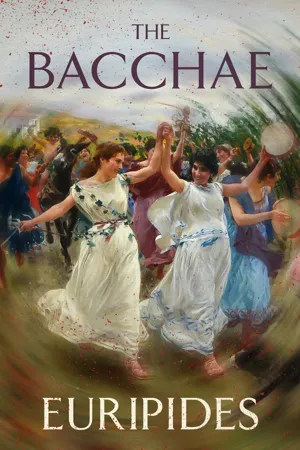
This great work of classical Greek theater is a profound reflection on faith, fanaticism, and human nature.
Considered by many to be Euripides's most important work,
The Bacchae has been rousing audiences since the fifth century BC. Appearing in human form, the Greek god Dionysus has come to seek vengeance on his mortal cousin, Pentheus, King of Thebes. The Greek ruler has proclaimed that, far from being the son of Zeus, Dionysus is a mere mortal. Angered at the insult, the god initiates the Theban women in Dionysian rites, inspiring them to ecstatic dance and wild abandon—mysterious acts that will tempt Pentheus—even as he is lured to his tragic end.
Controversial in its time and innovative in structure,
The Bacchae was written after Euripides's exile from Athens and published posthumously. Today it stands as one of the more provocative and poetic Greek tragedies by a writer whose intriguing plots and keen psychological insight make him the more modern of the ancient authors.
eBook - ePub
The Bacchae
About this book
Information
Subtopic
Ancient & Classical DramaIndex
LiteratureTable of contents
- Cover
- Title Page
- THE BACCHAE
- Copyright
Trusted by 375,005 students
Access to over 1.5 million titles for a fair monthly price.
Study more efficiently using our study tools.
Frequently asked questions
Yes, you can cancel anytime from the Subscription tab in your account settings on the Perlego website. Your subscription will stay active until the end of your current billing period. Learn how to cancel your subscription
No, books cannot be downloaded as external files, such as PDFs, for use outside of Perlego. However, you can download books within the Perlego app for offline reading on mobile or tablet. Learn how to download books offline
Perlego offers two plans: Essential and Complete
- Essential is ideal for learners and professionals who enjoy exploring a wide range of subjects. Access the Essential Library with 800,000+ trusted titles and best-sellers across business, personal growth, and the humanities. Includes unlimited reading time and Standard Read Aloud voice.
- Complete: Perfect for advanced learners and researchers needing full, unrestricted access. Unlock 1.5M+ books across hundreds of subjects, including academic and specialized titles. The Complete Plan also includes advanced features like Premium Read Aloud and Research Assistant.
We are an online textbook subscription service, where you can get access to an entire online library for less than the price of a single book per month. With over 1.5 million books across 990+ topics, we’ve got you covered! Learn about our mission
Look out for the read-aloud symbol on your next book to see if you can listen to it. The read-aloud tool reads text aloud for you, highlighting the text as it is being read. You can pause it, speed it up and slow it down. Learn more about Read Aloud
Yes! You can use the Perlego app on both iOS and Android devices to read anytime, anywhere — even offline. Perfect for commutes or when you’re on the go.
Please note we cannot support devices running on iOS 13 and Android 7 or earlier. Learn more about using the app
Please note we cannot support devices running on iOS 13 and Android 7 or earlier. Learn more about using the app
Yes, you can access The Bacchae by Euripides in PDF and/or ePUB format, as well as other popular books in Literature & Ancient & Classical Drama. We have over 1.5 million books available in our catalogue for you to explore.