Despite 15 years of reform efforts, the incarceration rate in the United States remains unprecedentedly high. This book provides the first comprehensive survey of these reforms and explains why they have proven to be ineffective.
After many decades of stability, the imprisonment rate in the United States quintupled between 1973 and 2003. Since then, nearly all states have adopted multiple reforms intended to reduce imprisonment, but the U.S. imprisonment rate has only decreased by a paltry 2 percent. Why have American sentencing reforms since 2000 been largely ineffective? Are tough mandatory minimum sentences for nonviolent drug offenders the primary reason our prisons are always full? This book offers a fascinating assessment of the wave of sentencing reforms adopted by dozens of states as well as changes at the federal level since 2000, identifying common themes among seemingly disparate changes in sentencing policy and highlighting recent reform efforts that have been more successful and may point the way forward for the nation as a whole.
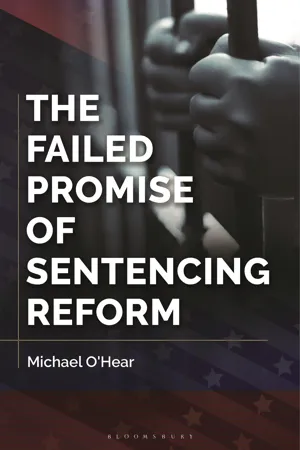
In The Failed Promise of Sentencing Reform, Michael O'Hear exposes the myths that American prison sentencing reforms enacted in the 21st century have failed to have the expected effect because U.S. prisons are filled to capacity with nonviolent drug offenders as a result of the "war on drugs" or because of new laws that took away the discretion of judges and corrections officials. O'Hear then makes a convincing case for the real reasons sentencing reforms have come up short: because they exclude violent and sexual offenders, and because they rely on the discretion of officials who still have every incentive to be highly risk-averse. He also highlights how overlooking the well-being of offenders and their families in our consideration of sentencing reform has undermined efforts to effect real change.
- 296 pages
- English
- ePUB (mobile friendly)
- Available on iOS & Android
eBook - ePub
The Failed Promise of Sentencing Reform
Table of contents
- Cover
- Title
- Copyright
- Contents
- Dedication
- Figures and Tables
- Acknowledgments
- Introduction: An Era of Treading Water
- 1 The Great U.S. Imprisonment Boom, 1973–2000
- 2 War on Drugs: Escalation and (Equivocal) De-Escalation
- 3 The Early Release “Revolution”
- 4 Justice Reinvestment: Dominant Reform Model of the Treading Water Era
- 5 Federal Sentencing in the Age of Bush and Obama
- 6 Sentencing in the Supreme Court
- 7 California: Is the Glass Half Empty or Half Full?
- 8 Conclusion: Looking Back, Looking Ahead
- Index
- About the Author
Trusted by 375,005 students
Access to over 1.5 million titles for a fair monthly price.
Study more efficiently using our study tools.
Frequently asked questions
Yes, you can cancel anytime from the Subscription tab in your account settings on the Perlego website. Your subscription will stay active until the end of your current billing period. Learn how to cancel your subscription
No, books cannot be downloaded as external files, such as PDFs, for use outside of Perlego. However, you can download books within the Perlego app for offline reading on mobile or tablet. Learn how to download books offline
Perlego offers two plans: Essential and Complete
- Essential is ideal for learners and professionals who enjoy exploring a wide range of subjects. Access the Essential Library with 800,000+ trusted titles and best-sellers across business, personal growth, and the humanities. Includes unlimited reading time and Standard Read Aloud voice.
- Complete: Perfect for advanced learners and researchers needing full, unrestricted access. Unlock 1.5M+ books across hundreds of subjects, including academic and specialized titles. The Complete Plan also includes advanced features like Premium Read Aloud and Research Assistant.
We are an online textbook subscription service, where you can get access to an entire online library for less than the price of a single book per month. With over 1.5 million books across 990+ topics, we’ve got you covered! Learn about our mission
Look out for the read-aloud symbol on your next book to see if you can listen to it. The read-aloud tool reads text aloud for you, highlighting the text as it is being read. You can pause it, speed it up and slow it down. Learn more about Read Aloud
Yes! You can use the Perlego app on both iOS and Android devices to read anytime, anywhere — even offline. Perfect for commutes or when you’re on the go.
Please note we cannot support devices running on iOS 13 and Android 7 or earlier. Learn more about using the app
Please note we cannot support devices running on iOS 13 and Android 7 or earlier. Learn more about using the app
Yes, you can access The Failed Promise of Sentencing Reform by Michael O'Hear in PDF and/or ePUB format, as well as other popular books in Law & Sentencing. We have over 1.5 million books available in our catalogue for you to explore.