- 256 pages
- English
- ePUB (mobile friendly)
- Available on iOS & Android
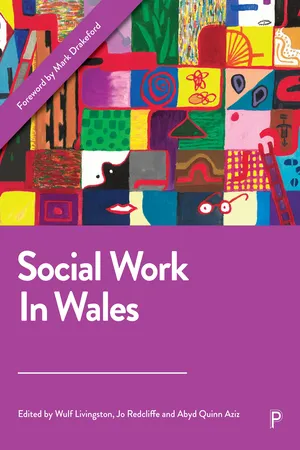
Social Work in Wales
About this book
With a foreword by First Minister of Wales, Mark Drakeford, this book is the first to offer an in-depth look into what makes the Welsh Social Work context unique. It includes the move towards joint children, families and adult provision and the emphasis on early intervention, future generations and partnership considerations.
Covering the subject knowledge required by the Welsh regulator, Social Care Wales, it provides essential reading for students and practising social workers in Wales, and rich contextual analysis for other international social work practitioners and writers. Each chapter includes:
• dialogue on the distinctive 'Welsh way' that underpins the nation's social work approach;
• focus on application: responses and implications for professional practice;
• the 'giving of voice' section: demonstrating the key emphasis in Welsh practice of ensuring that multiple stakeholder perspectives are actively heard;
• key resources for further independent exploration of the topics.
Frequently asked questions
- Essential is ideal for learners and professionals who enjoy exploring a wide range of subjects. Access the Essential Library with 800,000+ trusted titles and best-sellers across business, personal growth, and the humanities. Includes unlimited reading time and Standard Read Aloud voice.
- Complete: Perfect for advanced learners and researchers needing full, unrestricted access. Unlock 1.4M+ books across hundreds of subjects, including academic and specialized titles. The Complete Plan also includes advanced features like Premium Read Aloud and Research Assistant.
Please note we cannot support devices running on iOS 13 and Android 7 or earlier. Learn more about using the app.
Information
Table of contents
- Cover
- Title Page
- Copyright Page
- Table of Contents
- List of Figures and Tables
- List of Abbreviations
- Notes on Contributors
- Foreword
- Preface
- Part I Context
- Part II Practice examples
- Part III Current challenges
- Conclusion
- Index