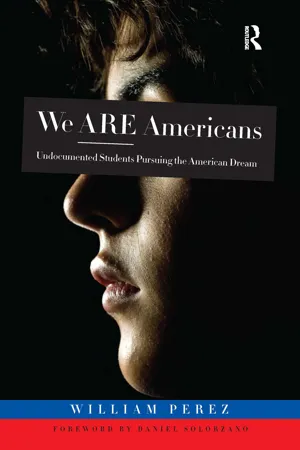
Winner of the CEP Mildred Garcia Award for Exemplary ScholarshipAbout 2.4 million children and young adults under 24 years of age are undocumented. Brought by their parents to the US as minors—many before they had reached their teens—they account for about one-sixth of the total undocumented population. Illegal through no fault of their own, some 65,000 undocumented students graduate from the nation's high schools each year. They cannot get a legal job, and face enormous barriers trying to enter college to better themselves—and yet America is the only country they know and, for many, English is the only language they speak. What future do they have? Why are we not capitalizing, as a nation, on this pool of talent that has so much to contribute? What should we be doing?Through the inspiring stories of 16 students—from seniors in high school to graduate students—William Perez gives voice to the estimated 2.4 million undocumented students in the United States, and draws attention to their plight. These stories reveal how—despite financial hardship, the unpredictability of living with the daily threat of deportation, restrictions of all sorts, and often in the face of discrimination by their teachers—so many are not just persisting in the American educational system, but achieving academically, and moreover often participating in service to their local communities. Perez reveals what drives these young people, and the visions they have for contributing to the country they call home.Through these stories, this book draws attention to these students' predicament, to stimulate the debate about putting right a wrong not of their making, and to motivate more people to call for legislation, like the stalled Dream Act, that would offer undocumented students who participate in the economy and civil life a path to citizenship. Perez goes beyond this to discuss the social and policy issues of immigration reform. He dispels myths about illegal immigrants' supposed drain on state and federal resources, providing authoritative evidence to the contrary. He cogently makes the case—on economic, social, and constitutional and moral grounds—for more flexible policies towards undocumented immigrants. If today's immigrants, like those of past generations, are a positive force for our society, how much truer is that where undocumented students are concerned?
- 200 pages
- English
- ePUB (mobile friendly)
- Available on iOS & Android
eBook - ePub
About this book
Information
Table of contents
- Cover Page
- Half Title page
- Title Page
- Copyright Page
- Dedication
- Contents
- Foreword
- Introduction
- Part One High School Students
- Part Two Community College Students
- Part Three University Students
- Part Four Graduates
- Part Five Formerly Undocumented College Graduates
- Conclusion
- Reading Group Guide
- Index
Trusted by 375,005 students
Access to over 1.5 million titles for a fair monthly price.
Study more efficiently using our study tools.
Frequently asked questions
Yes, you can cancel anytime from the Subscription tab in your account settings on the Perlego website. Your subscription will stay active until the end of your current billing period. Learn how to cancel your subscription
No, books cannot be downloaded as external files, such as PDFs, for use outside of Perlego. However, you can download books within the Perlego app for offline reading on mobile or tablet. Learn how to download books offline
Perlego offers two plans: Essential and Complete
- Essential is ideal for learners and professionals who enjoy exploring a wide range of subjects. Access the Essential Library with 800,000+ trusted titles and best-sellers across business, personal growth, and the humanities. Includes unlimited reading time and Standard Read Aloud voice.
- Complete: Perfect for advanced learners and researchers needing full, unrestricted access. Unlock 1.5M+ books across hundreds of subjects, including academic and specialized titles. The Complete Plan also includes advanced features like Premium Read Aloud and Research Assistant.
We are an online textbook subscription service, where you can get access to an entire online library for less than the price of a single book per month. With over 1.5 million books across 990+ topics, we’ve got you covered! Learn about our mission
Look out for the read-aloud symbol on your next book to see if you can listen to it. The read-aloud tool reads text aloud for you, highlighting the text as it is being read. You can pause it, speed it up and slow it down. Learn more about Read Aloud
Yes! You can use the Perlego app on both iOS and Android devices to read anytime, anywhere — even offline. Perfect for commutes or when you’re on the go.
Please note we cannot support devices running on iOS 13 and Android 7 or earlier. Learn more about using the app
Please note we cannot support devices running on iOS 13 and Android 7 or earlier. Learn more about using the app
Yes, you can access We ARE Americans by William Perez in PDF and/or ePUB format, as well as other popular books in Bildung & Hochschulausbildung. We have over 1.5 million books available in our catalogue for you to explore.