- 542 pages
- English
- ePUB (mobile friendly)
- Available on iOS & Android
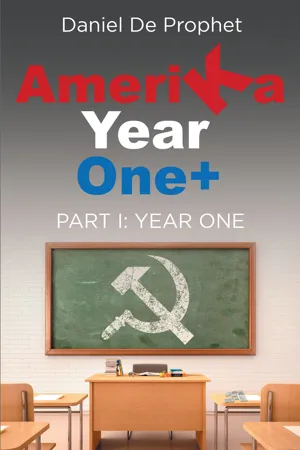
Amerika Year One+
About this book
After the events of the 2020 presidential election, a Cuban teacher in Miami identifies signs of the type of society he left behind. Concerned about the conversion of the United States into a totalitarian country, he begins sending email alerts to known people. The mails have become analyses of the evolving situation and a chronicle of the occupation of each field by the radical left. Education becomes indoctrination, news becomes harmful propaganda, and the health system is corrupt and used as a weapon to submit the population, purge people from their jobs, and control the individual. Workplaces, universities, and even the military create commissions that use race as a pretext to purge their ranks. CRT, the Marxist offspring, becomes the doctrine of people in power. The judicial system, including its head and their repressive corps, becomes servers of just one party. People are put in jail just for political reasons, and freedom of speech is canceled under the rules of a fascist document called NSCDT. This is a book with serious accusations but supported by the words and actions of those in power and their servers. It is also a call to react against the serious threat of losing freedom forever.
Frequently asked questions
- Essential is ideal for learners and professionals who enjoy exploring a wide range of subjects. Access the Essential Library with 800,000+ trusted titles and best-sellers across business, personal growth, and the humanities. Includes unlimited reading time and Standard Read Aloud voice.
- Complete: Perfect for advanced learners and researchers needing full, unrestricted access. Unlock 1.4M+ books across hundreds of subjects, including academic and specialized titles. The Complete Plan also includes advanced features like Premium Read Aloud and Research Assistant.
Please note we cannot support devices running on iOS 13 and Android 7 or earlier. Learn more about using the app.
Information
Table of contents
- Introduction