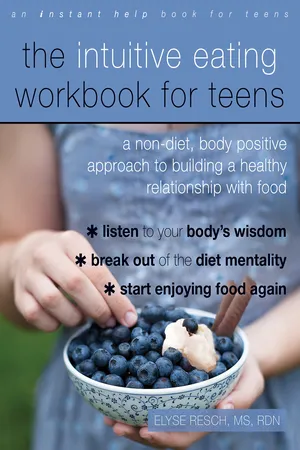
A new, non-diet approach to adopting healthy eating habits! Drawing on the same evidence-based practices introduced in Intuitive Eating, this workbook for teens addresses the ten principles of intuitive eating to help you listen to your body's natural hunger and fullness cues.
Do you struggle with stress eating, overeating, emotional eating, or binge eating? You aren't alone. Sometimes, when we're not feeling so good, food can seem like a great comfort. The problem is that over time, overeating can lead to several physical health problems, as well as depression and lowered self-esteem. So, how can you put a stop to unhealthy eating behaviors before they become ingrained, lifelong habits?
With this breakthrough workbook, you'll learn to notice and respect your body's natural hunger and fullness signals, find real eating satisfaction, cultivate body positivity, and build a profound connection to your mind and body for years to come. Each chapter includes an important principle of intuitive eating, and includes worksheets and activities to help you connect with and deepen your skills.
Whether you're a teen, a parent, a clinician, or a certified intuitive eating counselor, this proven-effective workbook is an essential resource.