AACTE 2024 Gloria J. Ladson-Billings Outstanding Book Award
A wealth of practical tools and guidance for rooting out injustice and creating science learning spaces in which students feel valued, safe, and eager to engage.
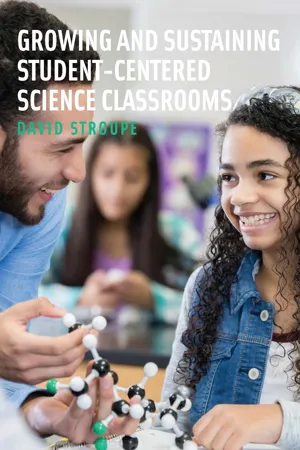
In Growing and Sustaining Student-Centered Science Classrooms, David Stroupe promotes powerful conversation and action around knowledge-building practices in science education. The book takes readers into inspiring classroom communities in which all students are invited and encouraged to engage in the work of science. An illuminating series of real-time classroom scenes demonstrate flexible teaching approaches and instructional pivots that Stroupe calls talk moves and shows how they foster inclusive collaboration and participation to create a more expansive, and better, version of science education.
Even as Stroupe champions student-centered science education, he acknowledges that common obstructions to knowledge sharing, or epistemic injustices, can often prevent this student-led ideal from materializing. He calls attention to four types of injustices that frequently stifle student voice and access in science learning communities: testimonial injustice, hermeneutical injustice, intrapersonal injustice, and hierarchical injustice. Recounting real-life examples of these individual and systemic injustices, Stroupe gives educators the tools to both identify and eradicate them.
This thought-provoking book sets forth ambitious tactics for educators to audit assumptions and biases in science, promote student agency, and conduct action research to document change. Using Stroupe's accessible methods, teachers, teacher educators, and administrators can design immediate and long-term instructional practices to disrupt injustices in STEM classroom communities and support student learning.
A wealth of practical tools and guidance for rooting out injustice and creating science learning spaces in which students feel valued, safe, and eager to engage.
In Growing and Sustaining Student-Centered Science Classrooms, David Stroupe promotes powerful conversation and action around knowledge-building practices in science education. The book takes readers into inspiring classroom communities in which all students are invited and encouraged to engage in the work of science. An illuminating series of real-time classroom scenes demonstrate flexible teaching approaches and instructional pivots that Stroupe calls talk moves and shows how they foster inclusive collaboration and participation to create a more expansive, and better, version of science education.
Even as Stroupe champions student-centered science education, he acknowledges that common obstructions to knowledge sharing, or epistemic injustices, can often prevent this student-led ideal from materializing. He calls attention to four types of injustices that frequently stifle student voice and access in science learning communities: testimonial injustice, hermeneutical injustice, intrapersonal injustice, and hierarchical injustice. Recounting real-life examples of these individual and systemic injustices, Stroupe gives educators the tools to both identify and eradicate them.
This thought-provoking book sets forth ambitious tactics for educators to audit assumptions and biases in science, promote student agency, and conduct action research to document change. Using Stroupe's accessible methods, teachers, teacher educators, and administrators can design immediate and long-term instructional practices to disrupt injustices in STEM classroom communities and support student learning.