- 358 pages
- English
- PDF
- Available on iOS & Android
eBook - PDF
About this book
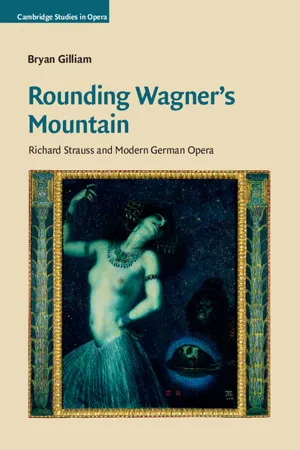
Richard Strauss' fifteen operas, which span the years 1893 to 1941, make up the largest German operatic legacy since Wagner's operas of the nineteenth century. Many of Strauss's works were based on texts by Europe's finest writers: Oscar Wilde, Hugo von Hofmannsthal and Stefan Zweig, among others, and they also overlap some of the most important and tumultuous stretches of German history, such as the founding and demise of a German empire, the rise and fall of the Weimar Republic, the period of National Socialism, and the post-war years, which saw a divided East and West Germany. In the first book to discuss all Strauss's operas, Bryan Gilliam sets each work in its historical, aesthetic, philosophical, and literary context to reveal what made the composer's legacy unique. Addressing Wagner's cultural influence upon this legacy, Gilliam also offers new insights into the thematic and harmonic features that recur in Strauss's compositions.
Information
Subtopic
Opera MusicTable of contents
- Cover
- Half-title page
- Series page
- Title page
- Copyright page
- Dedication
- Contents
- Figures
- Preface
- Acknowledgments
- Introduction
- 1 Guntram and the crisis of German musical metaphysics
- 2 Élan vital: Feuersnot, Salome, and radical individualism
- 3 The way to the social: Elektra and Der Rosenkavalier
- 4 Intermezzo: Ariadne and her transformations
- 5 The marriage operas: Die Frau ohne Schatten, Intermezzo, and Die ägyptische Helena
- 6 Composing without Hofmannsthal: Arabella and Die schweigsame Frau
- 7 The politics of peace: Friedenstag and Daphne
- 8 Opera in time of war: Die Liebe der Danae and Capriccio
- Epilogue
- Bibliography
- Index
Trusted by 375,005 students
Access to over 1.5 million titles for a fair monthly price.
Study more efficiently using our study tools.
Frequently asked questions
Yes, you can cancel anytime from the Subscription tab in your account settings on the Perlego website. Your subscription will stay active until the end of your current billing period. Learn how to cancel your subscription
No, books cannot be downloaded as external files, such as PDFs, for use outside of Perlego. However, you can download books within the Perlego app for offline reading on mobile or tablet. Learn how to download books offline
We are an online textbook subscription service, where you can get access to an entire online library for less than the price of a single book per month. With over 1.5 million books across 990+ topics, we’ve got you covered! Learn about our mission
Look out for the read-aloud symbol on your next book to see if you can listen to it. The read-aloud tool reads text aloud for you, highlighting the text as it is being read. You can pause it, speed it up and slow it down. Learn more about Read Aloud
Yes! You can use the Perlego app on both iOS and Android devices to read anytime, anywhere — even offline. Perfect for commutes or when you’re on the go.
Please note we cannot support devices running on iOS 13 and Android 7 or earlier. Learn more about using the app
Please note we cannot support devices running on iOS 13 and Android 7 or earlier. Learn more about using the app
Yes, you can access Rounding Wagner's Mountain by Bryan Gilliam in PDF and/or ePUB format, as well as other popular books in Media & Performing Arts & Opera Music. We have over 1.5 million books available in our catalogue for you to explore.