eBook - PDF
Plant Domestication and the Origins of Agriculture in the Ancient Near East
- 290 pages
- English
- PDF
- Available on iOS & Android
eBook - PDF
Plant Domestication and the Origins of Agriculture in the Ancient Near East
About this book
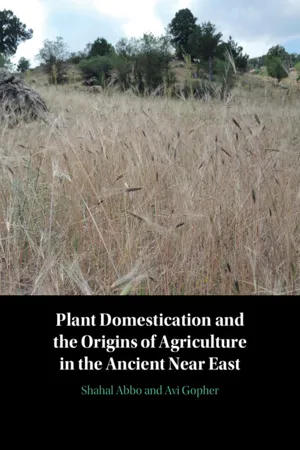
The Agricultural Revolution – including the domestication of plants and animals in the Near East – that occurred 10,500 years ago ended millions of years of human existence in small, mobile, egalitarian communities of hunters-gatherers. This Neolithic transformation led to the formation of sedentary communities that produced crops such as wheat, barley, peas, lentils, chickpeas and flax and domesticated range of livestock, including goats, sheep, cattle and pigs. All of these plants and animals still play a major role in the contemporary global economy and nutrition. This agricultural revolution also stimulated the later development of the first urban centres. This volume examines the origins and development of plant domestication in the Ancient Near East, along with various aspects of the new Man-Nature relationship that characterizes food-producing societies. It demonstrates how the rapid, geographically localized, knowledge-based domestication of plants was a human initiative that eventually gave rise to Western civilizations and the modern human condition.
Information
Table of contents
- Cover
- Half-title
- Title Page
- Copyright Information
- Contents
- List of Tables
- Foreword
- Foreword
- Preface and Acknowledgements
- Introduction
- 1 What Is the Agricultural Revolution?
- 2 From Hunter-Gatherers to Farmers in the Near East: Archaeological Background
- 3 Models That Describe and Explain the Agricultural Revolution, Including Plant Domestication
- 4 The Plant Formations of the Fertile Crescent and the Wild Progenitors of the Domesticated Founder Crops
- 5 The Difference between Wild and Domesticated Plants
- 6 Traditional versus Modern Agriculture - Stability vs Maximization
- 7 The Differences between Plant Domestication and Crop Evolution under Traditional and Modern Farming Systems
- 8 The Differences between Cereal and Legume Crops in the Near East
- 9 The Choice of Plant Species for Domestication: Agronomic and Dietary Considerations
- 10 Where, When and How Did Near Eastern Plant Domestication Occur?
- 11 Domestication of Fruit Trees in the Near East
- 12 Plant Evolution under Domestication
- 13 A Global View of Plant Domestication in Other World Regions: Asia, Africa and America
- 14 Animal Domestication in the Near East
- 15 Plant Domestication and Early Near Eastern Agriculture: Summary and Conclusions
- Notes
- Further Reading
- References, Chapter 14
- Glossary: Basic Concepts in Genetics, Botany, Ecology, Agronomy and Zoology
- Index
Trusted by 375,005 students
Access to over 1.5 million titles for a fair monthly price.
Study more efficiently using our study tools.
Frequently asked questions
Yes, you can cancel anytime from the Subscription tab in your account settings on the Perlego website. Your subscription will stay active until the end of your current billing period. Learn how to cancel your subscription
No, books cannot be downloaded as external files, such as PDFs, for use outside of Perlego. However, you can download books within the Perlego app for offline reading on mobile or tablet. Learn how to download books offline
Perlego offers two plans: Essential and Complete
- Essential is ideal for learners and professionals who enjoy exploring a wide range of subjects. Access the Essential Library with 800,000+ trusted titles and best-sellers across business, personal growth, and the humanities. Includes unlimited reading time and Standard Read Aloud voice.
- Complete: Perfect for advanced learners and researchers needing full, unrestricted access. Unlock 1.5M+ books across hundreds of subjects, including academic and specialized titles. The Complete Plan also includes advanced features like Premium Read Aloud and Research Assistant.
We are an online textbook subscription service, where you can get access to an entire online library for less than the price of a single book per month. With over 1.5 million books across 990+ topics, we’ve got you covered! Learn about our mission
Look out for the read-aloud symbol on your next book to see if you can listen to it. The read-aloud tool reads text aloud for you, highlighting the text as it is being read. You can pause it, speed it up and slow it down. Learn more about Read Aloud
Yes! You can use the Perlego app on both iOS and Android devices to read anytime, anywhere — even offline. Perfect for commutes or when you’re on the go.
Please note we cannot support devices running on iOS 13 and Android 7 or earlier. Learn more about using the app
Please note we cannot support devices running on iOS 13 and Android 7 or earlier. Learn more about using the app
Yes, you can access Plant Domestication and the Origins of Agriculture in the Ancient Near East by Shahal Abbo,Avi Gopher,Gila Kahila Bar-Gal in PDF and/or ePUB format, as well as other popular books in Social Sciences & Archaeology. We have over 1.5 million books available in our catalogue for you to explore.