eBook - PDF
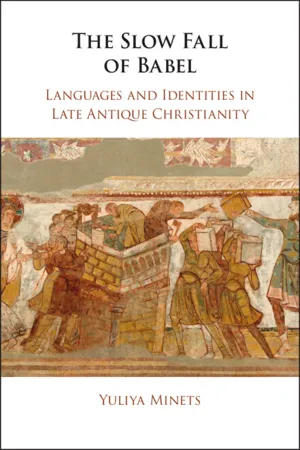
The Slow Fall of Babel
Languages and Identities in Late Antique Christianity
- 436 pages
- English
- PDF
- Available on iOS & Android
eBook - PDF
About this book
This is the story of the transformation of the ways in which the increasingly Christianized elites of the late antique Mediterranean experienced and conceptualized linguistic differences. The metaphor of Babel stands for the magnificent edifice of classical culture that was about to reach the sky, but remained self-sufficient and self-contained in its virtual monolingualism – the paradigm within which even Latin was occasionally considered just a dialect of Greek. The gradual erosion of this vision is the slow fall of Babel that took place in the hearts and minds of a good number of early Christian writers and intellectuals who represented various languages and literary traditions. This step-by-step process included the discovery and internalization of the existence of multiple other languages in the world, as well as subsequent attempts to incorporate their speakers meaningfully into the holistic and distinctly Christian picture of the universe.
Information
Table of contents
- Cover
- Half-title
- Title page
- Copyright information
- Dedication
- Contents
- Abbreviations
- Acknowledgments
- Introduction: Awakening to Linguistic Otherness
- CHAPTER 1 Meeting the Alloglottic Other: The Socio-Linguistic Landscape of the Ancient Mediterranean and the Spread of Christianity
- CHAPTER 2 Languages and Identities in Greco-Roman and Jewish Antiquity
- CHAPTER 3 The Tower of Babel and Beyond: The Primordial Linguistic Situation, the Original Language, and the Start of Linguistic Diversification
- CHAPTER 4 Speaking in Tongues in Christian Late Antiquity
- CHAPTER 5 Foreign Languages and the Discourse of Otherness
- CHAPTER 6 The Languages of Saints and Demons
- Conclusion: What's in the Language?
- Bibliography
- Index
Trusted by 375,005 students
Access to over 1.5 million titles for a fair monthly price.
Study more efficiently using our study tools.
Frequently asked questions
Yes, you can cancel anytime from the Subscription tab in your account settings on the Perlego website. Your subscription will stay active until the end of your current billing period. Learn how to cancel your subscription
No, books cannot be downloaded as external files, such as PDFs, for use outside of Perlego. However, you can download books within the Perlego app for offline reading on mobile or tablet. Learn how to download books offline
We are an online textbook subscription service, where you can get access to an entire online library for less than the price of a single book per month. With over 1.5 million books across 990+ topics, we’ve got you covered! Learn about our mission
Look out for the read-aloud symbol on your next book to see if you can listen to it. The read-aloud tool reads text aloud for you, highlighting the text as it is being read. You can pause it, speed it up and slow it down. Learn more about Read Aloud
Yes! You can use the Perlego app on both iOS and Android devices to read anytime, anywhere — even offline. Perfect for commutes or when you’re on the go.
Please note we cannot support devices running on iOS 13 and Android 7 or earlier. Learn more about using the app
Please note we cannot support devices running on iOS 13 and Android 7 or earlier. Learn more about using the app
Yes, you can access The Slow Fall of Babel by Yuliya Minets in PDF and/or ePUB format, as well as other popular books in History & Ancient History. We have over 1.5 million books available in our catalogue for you to explore.