- 402 pages
- English
- PDF
- Available on iOS & Android
eBook - PDF
About this book
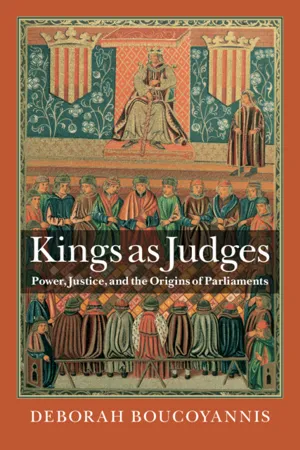
How did representative institutions become the central organs of governance in Western Europe? What enabled this distinctive form of political organization and collective action that has proved so durable and influential? The answer has typically been sought either in the realm of ideas, in the Western tradition of individual rights, or in material change, especially the complex interaction of war, taxes, and economic growth. Common to these strands is the belief that representation resulted from weak ruling powers needing to concede rights to powerful social groups. Boucoyannis argues instead that representative institutions were a product of state strength, specifically the capacity to deliver justice across social groups. Enduring and inclusive representative parliaments formed when rulers could exercise power over the most powerful actors in the land and compel them to serve and, especially, to tax them. The language of rights deemed distinctive to the West emerged in response to more effectively imposed collective obligations, especially on those with most power.
Information
Subtopic
PoliticaTable of contents
- Cover
- Half-title page
- Title page
- Copyright page
- Contents
- List of Figures
- List of Tables
- Preface and Acknowledgments
- Part I The Origins of Representative Institutions: Power, Land, and Courts
- Part II The Origins of Representative Practice: Power, Obligation, and Taxation
- Part III Trade, Towns, and the Political Economy of Representation
- Part IV Land, Conditionality, and Property Rights
- Part V Why Representation in the West: Petitions, Collective Responsibility, and Supra-Local Organization
- Bibliography
- Index
Trusted by 375,005 students
Access to over 1.5 million titles for a fair monthly price.
Study more efficiently using our study tools.
Frequently asked questions
Yes, you can cancel anytime from the Subscription tab in your account settings on the Perlego website. Your subscription will stay active until the end of your current billing period. Learn how to cancel your subscription
No, books cannot be downloaded as external files, such as PDFs, for use outside of Perlego. However, you can download books within the Perlego app for offline reading on mobile or tablet. Learn how to download books offline
Perlego offers two plans: Essential and Complete
- Essential is ideal for learners and professionals who enjoy exploring a wide range of subjects. Access the Essential Library with 800,000+ trusted titles and best-sellers across business, personal growth, and the humanities. Includes unlimited reading time and Standard Read Aloud voice.
- Complete: Perfect for advanced learners and researchers needing full, unrestricted access. Unlock 1.5M+ books across hundreds of subjects, including academic and specialized titles. The Complete Plan also includes advanced features like Premium Read Aloud and Research Assistant.
We are an online textbook subscription service, where you can get access to an entire online library for less than the price of a single book per month. With over 1.5 million books across 990+ topics, we’ve got you covered! Learn about our mission
Look out for the read-aloud symbol on your next book to see if you can listen to it. The read-aloud tool reads text aloud for you, highlighting the text as it is being read. You can pause it, speed it up and slow it down. Learn more about Read Aloud
Yes! You can use the Perlego app on both iOS and Android devices to read anytime, anywhere — even offline. Perfect for commutes or when you’re on the go.
Please note we cannot support devices running on iOS 13 and Android 7 or earlier. Learn more about using the app
Please note we cannot support devices running on iOS 13 and Android 7 or earlier. Learn more about using the app
Yes, you can access Kings as Judges by Deborah Boucoyannis in PDF and/or ePUB format, as well as other popular books in Politica e relazioni internazionali & Politica. We have over 1.5 million books available in our catalogue for you to explore.