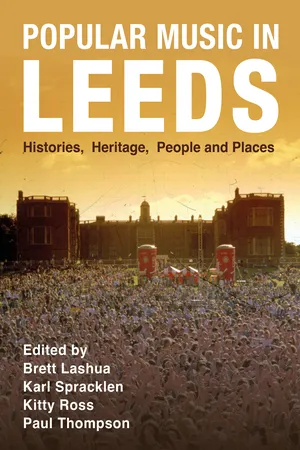
This first academic collection dedicated to popular music in Leeds - developed from the work of interdisciplinary scholars, drawn from a major public museum exhibition "Sounds of Our City" and built upon contemporary research. Leeds has rich musical histories and heritage, a long tradition of vibrant music venues, nightclubs, dance halls, pubs and other sites of musical entertainment.
The city has spawned crooners, folk singers, punks, post- punks, Goths, DJs, popstars, rappers and indie rockers, yet – with a few exceptions - Leeds has not been studied for its scenes in ways that other UK cities have. In ways that the chapters explore, Leeds' popular music exemplifies and informs understandings of broader cultural and urban changes – both in Britain and across wider global contexts – of the social and historical significance of music as mass media; music and migration; music, racialisation and social equity; industrial decline, de-industrialisation, neoliberalism and the rise of the 24-hour city. Charting moments of stark musical politicisation and de-politicisation, while concomitantly tracing arguments about "heritagising" popular music within discussions about music's "place" in museums and in the urban economy, this book contributes to debates about why music matters, has mattered, and continues to matter in Leeds, and beyond.