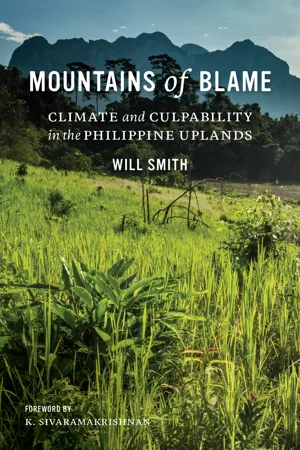
Mountains of Blame
Climate and Culpability in the Philippine Uplands
- 192 pages
- English
- ePUB (mobile friendly)
- Available on iOS & Android
About this book
Explores the unsettling phenomenon of indigenous self-blame for climate change Swidden agriculture has long been considered the primary cause of deforestation throughout Southeast Asia, and the Philippine government has used this belief to exclude the indigenous people of Palawan Island from their ancestral lands and to force them to abandon traditional modes of land use. After adopting ostensibly modern and ecologically sustainable livelihoods, the Pala'wan people have experienced drought and uncertain weather patterns, which they have blamed on their own failure to observe traditional social norms that are believed to regulate climate—norms that, like swidden agriculture, have been outlawed by the state. In this ethnographic case study, Will Smith asks how those who have contributed least to greenhouse gas emissions and environmental degradation have come to position themselves as culpable for the devastating impacts of climate change, examining their statements about changing weather, processes of dispossession, and experiences of climate-driven hunger. By engaging both forest policy and local realities, he suggests that reckoning with these complexities requires reevaluating and questioning key wisdoms in global climate-change policy: What is indigenous knowledge, and who should it serve? Who is to blame for the vulnerability of the rural poor? What, and who, belongs in tropical forests?
Frequently asked questions
- Essential is ideal for learners and professionals who enjoy exploring a wide range of subjects. Access the Essential Library with 800,000+ trusted titles and best-sellers across business, personal growth, and the humanities. Includes unlimited reading time and Standard Read Aloud voice.
- Complete: Perfect for advanced learners and researchers needing full, unrestricted access. Unlock 1.4M+ books across hundreds of subjects, including academic and specialized titles. The Complete Plan also includes advanced features like Premium Read Aloud and Research Assistant.
Please note we cannot support devices running on iOS 13 and Android 7 or earlier. Learn more about using the app.
Information
Table of contents
- Cover
- Series Page
- Title Page
- Copyright
- Contents
- Foreword by K. Sivaramakrishnan
- Acknowledgments
- List of Abbreviations
- Introduction
- Chapter One: Making Uma, Imagining Kaingin
- Chapter Two: Rooted in Place
- Chapter Three: Insidious Vulnerabilities
- Chapter Four: El Niño and Incest
- Conclusion: Placing Blame
- Glossary
- Notes
- Bibliography
- Index
- Series List