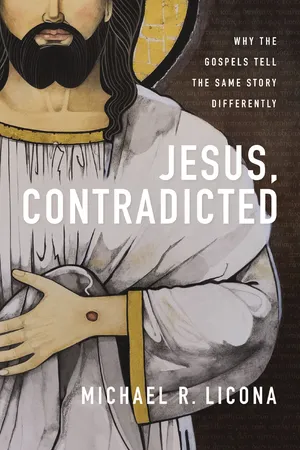
The differences and discrepancies in the Gospels constitute the foremost objections to their reliability and the credibility of their message. Some have tried to resolve Gospels contradictions with strained harmonization efforts. Many others conclude that the Gospels are hopelessly contradictory and, therefore, historically unreliable accounts of Jesus.
In Jesus, Contradicted, New Testament scholar Michael Licona shows how the genre of ancient biography, to which the Gospels belong, actually allows biographers to be flexible in how they report events, construct a narrative, and make an argument. Licona demonstrates that the intentional changes to the Jesus tradition by the Evangelists reveal that the differences in how the Gospels report events are not grounds for their rejection. Instead, they are a result of the Gospel writers employing standard literary conventions common in their time for writing ancient biography.
Licona introduces readers to the genre of ancient biography through Plutarch, who wrote 48 of the 90 extent biographies written within 150 years of Jesus, giving numerous examples of compositional devices employed by Plutarch, and comparing them with instances in the Gospels where the Evangelists appear to use similar techniques. Licona also examines Theon's Progymnasmata, a first-century textbook that provides six techniques for paraphrasing one's sources when writing a narrative. In doing so, he helps readers understand why the Gospels report many events differently. Finally, Licona concludes by addressing the thorny question of whether the editorial moves commonplace in ancient biography are compatible with the doctrines of the divine inspiration and the inerrancy of Scripture.
Rather than trying to resolve discrepancies by bending the Gospel narrative, which risks making them say things they aren't saying, Jesus, Contradicted situates the Gospels within their proper context and helps readers account for differences in the Gospels in a cohesive and historically cogent way.